

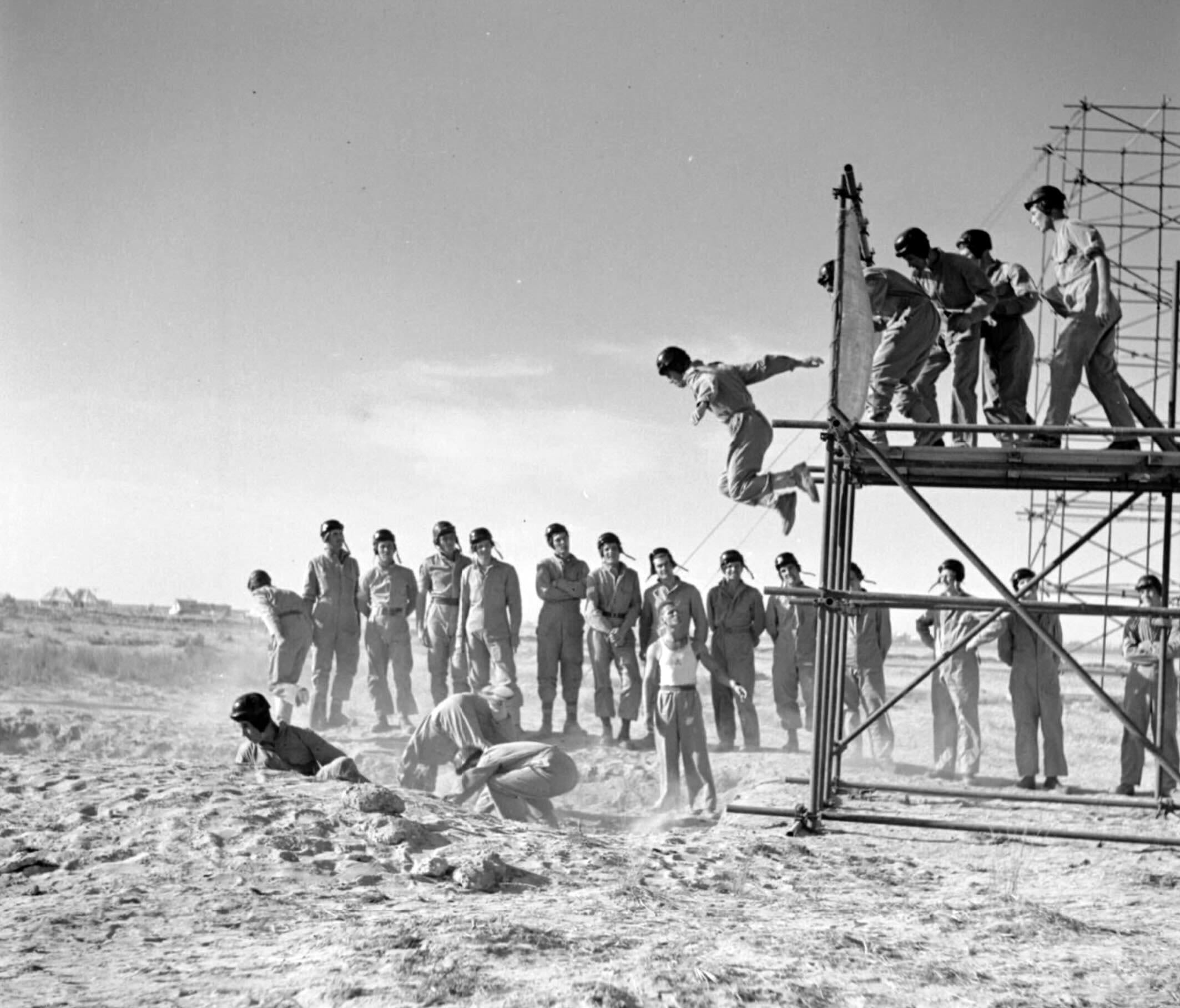
In 1941, the British were still evaluating how best they could utilise their putative ‘Special Forces’. A programme of ‘Commando training’ had begun in Britain, but the very first airborne raid behind enemy lines had achieved little. A more substantial force of Commandos, intended as maritime raiders in the Mediterranean, Layforce, had been diverted to the attack on the Vichy French in Syria. But they had suffered heavy casualties and were due to be disbanded.
The vision, determination and enthusiasm for ‘raiding party’ warfare, championed by just a few individuals, now allowed the concept one more chance. Without them, some senior officers would have ended the establishment of ‘Special Forces’ as a costly mistake. It took some high-risk endeavours, successfully completed, to change the outlook of many in the British forces.
One of the very few key individuals making the case was an Australian officer who found himself, as one of the small surviving remnants of Layforce, besieged in the fortress of Tobruk, awaiting transfer to another unit. Jock Lewes, Co-Founder of the SAS, first published in 2000, is based on many letters to his family as well as other contemporary accounts. This excerpt covers a raid conducted on the night of the 17th/18th July 1941:
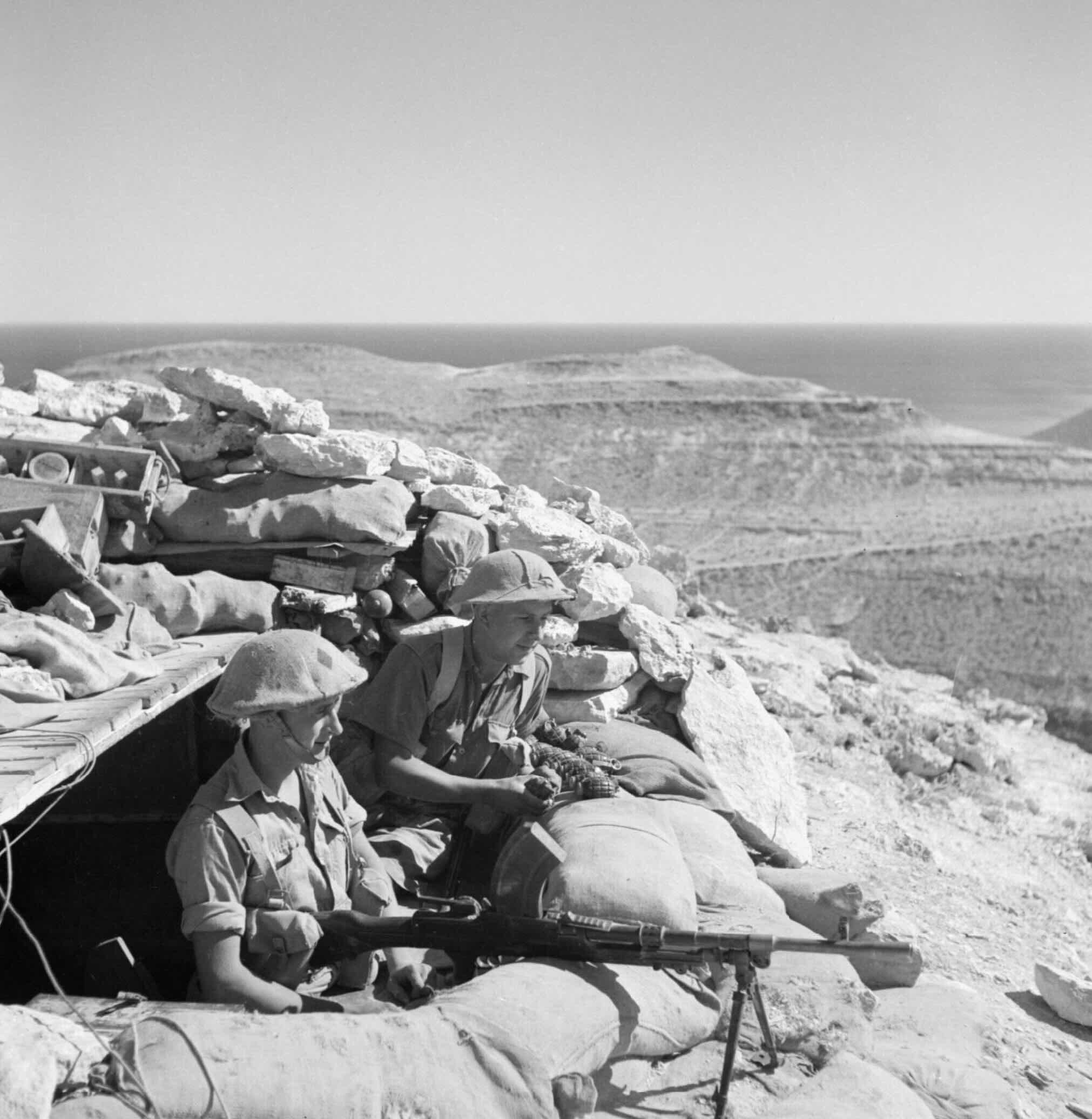
General Morshead, despite the opposition of the Commanding Officer of the Indian regiment, insisted that the Layforce men had come to Tobruk ‘to do a show’ and ‘he would give us one worth doing’ .
The ‘Twin Pimples’ were two little mounds of rubble which often mark the position of Arab cisterns, in the making of which the stuff was excavated; they stood out clearly on the level plain and covered the whole area with observation. The CO of the Indian Regiment considered that the position that Jock was to raid was not an isolated forward post but part of a continuous line, heavily defended with mutual covering fire and the invariable defensive fire plan from the flanks and rear; it was strongly held and heavily fortified. The objection to the decision was that ‘the raid was a bigger undertaking than we could handle alone and would be more costly than a hit-and-run raid should be’. The Viceroy Commissioned Officer also wanted to have more control of his sector and ‘not have his affairs of honour dispatched for by hired assassins’ .
The General had his way, and Indian guides led. The plan was to attack the left rear where the Italian line fell back a little into a shallow salient, and to withdraw to the left straight across the Italians’ front. Diversionary raids were set to the right a few minutes before zero hour, counterbattery work to ease the process of withdrawal, a mortar platoon and a section of machine guns were pointed on the line to the right of the objective. Jock led with two officers and each man commanded a troop of fifteen. Six Australian Sappers brought ten pounds of gelignite each.
Jock also had plenty of support in the form of Sgts Pat Riley and Jim Almonds, both giants of men and brave as lions. The men wondered what exactly they might find up the ‘Twin Pimples’: ‘Indian patrols had heard a concrete-mixer going there for weeks - the Italians worship concrete, they set their idol and build his temples wherever they go.’ The irony of these symbolic totems of Mussolini’s African Empire didn’t escape Jock, who added, ‘Having made one set of concrete posts to keep us out of Tobruk they are now building another to keep us in. I wonder if they see the joke or even the implication.’
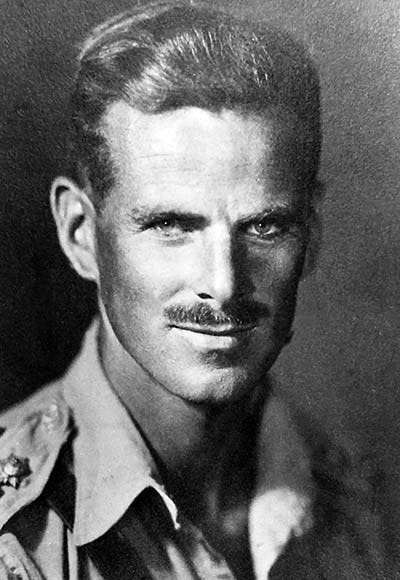
Everything went like clockwork. Jock arrived 200 yards south of the post and heard uproar from the Italian lines; before zero hour he heard ‘laughing and singing, political arguments, a truck being unloaded like a Covent Garden lorry, the concrete mixer and a stiff breeze were all in our favour.’ Dressed in tin hat, shirt, shorts, stocking tops, puttees and rubber-soled boots, he was given the job of silently ‘bumping first’ the outer defensive line on his right as he approached from the rear. Extracts from his Tobruk diary that was sent to MEHQ seem unedited, highlighting both the grotesque and banal in the heat of battle:
A hundred yards to go and up went the diversion, plum to time; the moonless night covered us, but the stars here are always bright enough to show you all you want to see without being seen. We came on faster and crouched lower, still there was talking and laughing in the lines; suddenly the pimple loomed up ahead, a single shot was fired, we were too far to the left but had to go on, I signalled the final rush, and as I reached the foot of the mound, firing into the embrasures with which it was honeycombed, there rose behind me the pitiful wail of the great Italian soldier in extremis.
… winkling out the wretched screaming Wop from his sangars and entrenchments with the bayonet
The head of my troop ‘arrow’ had actually passed through the outer line without seeing it and unnoticed; as the arms swept on they bumped it, and were now busy winkling out the wretched screaming Wop from his sangars and entrenchments with the bayonet, or rolling in grenades when he lay low. The place was like a disturbed ant heap; Italians, for the most part dressed only in trousers, ran grimly for their lives, silent and scuttling, fell screaming when brought down with fire, knelt with raised hands before bayonets, crying pitifully, or just whimpered as they grovelled underfoot.
The top of the pimple we had bumped was chaos. Some of the Italians as they ran threw their absurd grenades at us, they flashed and filled the air with smoke and dust; the shots from our own men were crackling past from behind, and more and more men were climbing up the mound. Men from all troops were there, mad with excitement, shouting obscene profanities at the fallen and departing enemy. Prisoners taken by one man, and left in his eagerness for more, were bayonetted by those folding in from the left and centre. Soon the whole force was dancing a mad war dance on and around the pimple.
To get the troops off the pimple was the only way to restore control. I ordered my troop back. This was taken as the signal for a general withdrawal, the sappers lit their fuses and shouted their prearranged warning to get clear. The withdrawal had begun, the enemy were quick to sense it, and at once before we were clear of the outer lines an LMG opened up and got two men with its first burst. It was very gallantly attacked and silenced, and no more short-range fire troubled us.
By now the troops were properly sorted out, the defensive fire was screaming over. Our plan worked perfectly; the long march southward with two wounded men, one unable to walk, was slow, hazardous and nerve-racking; the noise was terrific, and the coloured fire in the sky most awe-inspiring. The Very lights seemed to go up every five minutes, not at the quarter hours, and we seemed hardly to have moved between its appearances, but at last we reached the safety of our wadi, climbed the other side, which was being mortared relentlessly, swallowed our tea and rum at the cookhouse, and so to our cave and sangar to sleep, while the Italian continued to roar defiance from a distance in the pleasant impersonal manner that he prefers.
Jock reported the two casualties and tended the pair, removing his pullover to warm the cooling body of a man shot in the neck; the soldier was fatally wounded, but the other escaped with a broken arm. The official estimate of the enemy casualties was one hundred, but Jock regarded that as ‘an exaggeration; fifty would be closer’. Most of the guns on the ‘Twin Pimple’ went up with a ‘lovely roar’ . Jock was disappointed that he had been unable to ‘exploit our extraordinary good fortune’ while the objective lay for a while completely at the men’s mercy ‘instead of dancing our war dance on top of the pimple’ - ‘but there it is, that’s how it happened, and I suppose, being inexperienced soldiers, almost without exception, it could hardly be expected to have happened any otherwise.’
The attack took place in the early morning of 18 July, and the following day Jock wrote to his father that he was ‘able to lift up my head in the presence of those who have been in battle and stood the test of action’:
Last night I led an attack which has been universally proclaimed a success, but what pleases me more than praise of those higher up is the fact that the men of my troop are satisfied with me, and in knowing that with the help and strength which I needed on that night I can do much better. But the Italian is no soldier and fighting him is a hateful business, so let’s talk no more of it.
© John Lewes 2000, 2001, 2007 ‘Jock Lewes, Co-Founder of the SAS’. Reproduced courtesy of Pen & Sword Publishers Ltd.

Affiliate Links
Recently on World War II Today ...

