

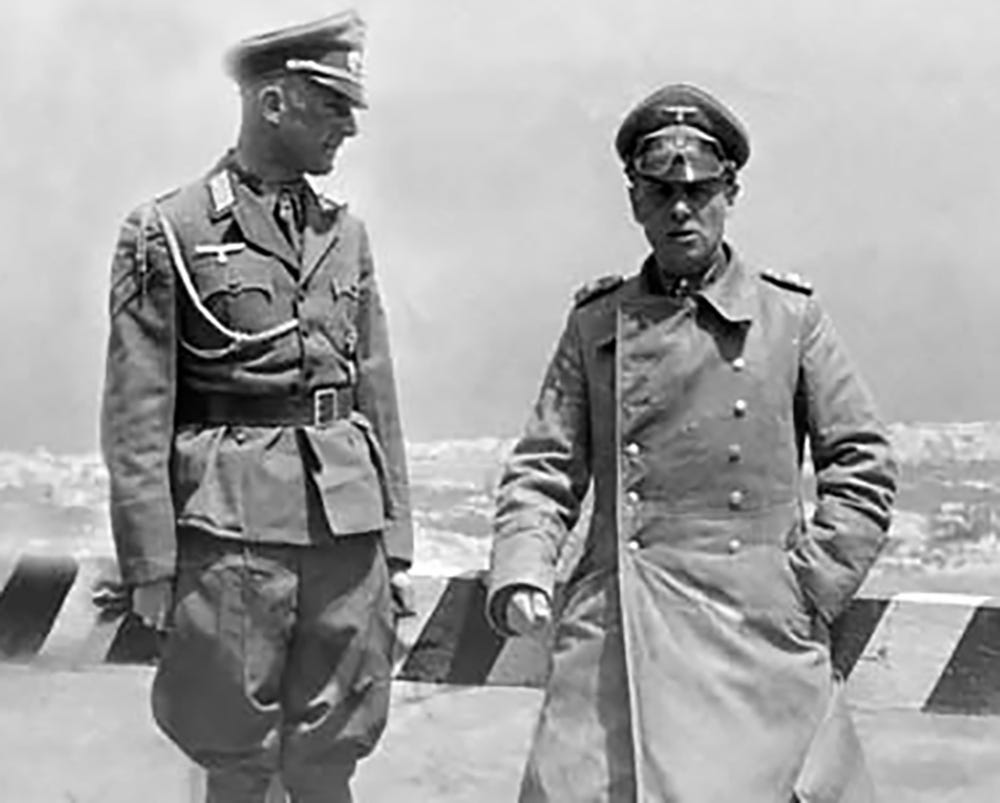
Hans-Joachim Schraepler had arrived in Libya on 20th February, to serve as an aide to General Erwin Rommel. He was familiar with Rommel’s energetic, impatient approach to war, having served with him in France the previous year. He was just getting to grips with the desert, along with everyone else in the Afrika Korps. For a Staff Officer, he was adjusting to the logistics and the new realities of fighting in Africa.
Schraepler wrote almost every day to his wife, creating a unique diary of working alongside Rommel. It was not until 2001 that these letters were discovered by his son and not until 2009 that they were published as At Rommel’s Side: The Lost Letters of Hans-Joachim Schraepler.
From 18th March Rommel was briefly absent, having flown back to Germany for a conference with the Wehrmacht High Command. For Hitler, North Africa was just a side show, he had only sent troops there to avoid a further humiliation for Mussolini. The Wehrmacht were preoccupied with planning an impending war in the East.
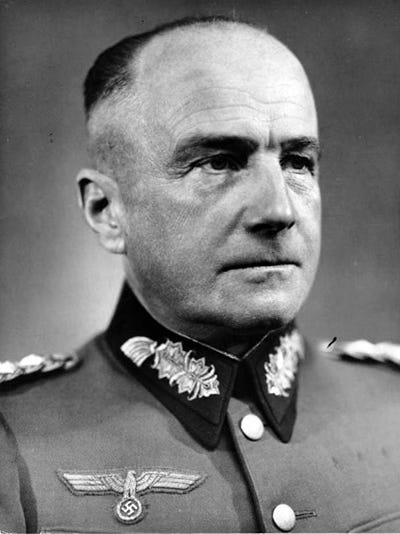
Field Marshal von Brauchitsh, Commander-in-Chief (Oberbefehlshaber) of the German Army, had made it abundantly clear1 that there was “no intention” of launching offensive operations in Africa and there were no reinforcements available for Rommel.
Schraepler was an eyewitness to the unfolding events in the desert:
Sirte, 20 March 1941
Should the English continue to retreat, Rommel will go forward with the troops available to him - I had often seen him do this in France. We have to get hold of the English so that we can wipe them out. But what do the English intend by withdrawing? And where are they going?
And we have to ask, which target we will pursue. Instructions will be probably given to Rommel in Berlin now. I continue to hope that I will see Cairo. Otherwise my trip here won’t have been worth it.
Today, I went up to the front, some 100 km out, to find out whether Casa Ristoro could be our next headquarters. But what are 100 km!
We are well-equipped with aircraft to find airfields anywhere: these are extended by the Italians with amazing speed. The construction of airfields in the desert is not too difficult. The Italians are excellent road builders.
Sirte, 22 March 1941
With comments about others, coming to one’s ears, one should be careful. However, they are always interesting. The corps chief2 is considered to be too hesitant. That is not correct, in my opinion. He is clever and considered and is an excellent counterweight to Rommel.
The transport of units and supplies to the front is not easy to organise. Eight days ago, for example, a special mission began, on which 1,400 km were to be covered. These are the distances we constantly have to cope with. It’s time consuming, everything takes longer. If we had begun preparing four or eight weeks ago, operations would already have started. The time lost in advancing and on the supplies must then be caught up again.
The eight-week campaign Rommel had been thinking about some time ago is obviously not discussed any more. It is simply unthinkable. Nevertheless, I am convinced that finally everything will be much faster than we are now assuming.
What makes everything more difficult is, of course, the fact that there is nothing available in this area which could be used for the advance. Everything has to be carried over hundreds of kilometres. In France, for example, we could always find food or petrol, even vehicles, which could be used instead of own vehicles which had broken down.
I have laid out the magazines you sent in the mess. They are very popular, everybody has been reading them. This week we might get newspapers.
Sirte, 23 March 1941
The planned transfer of our staff tomorrow 160 km closer to the front was postponed.
Were you not also surprised that Rommel got decorated with the Oak Leaves? We were quite surprised when the news came yesterday, and I immediately congratulated him by telex in Wiener Neustadt. We did not expect the message and are happy about it. But we are not clear why he has received it at this moment.
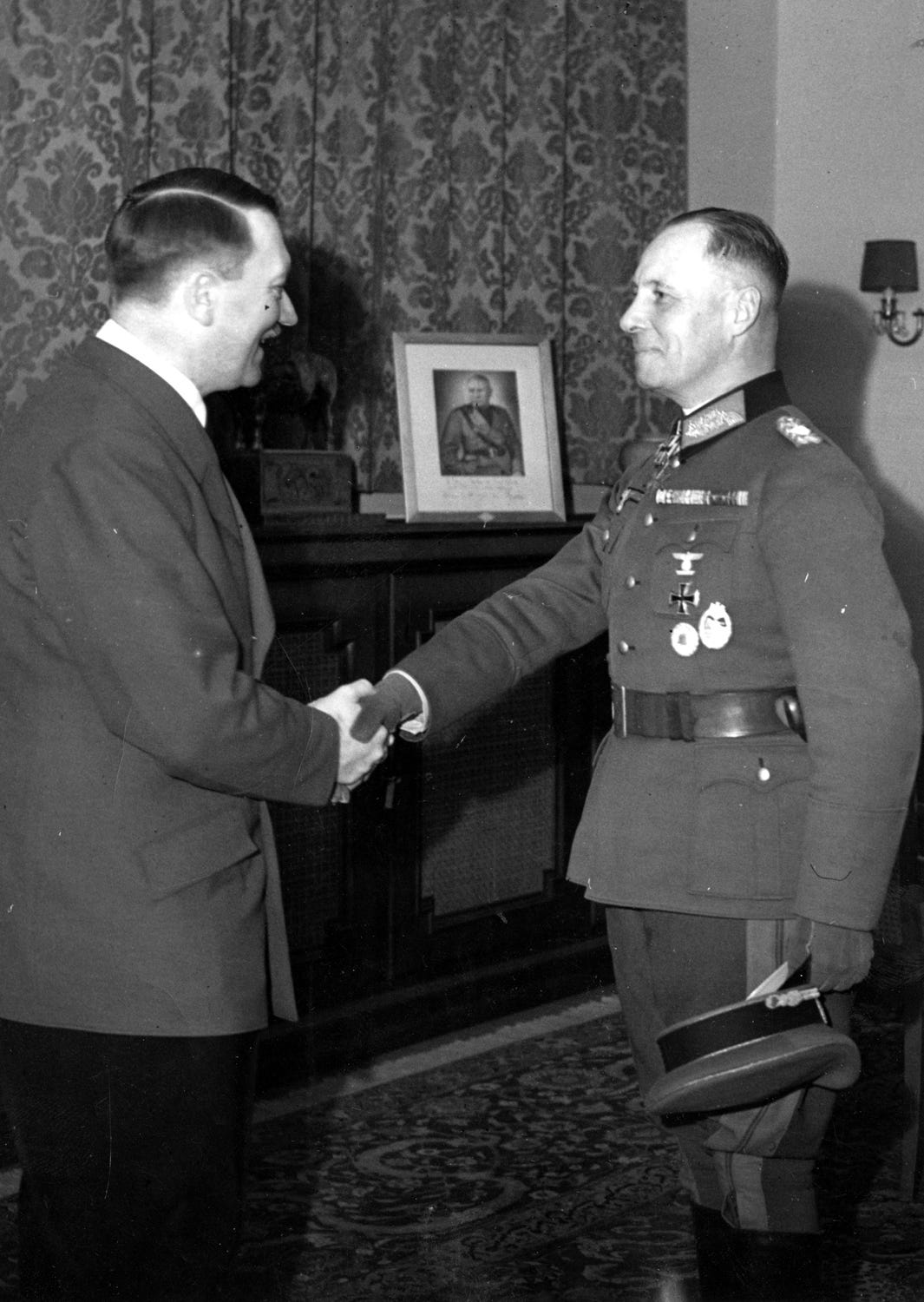
Undoubtedly, Rommel by his arrival finally stopped the retreat of the Italian army and hindered the English coming to Tripoli. But you might assume that an award comes only after a success and we would have advanced 1,000 km more. I am curious to see what Rommel brings along from Berlin. I am convinced that he will start soon. He has certainly accelerated the arrival of the next division. The award means certainly that the Fuhrer agrees with his actions.
I will not make you feel discouraged over this period, but will console you because we shall certainly spend my birthday in October together! Rommel expects that the war will end before winter. I am also convinced of that. In this sense, I hope that you will pass an agreeable Sunday without lacking anything.
Sirte, 24 March 1941
The commando has worked assiduously. The house, my future office, is fairly clean. The tents in the dunes are installed, a large barracks has been built and a second will follow today.
In the dunes there is a plethora of sand fleas, very small animals that you only can feel when, full of blood and the size of small peas, they abandon your body leaving fierce itching. The pioneers suffered most: the ones with bites swim in the sea, which is painful because of the strong salinity of the water. I looked, therefore, for another spot. But there were scorpions. They only bite when they are harassed, pressed or walked on. Their bites can be deadly. This area is full of surprises.
In Sirte, I slept well until the aircraft came between 3.45 and 4.45 a.m. and bombed us heavily. As they dropped fire bombs near my room it became bright as day despite closed shutters, so I got up. We stood close to the door, and we ducked our heads when two bombs fell in the immediate vicinity, about 100 feet from us, on a number of eucalyptus trees covering a parking area. An Italian unit was camping there. Fifteen soldiers were killed. The other bombs have probably not damaged anything.
Our anti-aircraft unit was obviously inadequate. It could only shoot up to 2,200 metres, as I yesterday found out. They are installed on the hill, perhaps only 150 feet from here. It is a fact that the anti-aircraft guns attract the [enemy] aircraft. The pilot thinks that where there is an anti-aircraft unit, there is something to protect. I think that we will soon leave this unfriendly region for the realm of the sand fleas.
Rommel has already come back at lunchtime today. He must have moved everything on. I didn’t expect him until tonight. This morning he meets Gariboldi in Tripoli. I am curious what he will do during the next few days. With his return, life comes back to the staff.
…
[ On 24th March Rommel launched a surprise attack on British positions at El Agheila, the furthest west point that they had reached in their offensive against the Italians at the beginning of February. The DAK successfully seized the position, marking a dramatic reversal in the situation of the two sides in North Arica.]
…
… El Agheila. The Fuhrer was very happy, Mussolini much surprised.
25 March 1941
In a hurry. In ten minutes captain Graf Baudissin will fly to Tripoli. So you will have at least a brief message from our new location in the dunes. El Agheila was occupied yesterday. The rapidly commanded relocation of the staff worked well. I slept for the first time in a tent in the dunes. Wonderful, without harassment by aircrafts, fleas or other vermin. The place is really superb.
Rommel is happy and has left already for El Agheila. The Fuhrer was very happy, Mussolini much surprised.
This morning at 7.00 hours, I swam in the Mediterranean. Morale is good everywhere.
© Hans-Albrecht Schraepler 2009 ‘At Rommel’s Side: The Lost Letters of Hans-Joachim Schraepler'. Reproduced courtesy of Pen & Sword Publishers Ltd.

Affiliate Links
Recently on World War II Today ...


The Rommel Papers
Lieutenant Colonel von dem Borne served as a Chief of Staff to Field Marshal Erwin Rommel during the early stages of the North African campaign.