

Cyril Joly took his title from Pericles, the Athenian general who espoused democracy:
Take these men, for example. Like them, remember that prosperity can only be for the free, that freedom is the sole possession of those alone who have the courage to defend it.
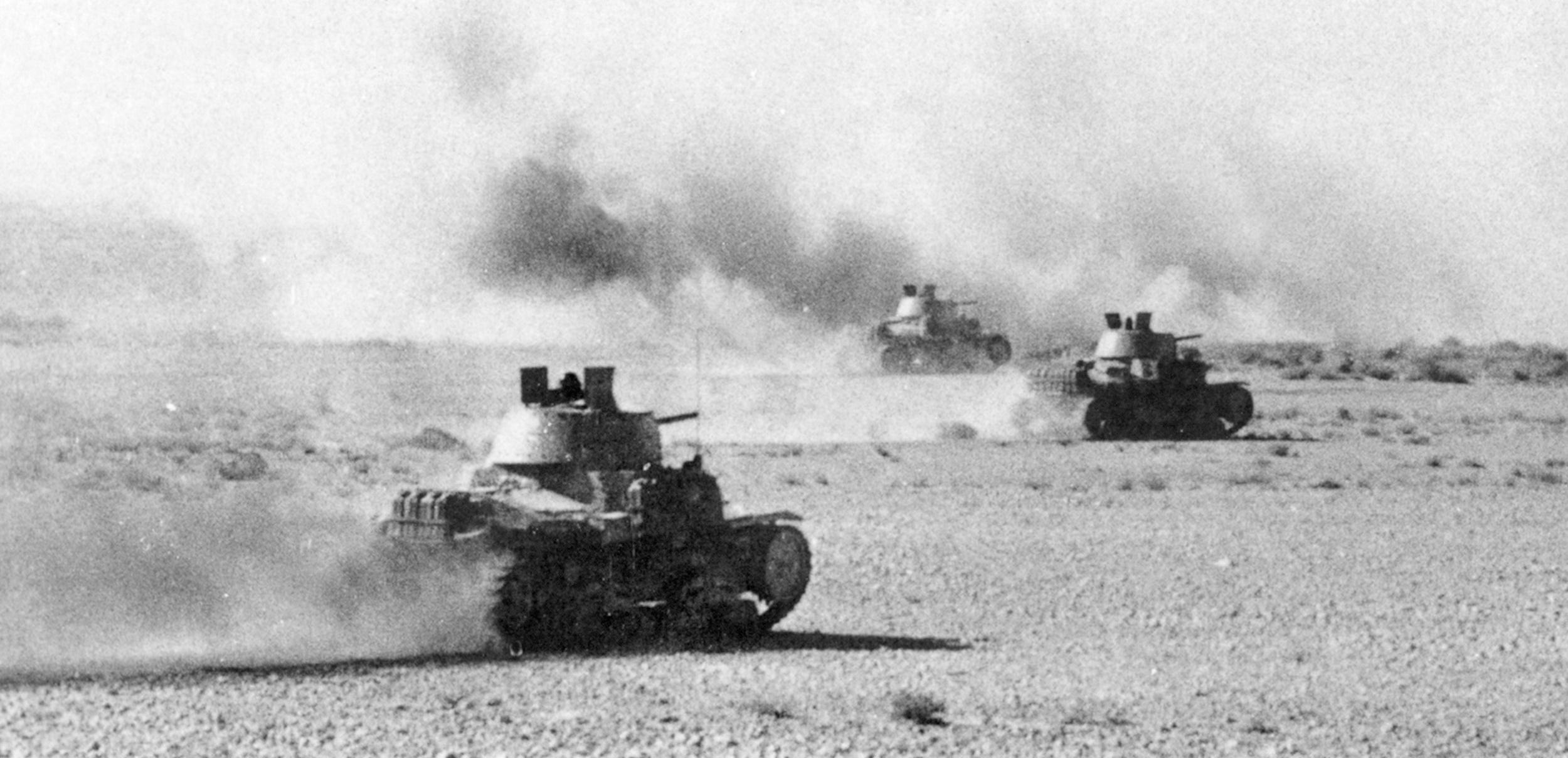
Joly was nineteen when he joined the Army in 1939. He survived the campaign in France in 1940 and then, as a tank commander, experienced the full African campaign from the early successes against the Italians through to the final defeat of the Germans in 1943. When Take These Men: Tank Warfare with the Desert Rats was first published in 1955, it was immediately acclaimed as an exceptional memoir. Joly put the reader in the tank alongside him, with a vivid recollection of time and place, of all the hardships endured in the desert, and of all the changes of fortune experienced by the men who lived every day in the turret of a tank.
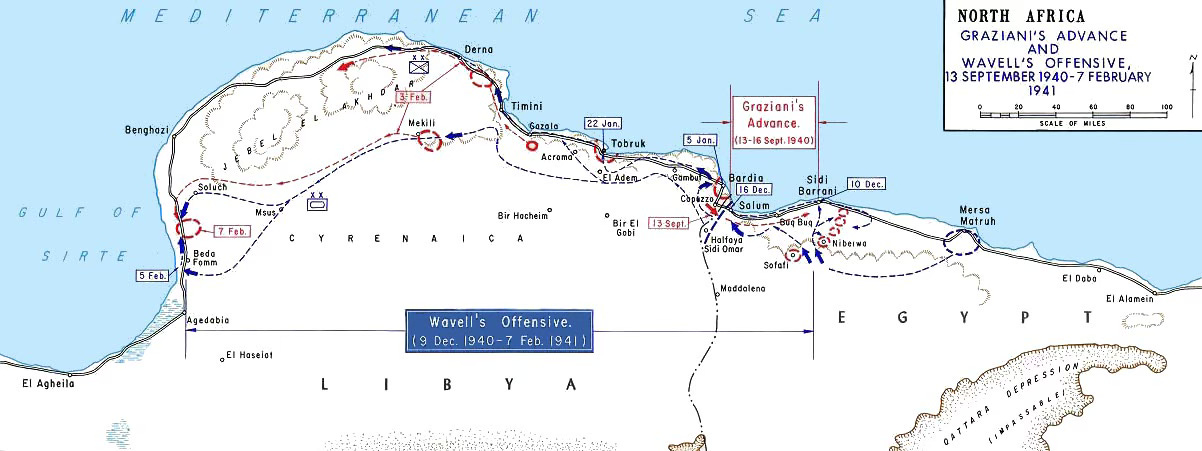
At the beginning of February 1941, the 7th Armoured Division completed the stunning British victory over the Italian 10th Army. Their garrisons had been overcome at Sidi Barrani, Bardia, Tobruk, and Derna. Now, by the thinnest of margins, they finally ran out of road at Beda Fomm:
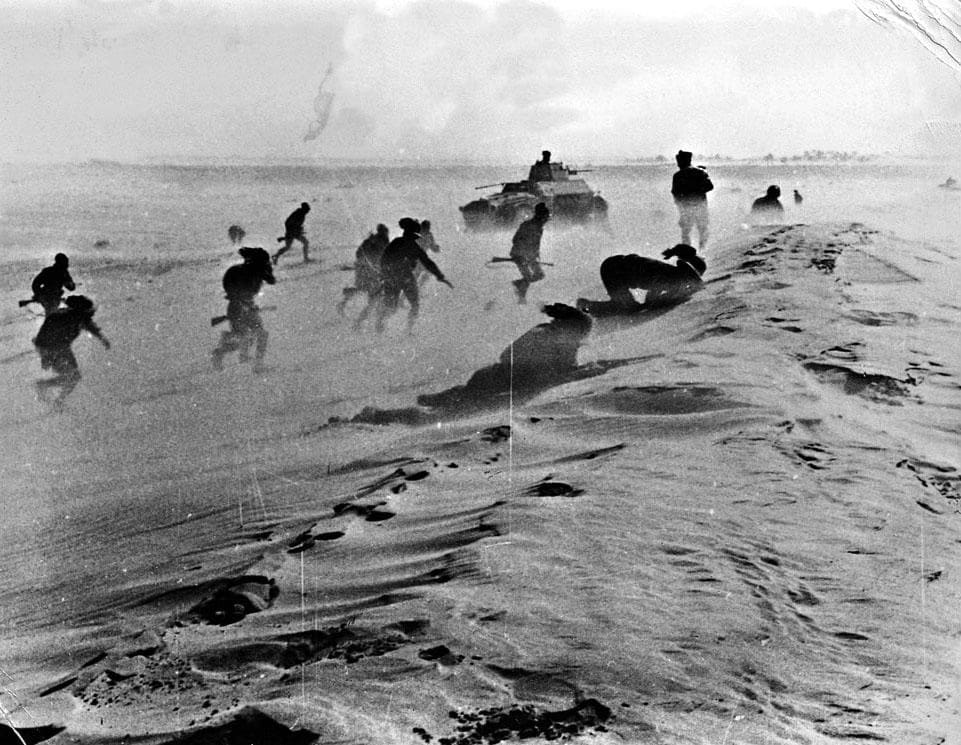
Before first light the leaguers were astir, and as the long, straggling, inert mass of the Italian column where it lay still in its positions of the previous day. The Italians had been harassed throughout the night by our guns and a number of’ roving infantry fighting patrols which had kept them on the alert and deprived them of rest and any chance to reorganise. From my positipn on the dune I watched an attack which was launched soon after dawn by about thirty Italian tanks against the position on the road. This was beaten off quickly and with little difficulty.
For a time there was silence on both sides. For all the efforts of the previous day, the Italian column still looked huge and threatening. I watched with apprehension the movements of the mass of vehicles before me. On either side of me, hidden behind the crests of other dunes and ridges, I knew that there were other eyes just as anxious as mine, surveying the scene before them. In the mind of each one of us was the sure knowledge that we were well outnumbered.
Each of us knew by what slim margin we still held dominance over the battlefield. Our threat was but a facade—behind us there were no more reserves of further troops. Even the supplies of the very sinews which could keep us going had almost run out. If we lost now we were faced with capture or a hopeless retreat into the empty distances of the inner desert. It was a sobering thought. I felt that the day, with all its black, wet dullness, was heavy with ominous foreboding. The scene before me was made gloomy enough to match my mood by the black clouds of acrid smoke which shrouded the battlefield like a brooding pall.
Gradually I became aware of a startling change. First one and then another white flag appeared in the host of vehicles. More and more became visible, until the whole column was a forest of waving white banners. Small groups of Italians started to move out hesitantly towards where they knew we lay watching them. Larger groups appeared, some on foot, some in vehicles. Still not able to believe the evidence of his own eyes, the Colonel warned, “ . . . Don’t make a move. This may be a trap. Wait and see what happens. Off.”
But it was no trap. Italians of all shapes and sizes, all ranks, all regiments and all services swarmed out to be taken prisoner. I felt that nothing would ever surprise me again after my loader suddenly shouted: “ Look, sir, there’s a couple of bints there coming towards us. Can I go an’ grab ’em, sir ? I could do with a bit of home comforts.” We took the two girls captive, installed them in a vehicle of their own and kept them for a few days to do our cooking and washing. I refrained from asking what other duties were required of the women, but noted that they remained contented and cheerful.
Out of the first confusion, order was slowly restored. Each squadron was given a part of the battlefield where we were to collect the prisoners and equipment and to keep careful tally of the captures. It was a novel but exhausting task, and Kinnaird, anxious to be done with it as soon as possible, pushed and harried us to clear our portion of the area.
The battlefield was an amazing sight. It was strewn with broken and abandoned equipment, tattered uniforms, piles of empty shell and cartridge cases. It was littered with paper, rifles and bedding. Here and there small groups of men tended the wounded who had been gathered together. Others were collecting and burying the dead. Still others, less eager to surrender than the majority, stood or lay waiting to be captured. Some equipment was still burning furiously, more was smouldering. There were many oil and petrol fires emitting clouds of black smoke. There were few incidents. Soon the generals and the high-ranking officers had been discovered and taken away.
The. remaining officers were piled unceremoniously into Italian lorries and driven off. The thousands of men were formed into long columns guarded at head and tail by only one or two of our impassive, imperturbable and perpetually cheerfill soldiers, who shouldered the unaccustomed new duties with the same confident assurance with which they had met and mastered all the other trials of the campaign. It was the work of some days to cleat the battlefield of all that was worth salvaging and to muster and despatch on their long march to the prison camps in Egypt the thousands of prisoners. At last the work was completed and the enemy’s losses could be computed.
Speed of manoeuvre and preparation, determination and the confidence born of a great and growing moral ascendancy were the weapons which had brought the final victory.
At Benghazi, which had fallen into Australian hands on the same day as the surrender to us farther south, and at Beda Fomm, the Italians had lost some 20,000 men killed and captured, as well as 1,500 lorries, 112 tanks and 216 guns.
In the brief period of two months, never numbering more than about a quarter of our enemy, we had captured or destroyed the cream of the Italian Colonial Army. The much-heralded might of Mussolini’s Empire had been shown to have been a Sham. Of the thousands who had marched with Graziani to the promised glory and riches of the capture of Egypt, few had escaped.
Some 134,000 had been killed, wounded or captured. We had taken thousands of lorries, hundreds of tanks and guns, as well as enormous supplies of food, ammunition and equipment. Against this gigantic total, our losses were 604 killed and 2,360 wounded.
We were well content. Except for the Matildas, our equipment had not been greatly superior and we had had at no time a superiority in numbers. Speed of manoeuvre and preparation, determination and the confidence born of a great and growing moral ascendancy were the weapons which had brought the final victory.
But, though these were enough to defeat the Italians, we knew that the scarcity of adequate equipment could be of no avail against an enemy with superior weapons and practised and dedicated to the rites of war. Behind the triumph and the glory of the campaign there lurked in the mind of each of us the threat of a more potent, more determined enemy—the. Germans. For even as the battlefield was being cleared and, as ever before, the advanced patrols of the Division were moving farther south and west to Agebadia and Agheila, German aircraft began to strafe the road and attack the forward positions.
It was on this note of a great victory precariously won and of more difficult trials to come in the near future that the campaign came to an end. For some of us in the forefront of the advance there was to be no comfort nor good food after endless days of hardship; no port after the storm.
© Cyril Joly 1955 & 2019, ‘Take These Men: Tank Warfare with the Desert Rats’. Reproduced courtesy of Pen & Sword Publishers Ltd.

Affiliate Links
Recently on World War II Today ...

