

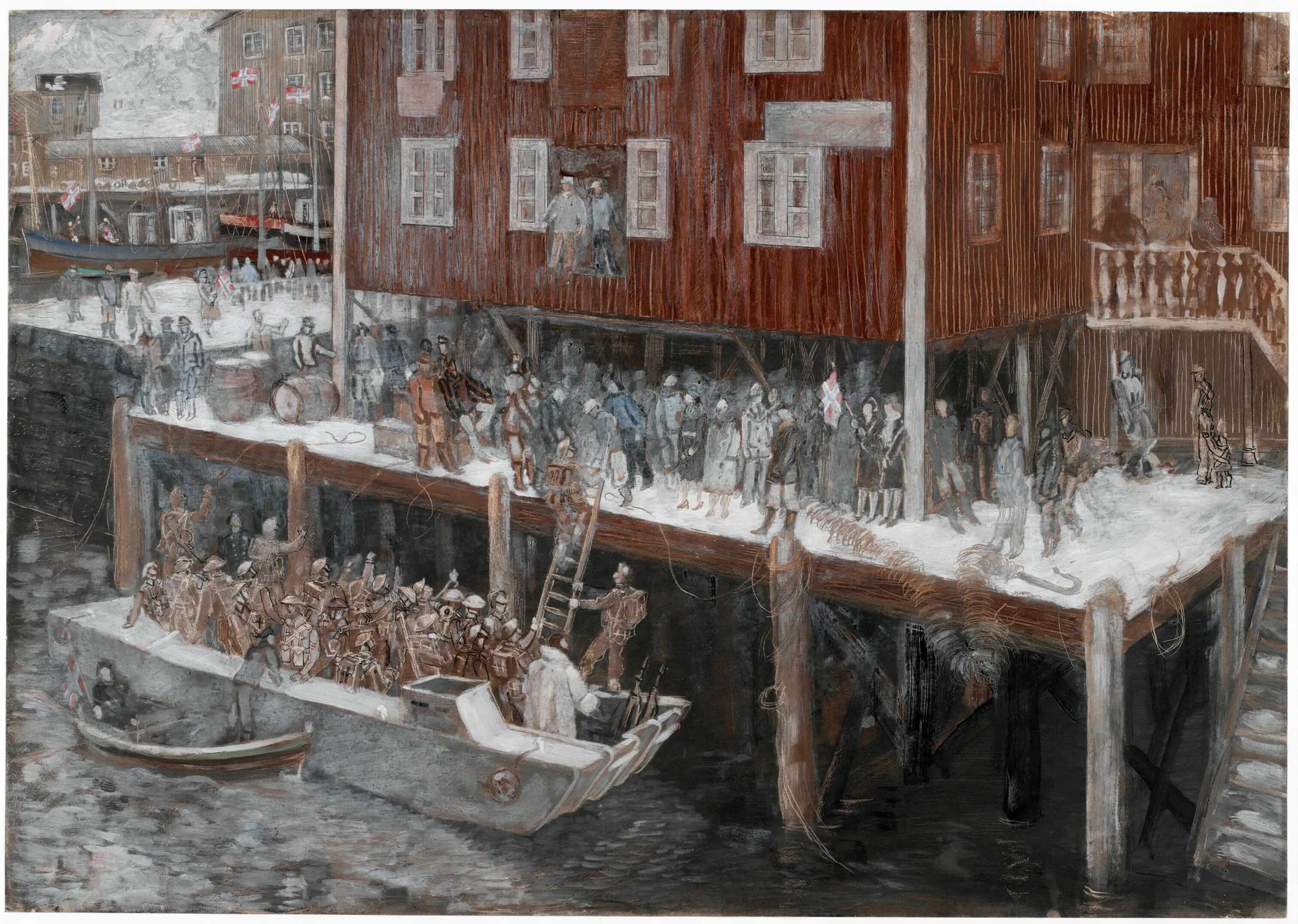
In June 1940, in the immediate aftermath of the evacuation of the British Army from Dunkirk, Churchill had made it very clear that he wanted to go on the offensive. Land forces were no longer in contact with German forces in occupied Europe, but this was no obstacle to Churchill. In a directive to the Chiefs of Staff, he demanded:
Enterprises must be prepared with specially trained troops of the hunter class who can develop a reign of terror down the enemy coasts. I look to the joint Chiefs of Staff to propose measures for vigorous enterprise and ceaseless offensive against the whole German-occupied coastline, leaving a trail of German corpses behind them.
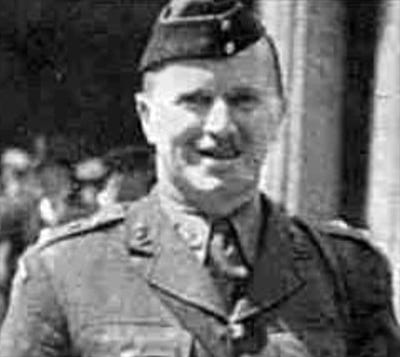
John Durnford-Slater was one of the officers who answered the call for volunteers. As the Adjutant of an Anti-Aircraft Regiment, he was bored and frustrated. By the end of June, he was the Colonel in command of No. 3 Commando, responsible for personally recruiting all the officers, who in turn recruited troopers from the men who had volunteered from a variety of units across the regular Army. Based in Plymouth, they pioneered amphibious raids in cooperation with the Royal Navy.
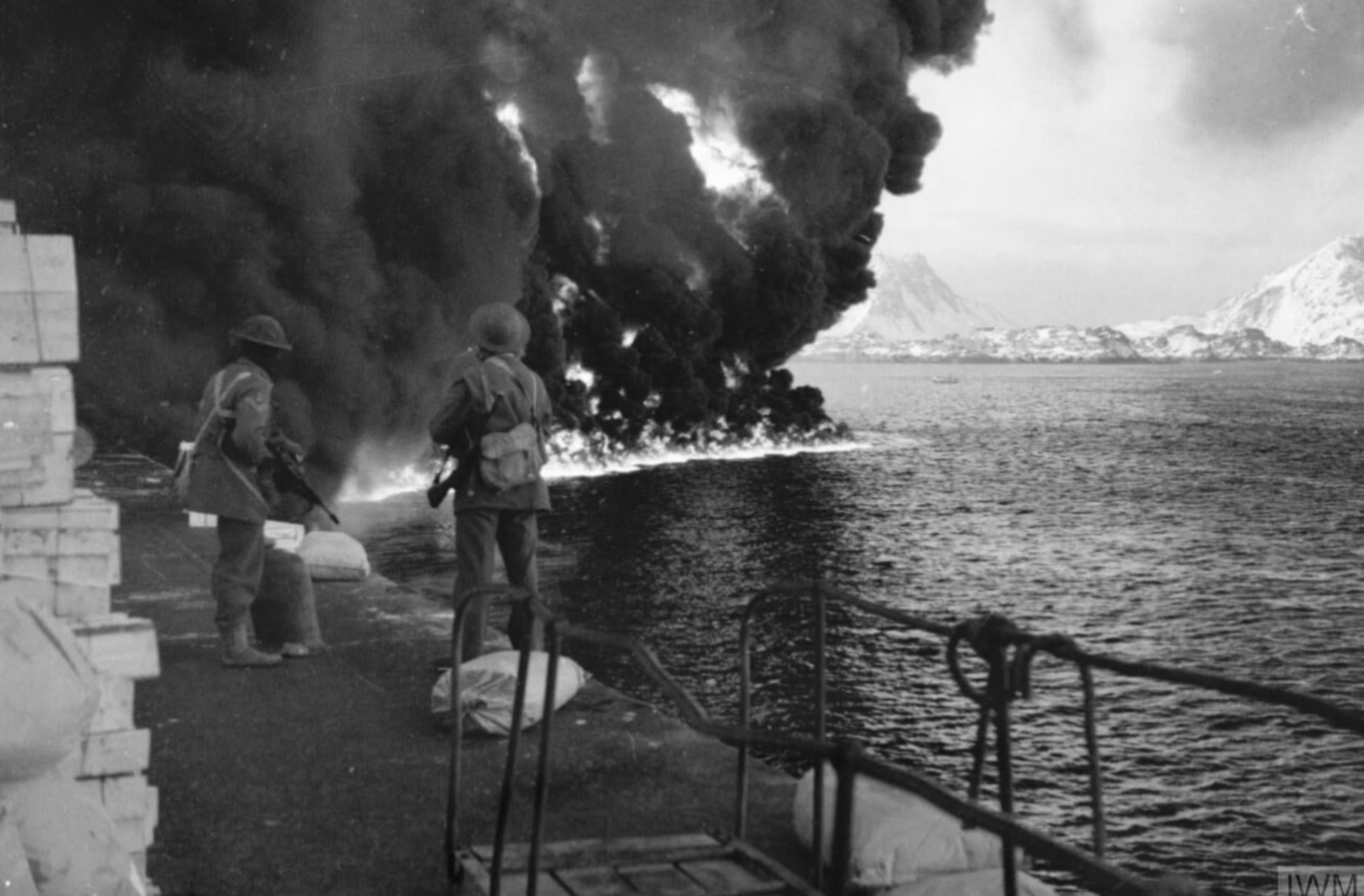
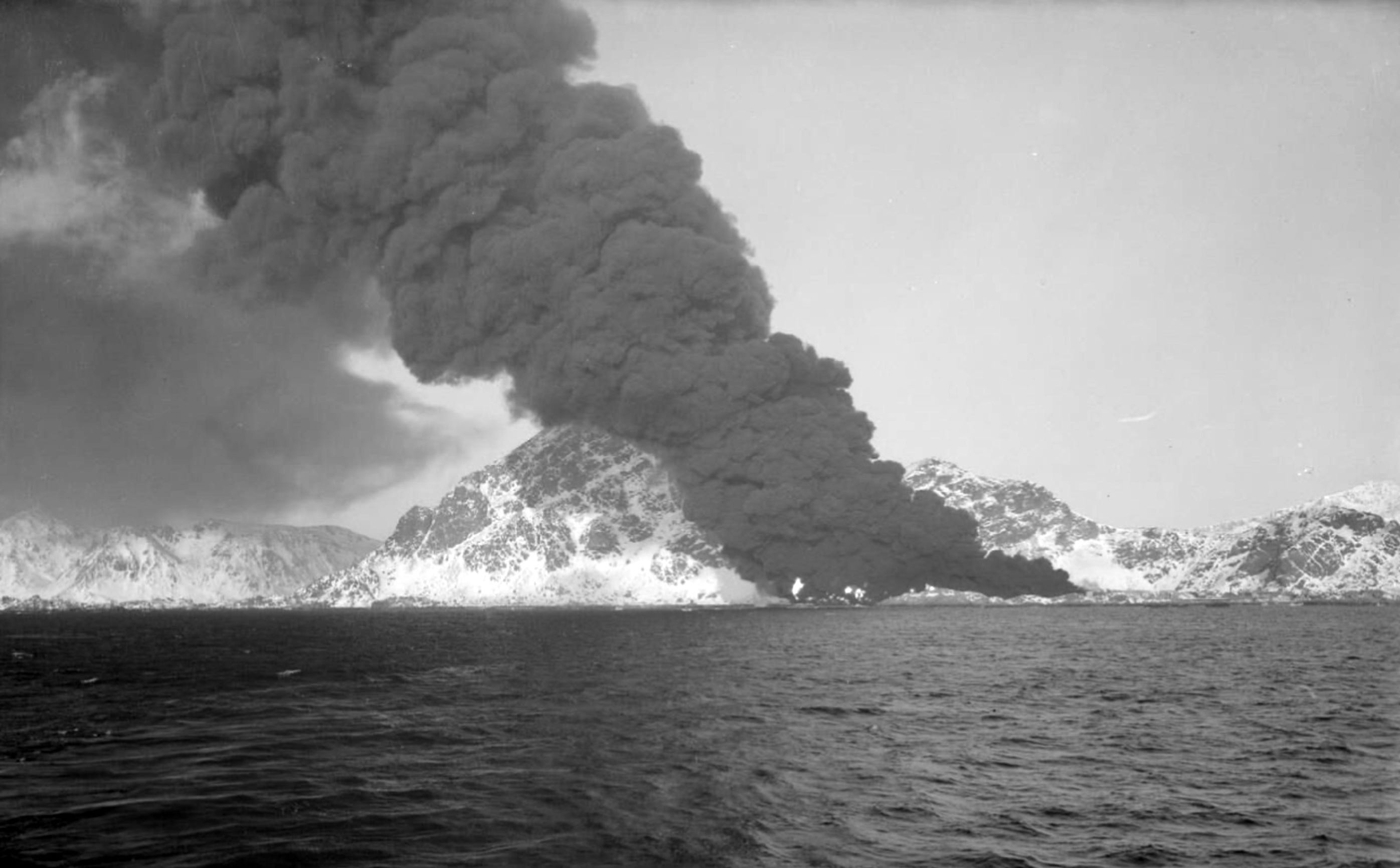
The Commandos learnt their skills and operational tactics by a process of trial and error. Some went off to form the Parachute raiding parties that had just launched Operation Colossus. The raid on the Lofoten Islands, in the far north of Norway, was not the first amphibious Commando raid, but it was the largest and most significant so far. The objective was to destroy fish oil and glycerine production facilities, valuable to the German war effort:
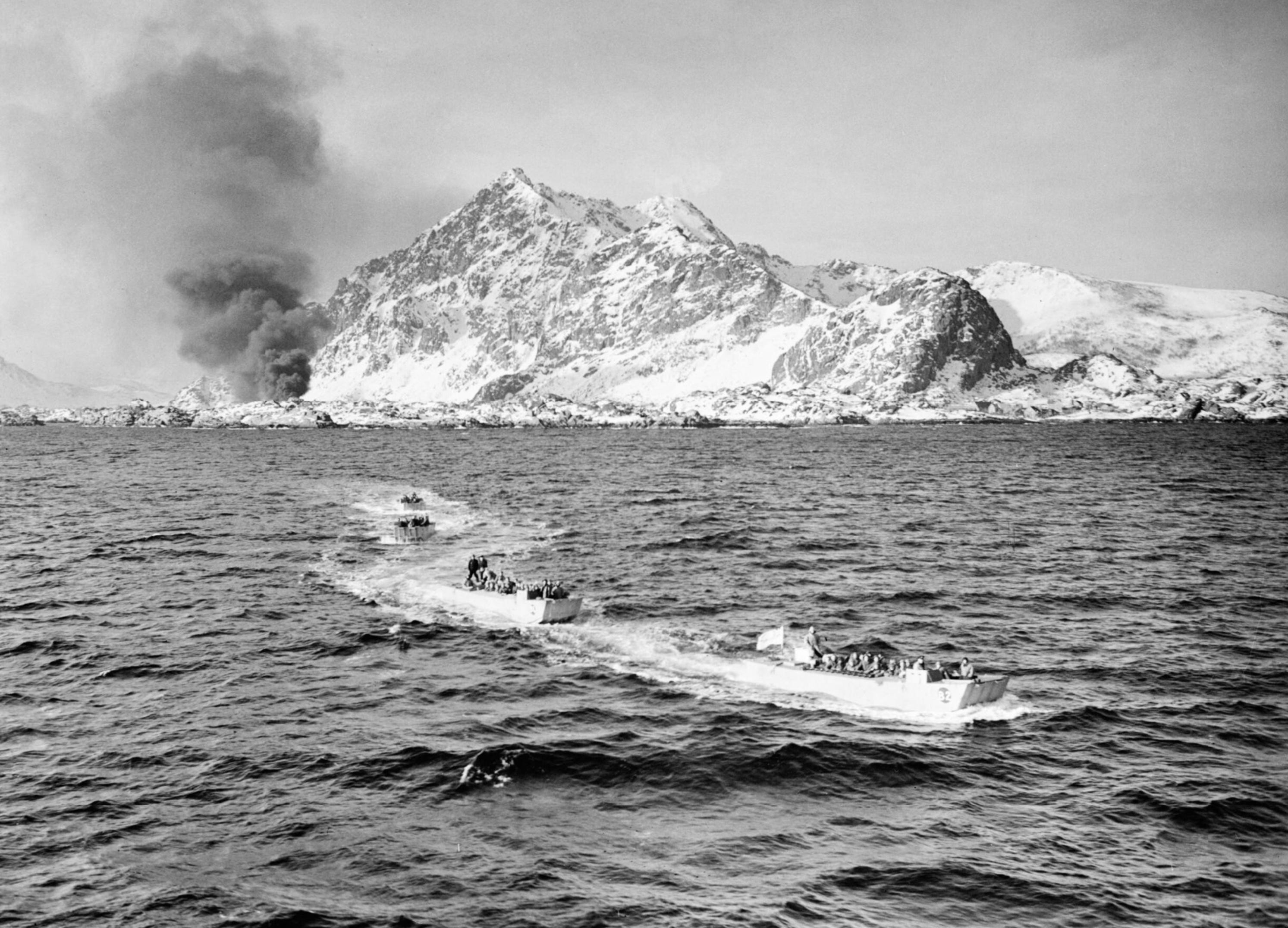
We had local pilots with us who knew the Lofoten waters. With their help, we were duly delivered to our objective off Stamsund at four o’clock on the morning of 4 March. The submarine Sunfish was in position to guide us. The weather was a little cloudy at first, but soon cleared. The Admiralty information regarding first light proved inaccurate, for instead of being pitch dark, as it should have been when we started our run-in from the Beatrix in the landing craft, it was broad daylight. I was in the leading landing craft which was commanded by the Flotilla Leader, a Canadian. He was worried about it being daylight instead of dark.
‘Will I give her the gun, Colonel?’ he asked me.
Our slow speed in daylight seemed to be bothering him. I shook my head.
We could not yet see the town as we approached the harbour mouth.
Suddenly, hundreds of small fishing trawlers poured out of the harbour. George Herbert, a Corporal now, was beside me.
‘There come the fishing boats, Colonel,’ he remarked, ‘dead on schedule.’
Every officer and man had been given the information contained in the intelligence summary. The Flotilla Leader was still nervous about the daylight.
‘How about giving her the gun now, Colonel?’
‘No: we’re doing nicely^ I said. ‘Let the fishing boats get out of the way’
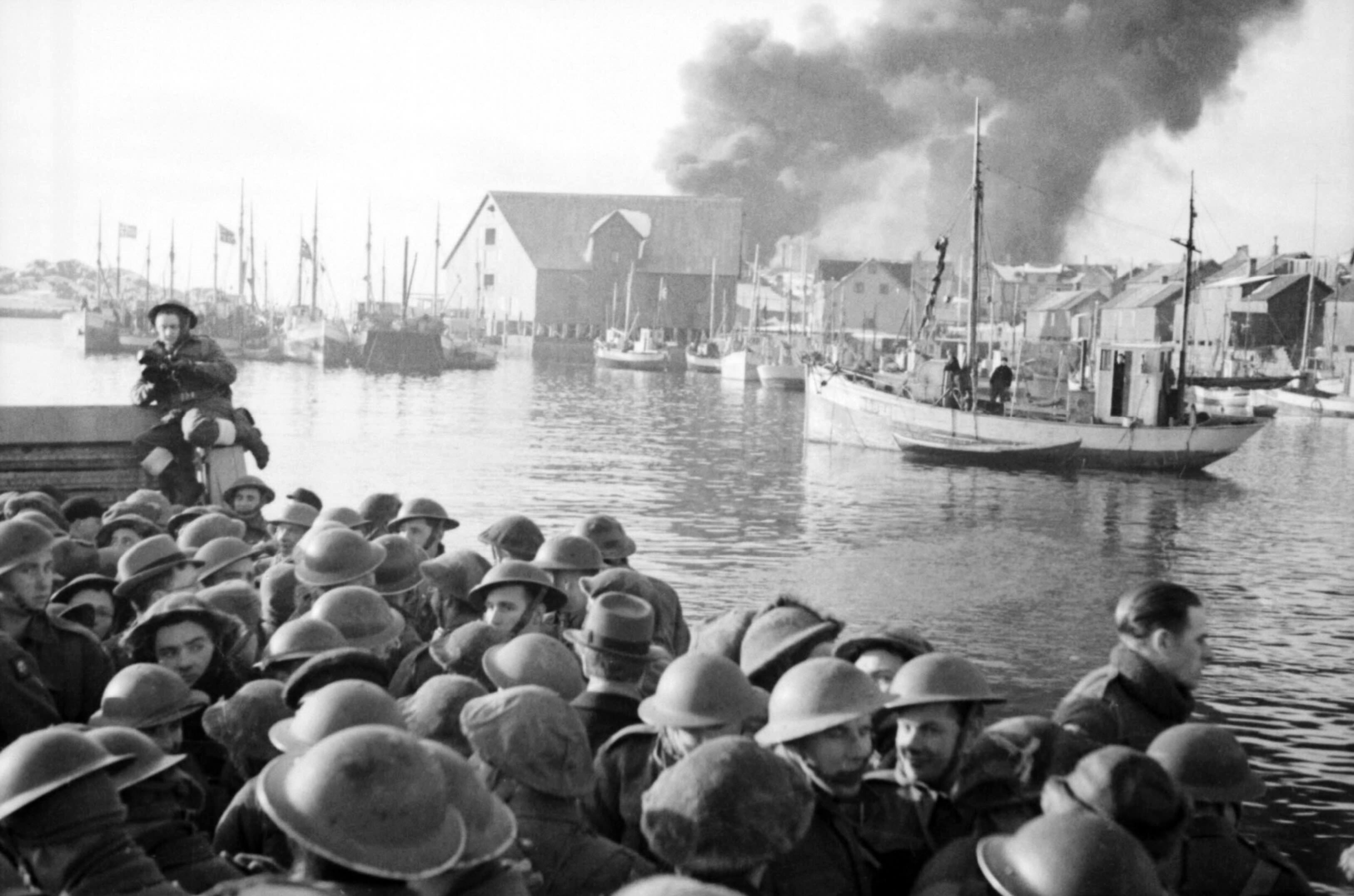
A destroyer fired a burst of tracer across the bows of the leading trawlers. The Captain didn’t want them to go out to sea, he wanted them under control but clear of the entrance which was merely a hundred yards across at the neck. In a few minutes the Lofoten fishing boats, sizing up the situation, had all hoisted Norwegian flags, an act which the Germans had specifically forbidden, and their crews joined in a great cheer of welcome. I felt good about that.
‘At least they seem to be on our side,’ George Herbert said.
It seemed as if our landings were going to be unopposed. At this moment, however, one of our destroyers, the Somali, sighted an armed German trawler pulling away from the harbour. Suddenly, the sound of gunfire shattered the early morning.
The threatened resistance soon faded. The Somali put the trawler out of the fight, killing fourteen and wounding five of her crew of twenty- four. Meanwhile, we went on with our landing.
The craft I was in snuggled up to a fish jetty. I jumped eagerly ashore, followed by my men. Perhaps I was too eager: I fell at the first fence, a long, three-feet-high pile of frozen cods’ heads. When I picked myself up, somewhat sheepishly, I looked up the main street of Stamsund. It was empty as air. Then, a moment later, someone appeared. It was the local postman, hurrying to greet us. He said something in Norwegian. I turned hopefully to Captain Martin Linge.
‘Ask him if there are any German soldiers in the town,’ I said.
‘He says no,’ Martin told me. ‘But there are Gestapo and German businessmen.’
‘Where are they?’
The postman, eager to help, used his hands excitedly while giving information. A police sergeant came up and interrupted him. They were both anxious to cooperate against the Germans. Between them they provided us with the addresses of all the Gestapo agents in the town. As each of my troops came along, I told them to go on to their planned objectives, the factories and installations to be demolished. The police sergeant was not content: he insisted on providing guides for them from his small force. I could see that Linge, who had not stepped on Norwegian soil for a long time, was keen to get around and talk to his own people.
‘May I go into the town, Colonel?’ he asked. ‘There isn’t enough for me to do here.’
‘Go ahead, Martin,’ I agreed. ‘Just leave one of your men to interpret for me. Do what you can to keep things friendly and report to me from time to time and let me know how things are going on.’
‘Right!’ he said, overjoyed.
The local police sergeant led my party to the police headquarters which was in his charge. The headquarters were in a long, low, wooden building facing the quay.
‘Would you like to use this as your headquarters while you are in town?’ the policeman asked hospitably.
‘Thank you very much, it’s just right.’ And I took over.
Everything was covered in deep snow. The town consisted of wooden houses and fish factories, these having large oil-storage tanks. There was a strong smell of fish, but because of the cold it was not objectionable. Behind the houses and the factories, a hill rose steeply to a height of several hundred feet. Everybody was cheerful and it felt very like an exercise.
He went to the post office and sent off a telegram addressed to A. Hitler, Berlin.
Fifteen minutes later I was standing in the doorway when I saw Lofty King and Bill Chitty, both big men [from our] unit of military police, forcing a prisoner along between them. Each had one of his arms. Squealing his protests, he looked and sounded like a fat pig being taken to slaughter. He wore a dark civilian suit. Lofty King saw me and grinned.
‘Here’s your top Gestapo boy, Colonel. What do you want done with him?’
Behind this ill-matched trio trailed a gang of locals, men, women, children and dogs, jeering, barking, laughing in delight. The Gestapo chap was cursing balefully in German. You didn’t have to understand the language to guess his feelings. I said: ‘Put him on a landing craft and send him right off to the Beatrix’ . The civilian police sergeant sighed, grinning. ‘He’s a bad swine,’ he declared happily. ‘I’m glad to see him go in good company.’
I had sent some men off under Charlie Head to take over the telephone exchange. Charlie knew very little about such matters but was remarkable at improvisation. He reported back to me by civilian telephone in good voice.
‘All ours,’ he announced.
Later, I heard that Lieutenant R. L. J. Wills had also become involved in a communication problem. He went to the post office and sent off a telegram addressed to A. Hitler, Berlin. It read:
YOU SAID YOUR LAST SPEECH GERMAN TROOPS WOULD MEET THE ENGLISH WHEREVER THEY LANDED. STOP. WHERE ARE YOUR TROOPS?
(signed)
WILLS 2-Lieut.
©John Durnford-Slater 1953 & 2020, ‘Commando: Memoirs of a Fighting Commando in World War Two’. Reproduced courtesy of Pen & Sword Publishers Ltd.

Affiliate Links
Recently on World War II Today ...

