

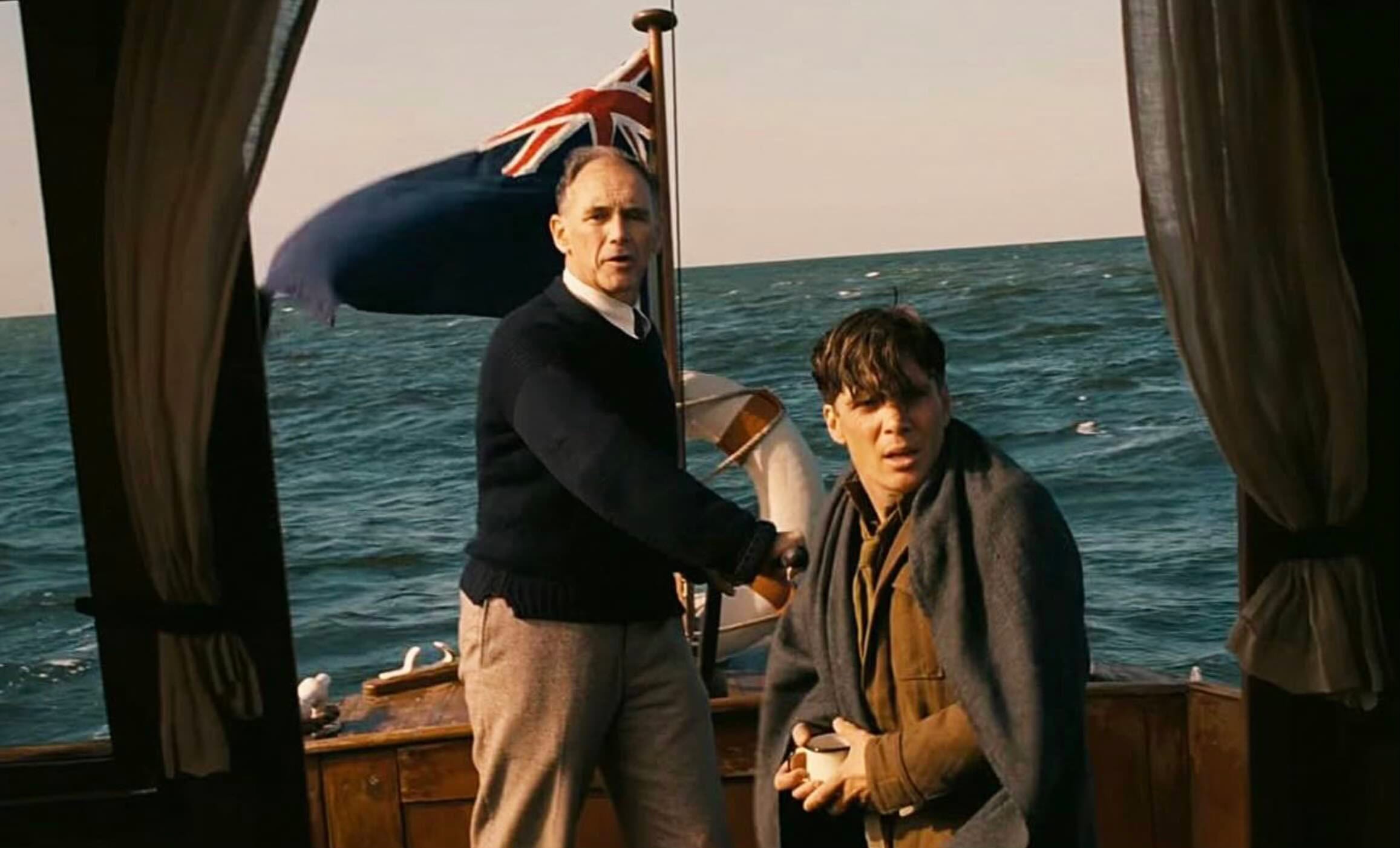
Not many people are familiar with the name Charles H. Lightoller, although most will have seen him portrayed on screen at some time. Lightoller was the Second Officer on the Titanic and the most senior officer to survive the sinking. This alone would make him noteworthy - he has been portrayed in at least eighteen different films, television series and documentaries, and even on stage. But in a career spanning over half a century at sea, including heroic roles in two World wars, Lightoller deserves to be better known.
Just published is Unsinkable Lights - Charles H. Lightoller’s Epic Tale of Hope and Survival, which seeks to do him justice. This is more than the story of one man. It is a picture of a different age, a maritime age still visible to us but rapidly slipping from view astern. Author Dustin D. Hyland has thoroughly researched the background to a succession of dramatic events. It is fascinating account, well told. The following excerpt is the tale of just one day in that life, when Lightoller took one of his sons and a Boy Seascout across the Channel, on his motor yacht Sundowner:
‘Hard to starboard!’ the elder Lightoller bellowed. Unlike Titanic, where steering commands were given in the opposite of the intended direction, the Merchant Shipping Act of 1932 dictated that the steering orders matched the planned movement of the vessel. Roger spun the helm, and the agile motor yacht altered course to starboard. The group observed a German sea mine only a few feet from the boat’s port side.
The Sundowner was barely clear of the mine when Lightoller spotted three Luftwaffe aircraft overhead. The Gleniffer diesel could only propel the former pinnace to 10 knots. To the pilots above, she appeared to be easy picking. Lightoller watched as the trio of fighter aircraft grew larger. Suddenly, the air exploded with gunfire.
Racing nearby, the 300-foot HMS Worcester – on her sixth trip to Dunkirk since the start of Operation Dynamo – opened her 4.7-inch anti-aircraft guns, and the three Luftwaffe aircraft fled toward the French coastline. The destroyer sustained damage from an aerial attack a few days earlier. It grounded in shoal water on her return trip from Dunkirk on 30 May. The damage had slowed her top speed, but she was still moving much faster – around 18 knots – than the Sundowner, quickly leaving the motor yacht in its wake.
Around 2.25 pm, Lightoller spied a nearby craft in distress. The motor cruiser Westerly, owned by Robert Arthur Bonham Christie, was on her return voyage to Ramsgate. Her crew of five – two rescued soldiers and three navy ratings – frantically tried to get the Sundowner’s attention. Bonham Christie was an affluent yachtsman and the only son of Mary Bonham Christie – dubbed the ‘Demon of Brownsea’ for her tyrannical and reclusive ownership of Brownsea Island. When Admiralty officials couldn’t locate Bonham Christie, they commandeered the vessel.
One of the boat’s engines had stopped working on the cross Channel voyage, and now flames leaped 10 feet into the air. Smoke soared from the 25-foot motor cruiser, and the elder Lightoller directed Roger to steer in the stricken boat’s direction. Lightoller discovered that the Westerly had over 200 gallons of fuel on board as the five members scrambled aboard the Sundowner. Now, with eight people on board, the motor yacht had scarcely left the Westerly when a massive fireball exploded into the air.
‘I went alongside and took them on board’, Lightoller recalled, ‘thereby giving them the additional pleasure of once again facing the “hell” they just left’. The Sundowner was safely away, but the explosion attracted another threat. The Junkers Ju 87, or Stuka, was a twin-seat dive bomber developed by Germany in the 1930s. Partially inspired by the American Curtiss Falcon, the gull-winged aircraft could fly at over 250 miles per hour and carried various bombs below its wings and fuselage. But it was in diving toward its target that the plane separated itself from other bombers. As the bomber dove toward its target, ram air sirens mounted near the aircraft’s wheels began to scream in what became known as ‘Jericho trumpets’.
Now Lightoller could hear the dreaded shriek of the trumpets as a pair of Stukas dove toward the Sundowner. The nose of the first bomber rose as it released its deadly payload. ‘Hard-a-port!’ Lightoller ordered.Roger spun the helm, and the bomb fell harmlessly to the starboard side of the motor yacht. A wave surged over the Sundowner’s main deck as the bomb detonated.
‘Hard-a-starboard!’ Lightoller, standing in the vessel’s bow, bellowed. Once again, Roger turned the wheel, and the bomb fell safely toward the craft’s port side. ‘The bomb landed this time only a very short distance away on the port quarter’, Ashcroft remembered. ‘Water came aboard from the bomb. We rolled heavily. Got out of it.’
Luckily, two bombs proved to be the most that the Luftwaffe was willing to waste on a small motor yacht, and the Stuka pilots flew away disheartened. Lightoller quickly exchanged his white hat for a black beret, realising that his peaked cap might make him a target for Luftwaffe pilots.
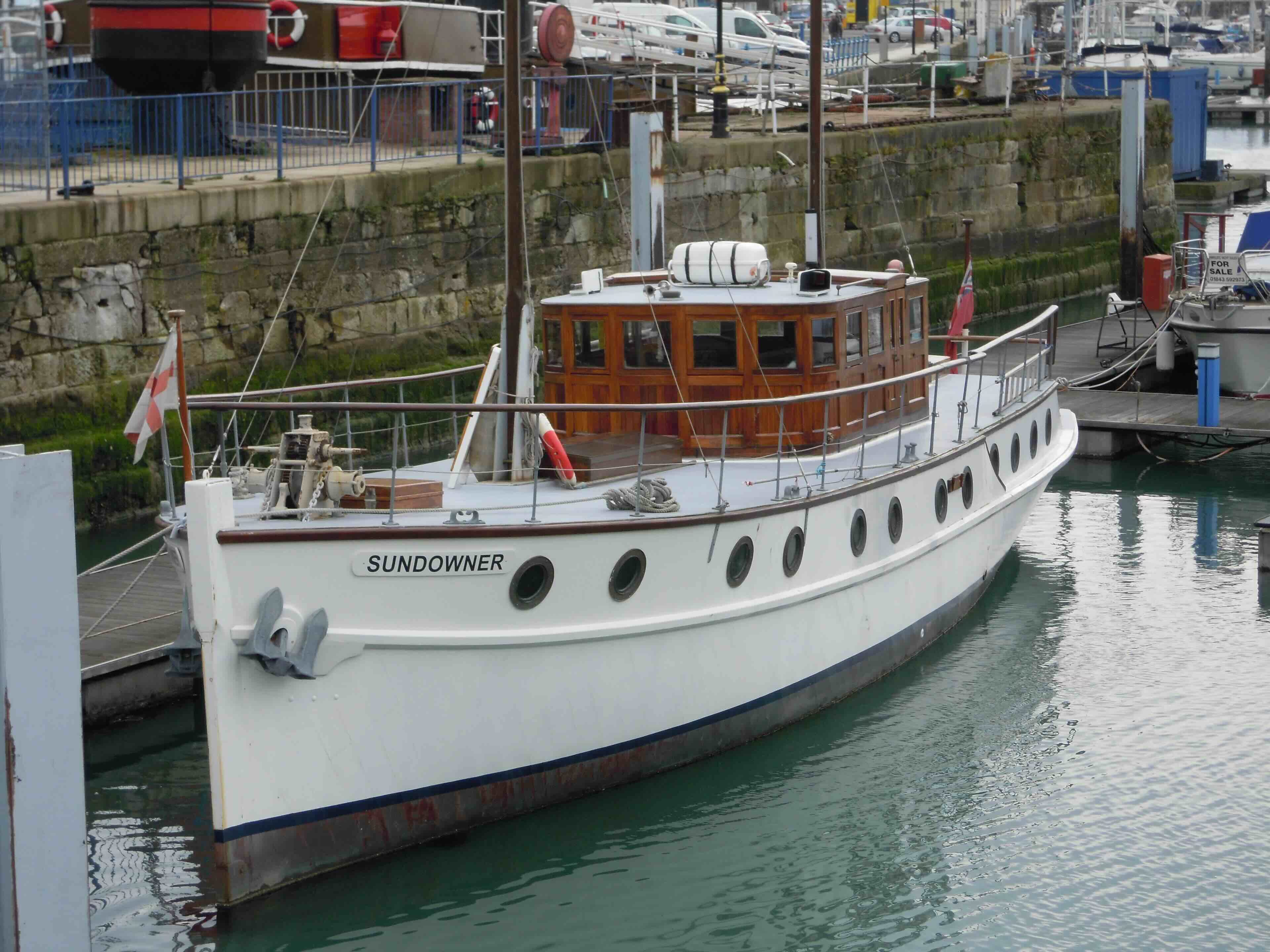
But the Sundowner was not out of danger yet. As the vessel approached Dunkirk harbour, a new airborne menace emerged. Sharing the skies with the Stukas were the infamous Messerschmitt Bf 109s. Like the Stukas, the single-seater 109s cut their teeth during the Spanish Civil War. They used that experience to their advantage over Dunkirk and the Channel. Powered by an 1,800 horsepower Daimler-Benz V-12 engine, the fighters could reach speeds of nearly 400 miles per hour and carried an assortment of guns, bombs, and rockets. Now, a single 109 had the Sundowner in its crosshairs.
Luckily for the motor yacht and its eight occupants, Lightoller knew the Messerschmitts’ fatal tic. His late son Brian learned in flight school and once shared with his father that the 109s were required to lift their noses slightly just before firing their 20mm cannons. It was a trait that the former mariner-turned-chicken farmer hoped to exploit. The single 109 bore down on the Sundowner, and Lightoller waited. As the nose began to rise, he made his move. ‘Hard-a-starboard!’ The motor yacht heeled to starboard, and towers of seawater sprayed on its port side as the rounds missed their mark.The fighter swung around for another try at the 28-year-old vessel. The process repeated itself with the Sundowner making a last-second turn to port. ‘The bullets came flying down the starboard side’, Ashcroft remembered. ‘That was the start of the fighter planes. After that, they accompanied us pretty well to the harbour entrance’.
Like the Stuka pilots before him, two failed assaults proved enough, and the 109 moved along to easier targets. The elder Lightoller knew his beloved craft well, and he noticed that the agile boat was becoming lethargic as she evaded enemy aircraft. He left his perch at the bow and went below decks to investigate. While the bombs dropped by the Stukas had not directly found the Sundowner, their concussive blast had opened a few of the diagonal seams along her teak hull. Lightoller descended to the engine room, located amidships, beneath the pilot house. Water poured through the seams and started collecting in the vessel’s bowels. To counter the seawater incursion, the elder Lightoller turned on the bilge pump, hoping it would be enough to keep the seawater in check.
For Roger, standing at the motor yacht’s helm, plotting a course for Dunkirk harbour was not difficult. Ahead of the Sundowner, massive pillars of smoke rose from the oil tanks that the Luftwaffe had bombarded. When the vessel arrived near Dunkirk around 3.00 pm, officials no longer used the beaches to load ‘Tommies’ onto ships. Instead, the two breakwaters, the West Mole and East Mole, were tasked with evacuating troops. The carcasses of ships were strewn all over the harbour, and Roger cautiously picked his way through the debris and approached the West Mole.
‘Time and time again, boats were blown to smithereens. The place was strewn with wreckage’, Lightoller later wrote. As the Sundowner approached the moles, a large transport ship passed by and came under attack from the air. Stukas swarmed the vessel and dropped their payloads. Despite damage, the transporter continued to surge ahead.
Thousands of troops crowded the beaches and the narrow moles, anxiously awaiting rescue. It was low tide when the motor yacht reached Dunkirk, and Lightoller looked up at the towering West Mole. The West Mole was unusable due to nearby oil refinery fires, and it would be far too challenging to embark from there, so he instructed Roger to move to the East Mole instead. At the 1,600-foot-long East Mole, the Sundowner pulled near the quarter of the HMS Worcester, the same warship that had used her anti-aircraft guns to chase the Luftwaffe away from the motor yacht just hours before. The plan was for the troops on the overloaded Worcester to transfer aboard the Sundowner.
As Lightoller readied for the arrival of the ‘Tommies’, Worcester’s anti-aircraft guns opened another bombardment on the Luftwaffe. Once the guns had fallen silent again, Lightoller approached the warship’s skipper, Commander John Hamilton Allison. Allison had commanded the Worcester since March 1940. The commander and the Worcester rescued 509 troops from the beaches during her first voyage to the French port. Despite a destructive air raid in Dunkirk the following day, the destroyer rescued another 800 soldiers on her subsequent journey, barely escaping before another Luftwaffe attack. The warship returned around the same number of troops to Dover during her following three rescue missions.
Now, with time running out before the Nazis closed in, nearly 1,000 soldiers crowded her decks and interior spaces. ‘How many can you take?’ the destroyer’s commanding officer asked Lightoller. The Sundowner had once held twenty-one people during her Baltic voyage. Still, with the beaches and piers full of soldiers waiting to return to British soil, Lightoller reckoned he could fit a few more onboard. ‘Oh, about a hundred’, Lightoller replied. Allison was stunned. ‘Are you sure?’ the commander asked sceptically. Lightoller nodded. ‘Go ahead, take all you can’.
Lightoller ordered Gerald Ashcroft to stand on the roof of Sundowner’s wheelhouse and create a battle dressing station. Meanwhile, Roger would oversee the loading of troops below decks. Soon, the former White Star Line officer supervised the troop embarkation onto the Sundowner, and a naval rating counted the soldiers as they arrived. The first to embark was a 28-year-old Royal Navy Reserve officer, Sub-Lieutenant Charles Jerram. Jerram commanded the motorboat Skylark, but the Luftwaffe attacked the 40-foot vessel, and the Worcester rescued Skylark’s three-person crew on her way to Dunkirk. Once aboard the Sundowner, the starving sub-lieutenant raided the motor yacht’s pantry and found the only remaining food – a mouldy piece of apple pie. He promptly inhaled the dessert.
Filing behind Jerram were dozens of ‘Tommies’ – exhausted and anxious to get off the beaches of France. Soon, it became clear that the soldiers’ equipment would take up too much room and add precious additional weight to the vessel. Lightoller ordered the men to remove their gear and throw it into the harbour. Reluctantly, the equipment made its way into the drink. Roger requested the ‘Tommies’ lay on the deck and atop each other to maintain the vessel’s stability and maximise the number of troops the boat could carry.
Among the soldiers was Private Reginald King, a Malvern native who served with the British Expeditionary Forces. King embarked on the Worcester, but with the destroyer at capacity, the 21-year-old and some of his fellow soldiers were ordered at gunpoint to climb over the side to the waiting Sundowner. In his youth, King had hoped to join the Royal Navy. However, a voyage in a small boat made him seasick, so he enlisted in the Territorial Army instead. After Britain declared war, he was mobilised and soon found himself with the regular army in France. The 300-foot destroyer dwarfed the 58-foot motor yacht, and perhaps Private King had thoughts of his previous seasick voyage as he embarked the Sundowner. The private was among the first to arrive onboard and found himself crammed below decks near the bow on the vessel’s starboard side.
When the count reached fifty, Lightoller shouted to Roger to see how many more he could accommodate below decks. ‘Oh, plenty of room, yet’, came Roger’s enthusiastic reply. And so, the embarkation continued. At seventy-five, the elder Lightoller queried again. Roger confessed it was becoming crowded but mentioned that he had squirreled away three additional soldiers – two in the now empty bathtub and one on the toilet. Despite the dangerous situation and the constant barrage of Worcester’s anti-aircraft guns, the elder Lightoller hadn’t lost his sense of humour. ‘I hope the men in the bath haven’t got their boots on’, Lightoller joked. In fact, in addition to everyone’s helmets, weapons, and other equipment, their boots also found their way into the water.
At seventy-five soldiers, Roger ran out of room below decks, and the focus shifted to the main deck, with another forty-seven soldiers finding refuge. Including the 3 men who brought the Sundowner from Ramsgate that morning and the 5 rescued from the Westerly, the motor yacht now held 130 souls. ‘We once had 21 on board and I thought that was somewhat of an achievement’, Lightoller later wrote to his brother-in-law, Vermont. ‘Still I reckoned we might manage 50 or 75, but I never imagined in the wildest flight of imagination thought we could pack that number’.
Whether Lightoller thought of Titanic’s half-loaded lifeboats as the Sundowner overflowed with troops is unknown. Perhaps it was the faces of the young soldiers that reminded him of his son, Trevor, that prompted him to continue loading the motor yacht well beyond its intended load. With the vessel loaded to capacity, it was time to cross the Channel again. It was late afternoon when the Sundowner began her journey back to Ramsgate.
© Dustin D. Hyland 2026, ‘Unsinkable Lights - Charles H. Lightoller’s Epic Tale of Hope and Survival ’. Reproduced courtesy of Pen & Sword Publishers Ltd. N.B. The above images are not from this volume but are courtesy of Warner Bros. and Stavros1, Wikimedia.

Affiliate Links
More from World War II Today ...

Follow the Dunkirk sequence of stories by using the NEXT button at the bottom of each post …

