

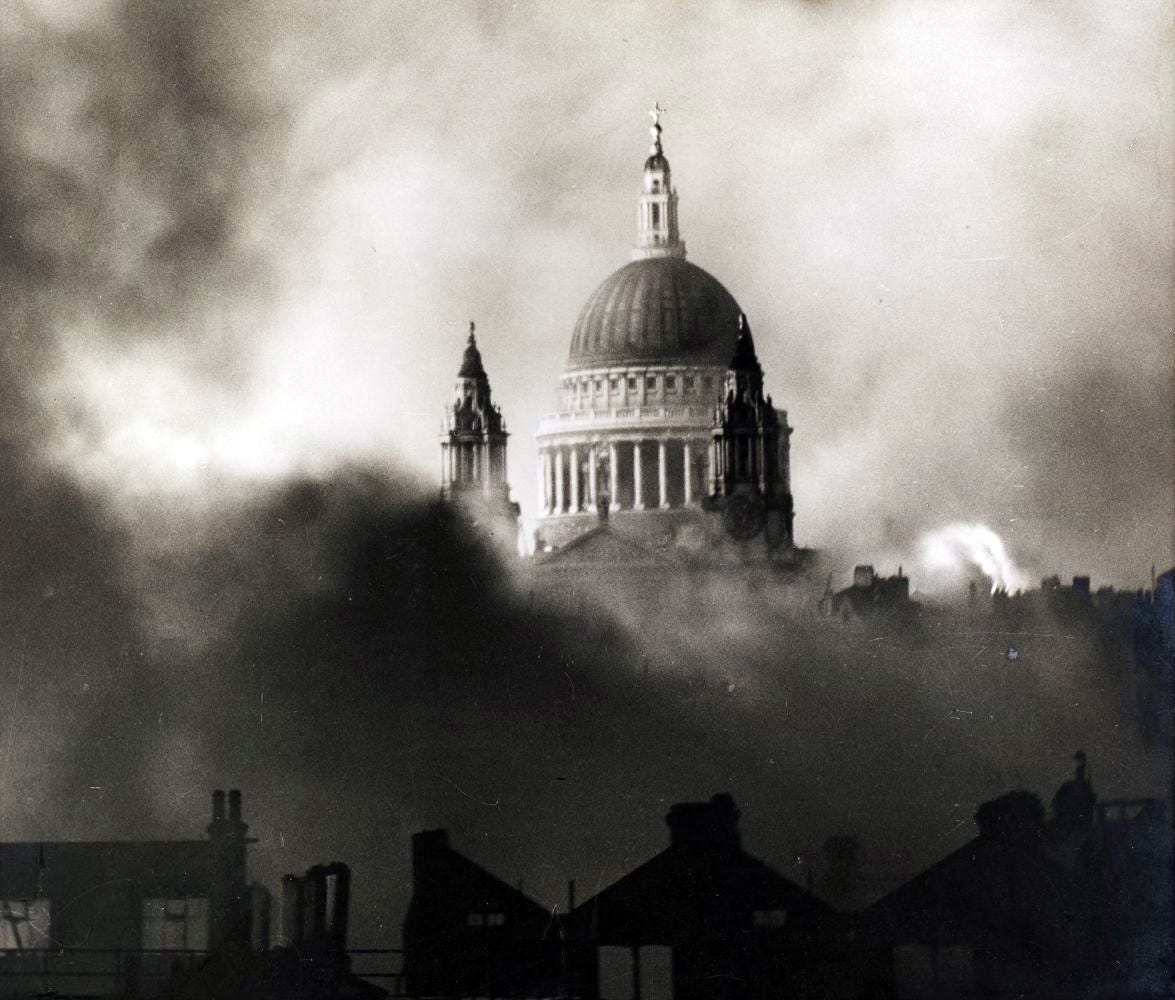
The lull in the blitz over the Christmas period came to an abrupt end on the evening of the 29th. It was not an exceptionally heavy raid compared with several earlier raids, when more bombs had fallen. That so many fires took hold was largely because the raid was on a Sunday evening when the commercial area of the City of London was mostly unoccupied, without the usual fire-watchers on every building.
If incendiary bombs were tackled as soon as they fell they caused little damage. This required sufficient people to be in the immediate vicinity and to reach the burning bomb within the first few minutes. With most of the city's buildings locked up and vacant, numerous fires soon broke out in the roof spaces of adjacent buildings and then merged into enormous conflagrations. The problems faced by the fire Brigade were exacerbated by a low tide on the Thames, making it difficult to draw water to fight the fires.
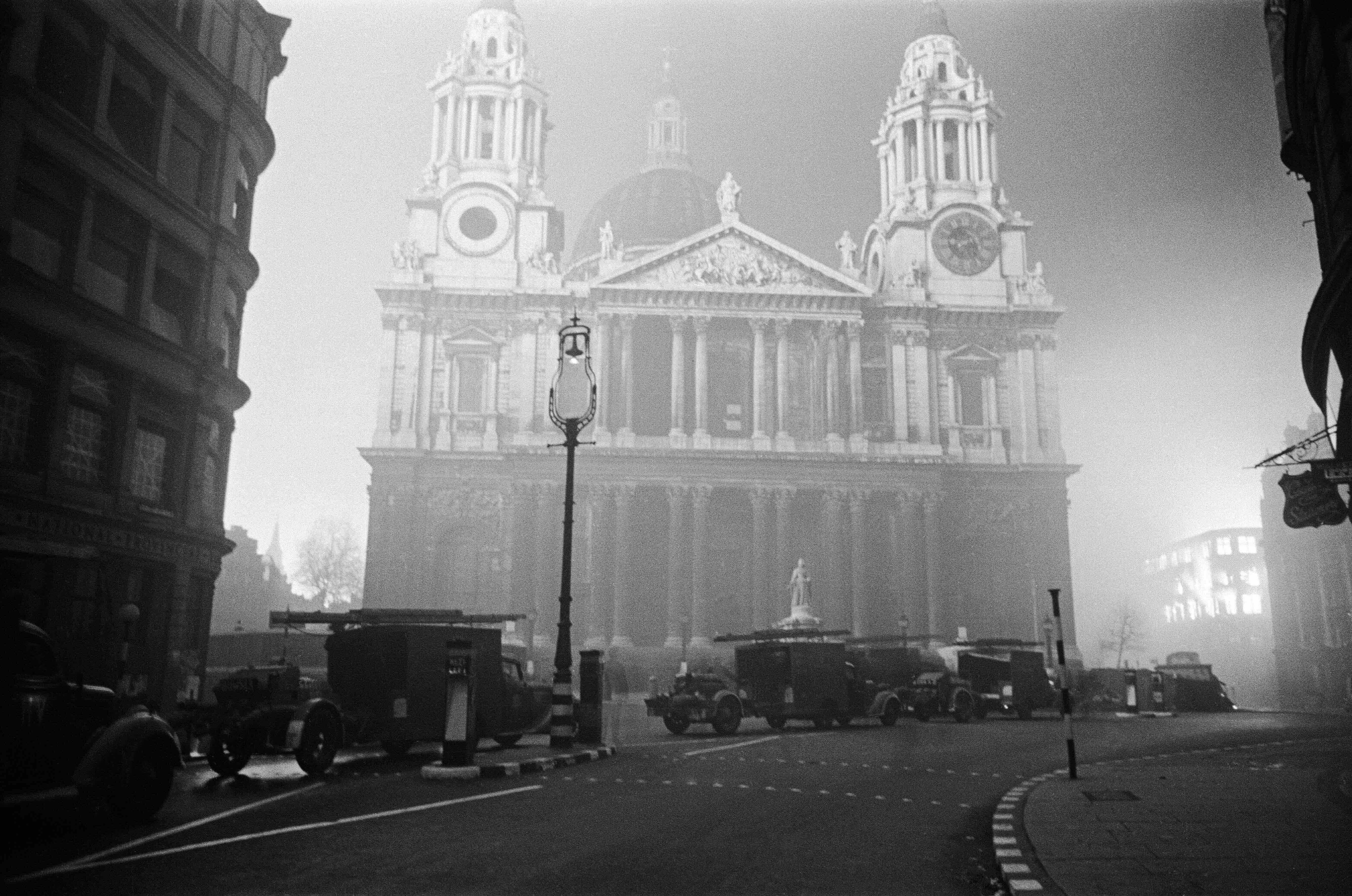
By contrast, there was a vigilant team of fire-watchers at work from the start in St Paul’s Cathedral. They were on hand to deal with the 28 incendiary bombs that fell on the building. But it was only luck that prevented the one incendiary bomb that just penetrated the dome from setting the whole building alight. The dome of St Paul’s is mainly a wooden structure covered with lead, so is highly combustible. Fortunately the bomb, having lodged in the roof, then fell outwards rather than inwards, and was swiftly dealt with.
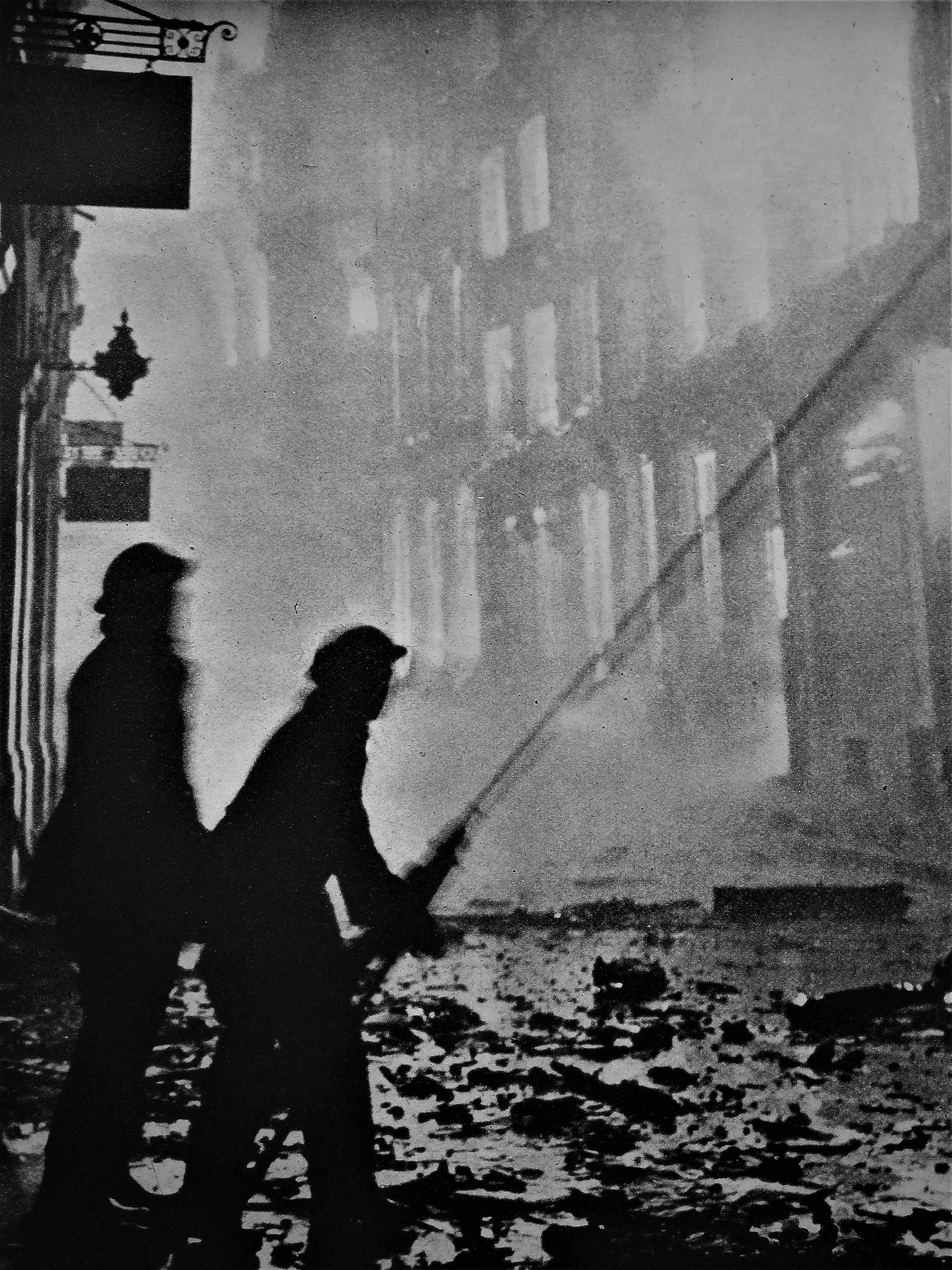
The journalist Ernie Pyle1 described the evening for an American audience:
You have all seen big fires, but I doubt if you have ever seen the whole horizon of a city lined with great fires - scores of them, perhaps hundreds.
There was something inspiring just in the awful savagery of it.
The closest fires were near enough for us to hear the crackling flames and the yells of firemen. Little fires grew into big ones even as we watched. Big ones died down under the firemen’s valor, only to break out again later.
About every two minutes a new wave of planes would be over. The motors seemed to grind rather than roar, and to have an angry pulsation, like a bee buzzing in blind fury.
