

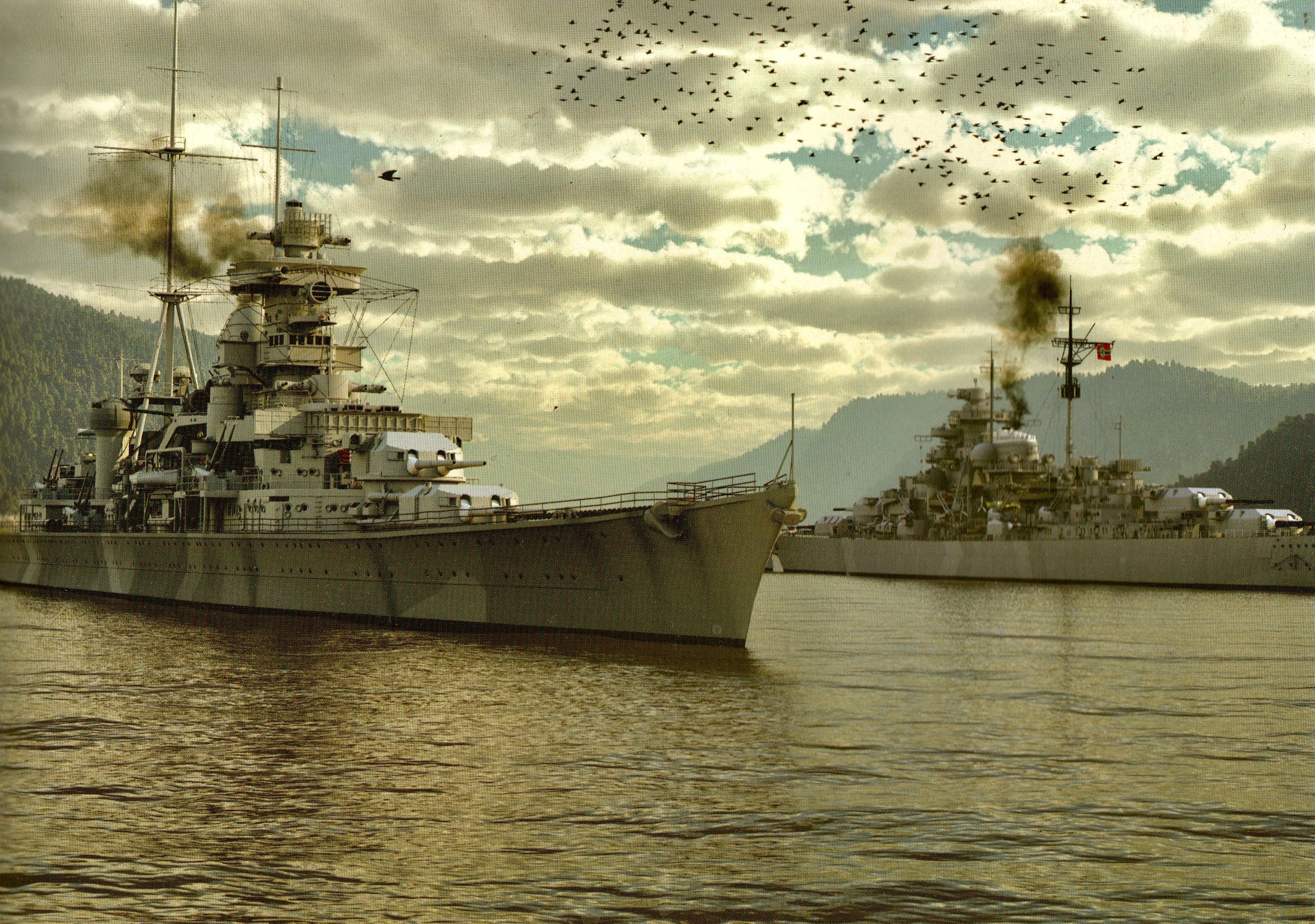
Hitler had high hopes for the Bismarck, the largest and most modern battleship yet built, in May 1941. When he reviewed the plans for Operation Rhine and the ship in port, he hoped she could deliver a devastating blow to the convoys of merchant ships that brought vital supplies from America to Britain during the Battle of the Atlantic. Could surface raiders be as effective as the U-boats? Even though she cost a hundred times more than a U-Boat, there were those in the Kriegsmarine, including the Admiral in charge of the operation, who doubted it. Acting alone, Bismarck might just be a hugely desirable target.
But there remained the hope that Bismarck might get away with it. Given the right weather, she might well be able to evade observation by aircraft. She was located in Norway by the RAF, but then a period of uncertainty followed. Was she still there or had she sailed? Another aircraft established that she had gone, but "where to?" was then a matter of educated guesswork. The deployments of the Home Fleet rested on such a guess.
The Bismarck might have the firepower to keep many a smaller ship at a good distance and the speed to outrun them. But could she really disappear over the horizon? When she was finally located north of Iceland by the cruisers HMS Suffolk and HMS Norfolk, this possibility was put to the test. The threat of her firepower certainly kept the two tracking ships at bay. The weather also allowed her to periodically disappear into rain squalls. She disappeared from direct sight at least. But there was now a new development that had not existed when she was on the drawing board at Blohm & Voss.
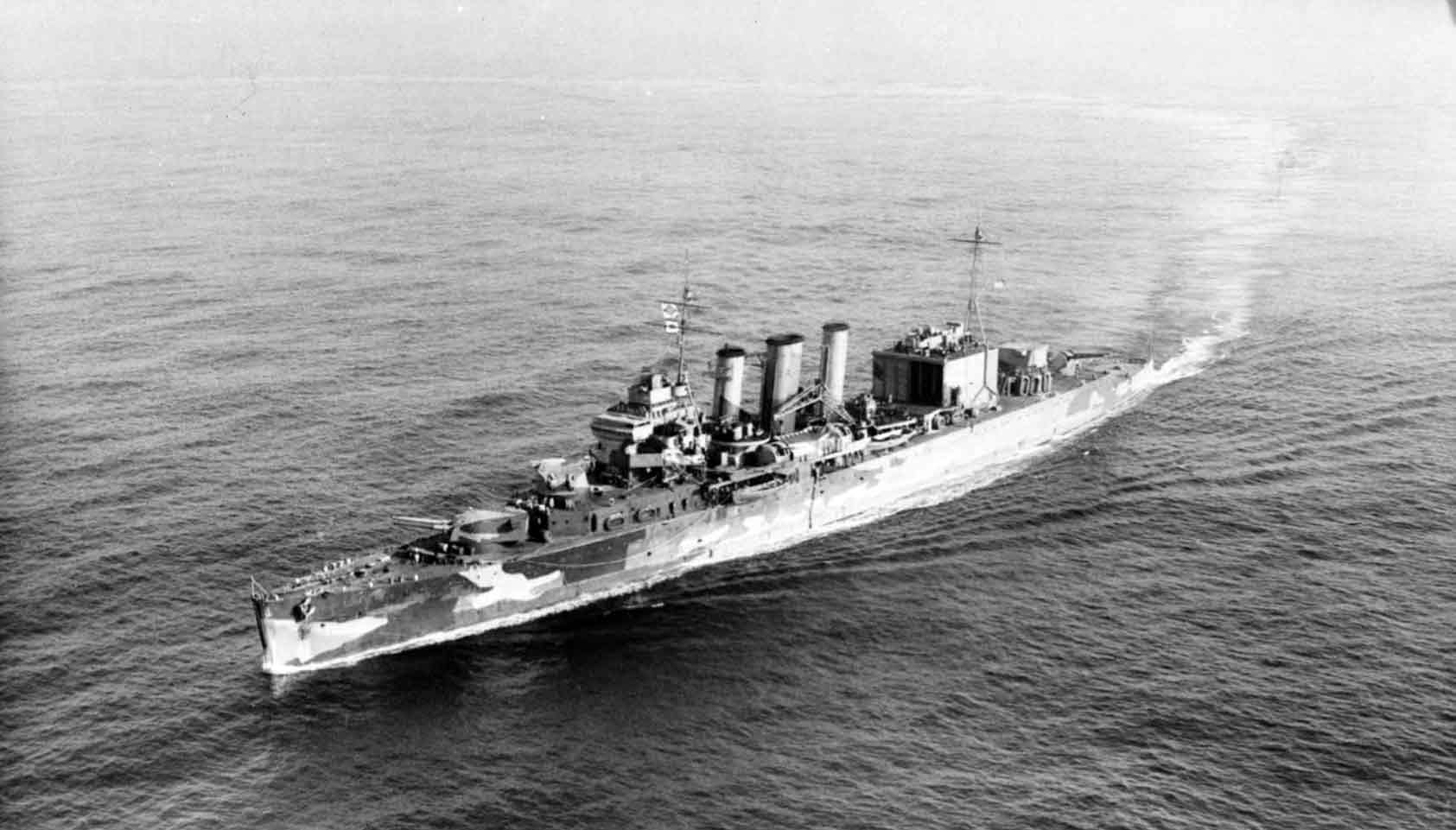
Alan Raven’s comprehensive ‘British Cruiser Warfare’ is a day-by-day history of the individual actions of cruisers during this period. Historians of naval warfare at this time have praised it.
The following extract focuses on the best-known naval engagement of the period and highlights the innovative use of radar, recently installed on the cruiser Suffolk:
The Bismarck episode was the first instance in history where extended tracking of surface targets was made by radar, and not by a dedicated surface-warning set, but by a gunnery set fitted on the Suffolk. This ship had very recently become operational after a ten-month repair, at the end of which, she was fitted with a Type 279 air-warning set, and a Type 284 gunnery set. The aerials for Type 284 were attached to the roof of the main director, which had to sweep to allow the radar set to perform a search. Although not designed to operate in a search mode to allow radar coverage, this could be done, but in a judicious manner, because constant training of the director would have a negative effect on its mechanism.
On the 23rd, before making contact with the Bismarck, the Type 284 set was being used as a navigational aid, allowing a patrol distance to be maintained within 24,000 yards off the ice shelf, when visibility ranges were less than eight miles. Although the first sighting was at 1922, it was not until 1934 that radar contact was made. Of the six initial sighting reports sent to the Admiralty, five were based upon data from the Type 284 radar.
From 2043 to 2154, Bismarck was within visual range that varied from 15 to 18 miles. At 2154 Bismarck entered a rainstorm at a speed of 28 knots and was tracked and held by the 284 until visual touch was regained at 2258.
The above will give the reader an idea of how effective Type 284 radar was for tracking targets in very poor weather, in spite of not having automatic all-round sweep ability, as many later surface-warning sets had. When the Bismarck was in visual contact, the radar was not used for tracking in order to reduce the wear on the training mechanism of the director. Shadowing by a combination of visual and radar continued until about 0326 on the 25th, when radar contact was lost. From the time of first sighting at 1922 on the 23rd to 0326 on the 25th when contact was lost, the Bismarck was at no greater a distance from Suffolk than 18 miles.
The use of Suffolk’s radar was not only the first time that radar had been used for an extended period of time for tracking surface targets, but also the longest ever recorded! Throughout, the set performed well, without any breakdowns, and was a superb example of tactical use made without any prior training or written procedure laid down.
The use of Type 284 in its designed function was mixed, but when Bismarck tried to ambush the Suffolk between 1805 and 1855 on the 24th, Suffolk made use of her Type 284, first to avoid, and then when firing her 8in guns in return fire, she obtained a straddle at a range of 20,700 yards using radar ranges.
The successful use of this set highlights well the somewhat poor performance of Type 286m radar as was fitted in Norfolk. This had been installed in the ship at the end of the first week of May. There had been problems in getting Type 286m to properly perform; all the spare valves had been used and as a consequence, when the ship sailed from Scapa Flow to patrol the Denmark Strait, this set had to be ‘nursed’, meaning that it had to be shut down periodically.
In addition to being nursed, the range on a large ship was only about 14,000 yards, compared to the 26,000 yards of Type 284, but its greatest deficiency was the fixed aerial array that was fitted at the masthead. In order to track a target the ship itself had to be steered in the direction of same, so that when Bismarck made turns, especially toward the ship, contact would of course be lost when the tracking vessel had to turn away. Also, its poor resolution made it unsuitable for gunnery purposes.
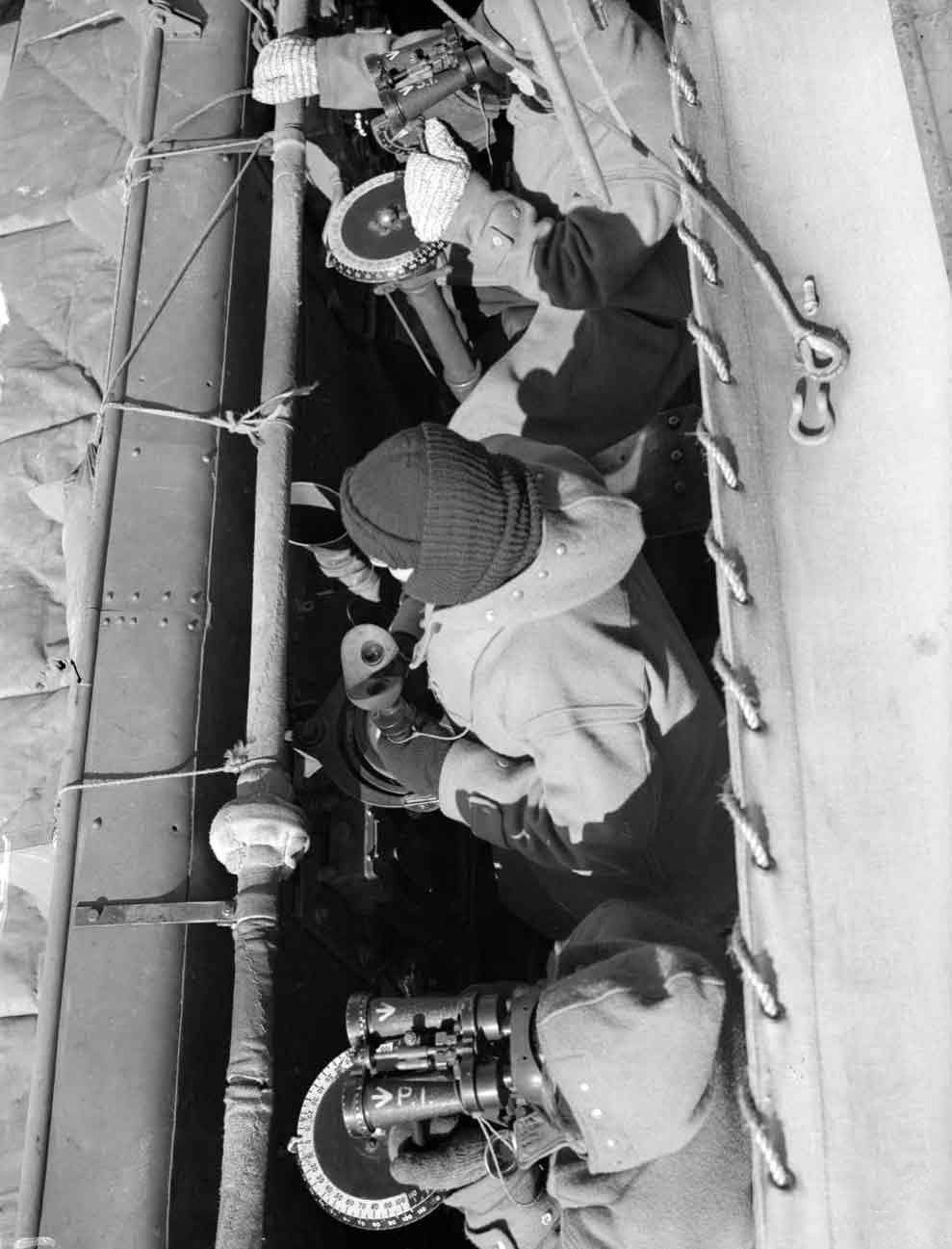
In many respects, the very concept of a "Battleship" might appear to be out of date by this time. Since the turn of the century torpedoes, submarines and aircraft had revealed their vulnerabilities. But naval strategists had clung to the notion of invincible ships, now with ever thicker armour and a wide range of countermeasures to deal the new threats.
The Bismarck episode illustrates how evolving technologies were challenging these ideas. She was located and tracked first by radar and then by aircraft.
With the benefit of hindsight we can see that it was the combination of radar and naval air power that saw the end of the battleships. The outcome of Operation Rhinubung was just the proof that they could not outrun the new realities.
But can we assess the likelihood of a successful outcome on what the Germans knew before the Bismarck set sail?
Was it was ever a realistic proposition for the Bismarck to make a surprise break out into the Atlantic, suddenly appearing to wreak devastation on merchant ships? It was even more unlikely that she could safely return to Germany once she had broken cover. She would have had to fight her way back past the Royal Navy on full alert and ready for vengeance, either up the English Channel or back down the North Sea.
Ultimately the Bismarck was the wrong ship to send on a raid on commercial shipping. She would inevitably become a high-priority target wherever she roamed. But Nazi Germany didn’t really have another role for her.
©Alan Raven 2019, ‘British Cruiser Warfare’’. Reproduced courtesy of Pen & Sword Publishers Ltd.

Affiliate Links
Recently on World War II Today ...

