

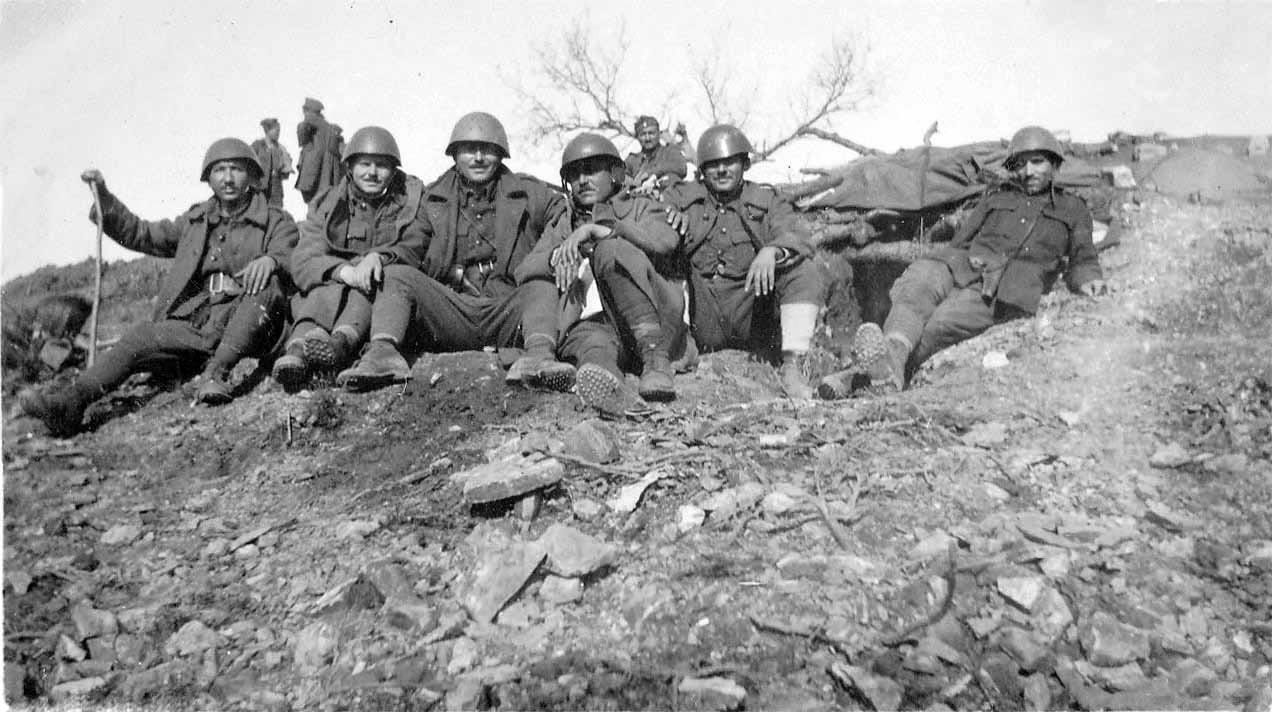
In October 1940, Mussolini decided to surprise Hitler by embarking on his own military adventures; predominantly rural Greece was surely a pushover for the relatively modern Italy. It was Mussolini who was surprised by the strength and purpose of the Greek resistance. In the deep snows of the high mountains of northern Greece, the poorly equipped but fervently patriotic Greek Army trounced the Italians and pushed them back into Albania. But everything changed when Hitler intervened.
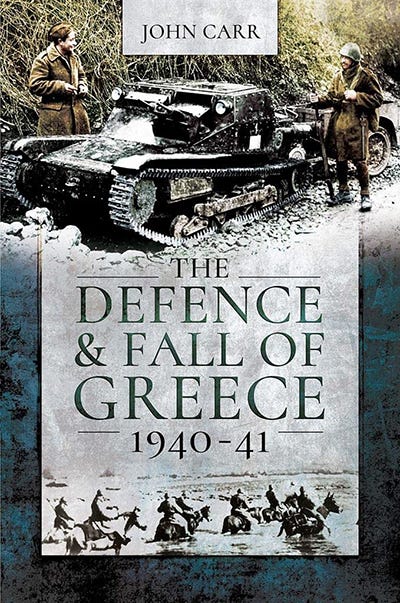
John Carr’s comprehensive account of the war, The Defence and Fall of Greece 1940-1941, tells the story from the Greek perspective. First published in 2013 and reprinted several times since, this history uses many Greek sources that had not previously been translated into English. He incorporates eyewitness accounts from front-line soldiers as well as the diaries and memoirs of generals and politicians.
Eyewitnesses saw Koryzis emerge ashen-faced …
The following excerpt takes up the story in the last few tragic days of the war, when the Greek government had to face up to the reality that the Greek armed forces, even supported by the British, were impotent to resist the overwhelming strength of the Wehrmacht, and that the Nazis were about to envelop their country.
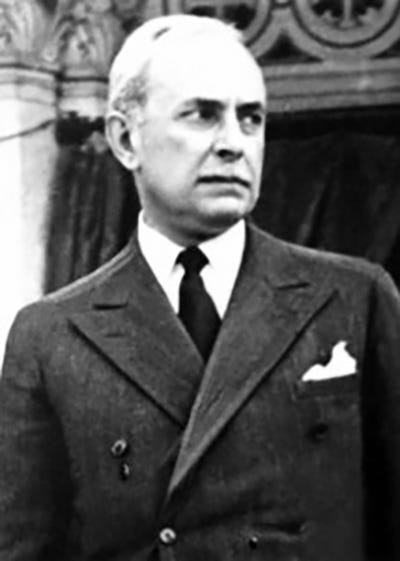
There were many personal tragedies, not least the unfortunate Alexandros Koryzis, who had felt obliged to accept the role of Prime Minister only when the King asked him, upon the untimely death of his predecessor at the end of January:
Koryzis was deathly tired. He confessed to King George that, as the Germans had now invaded and would in all likelihood occupy Athens, he had failed as prime minister; all he wanted to do was to resign. The king admonished him stiffly that this was no time for a prime minister to lose his nerve and leave the country without a government; indeed, he should consider himself a front-line soldier and keep fighting to the end. But Koryzis was adamant. He was neither a politician nor a soldier, but an ex-banker. He wanted out. Others could carry on the struggle in his place. But neither would the king budge. He ordered the hapless prime minister to stay in his post. At that, Koryzis stooped to kiss the king’s hand and said he had to go home ‘for some business’ .
Eyewitnesses saw Koryzis emerge ashen-faced, and without a word, pick up his hat and coat and exit the hotel almost at a run. Prince Peter encountered him at the front door. I managed to get a glimpse [the prince wrote], through the glass door, of his face, haggard with anguish. I thought of how weary he must be with all the responsibilities loaded on him at these critical moments. Koryzis got into his car and was driven home.
The king emerged and buttonholed his brother and heir, Crown Prince Paul, and told him that something in Koryzis’ attitude worried him and he wanted to make sure his prime minister was all right. Paul drove to Koryzis’ house, to be met by the prime minister’s distraught wife. Her husband had come home ‘very sad’ , she said, and had locked himself in the bathroom. At that moment a pistol shot sounded from inside. Prince Paul burst in to find Koryzis dead, with a bullet in his head, lying in a widening pool of blood. It was the afternoon of Good Friday, the saddest day in the Greek Orthodox calendar.
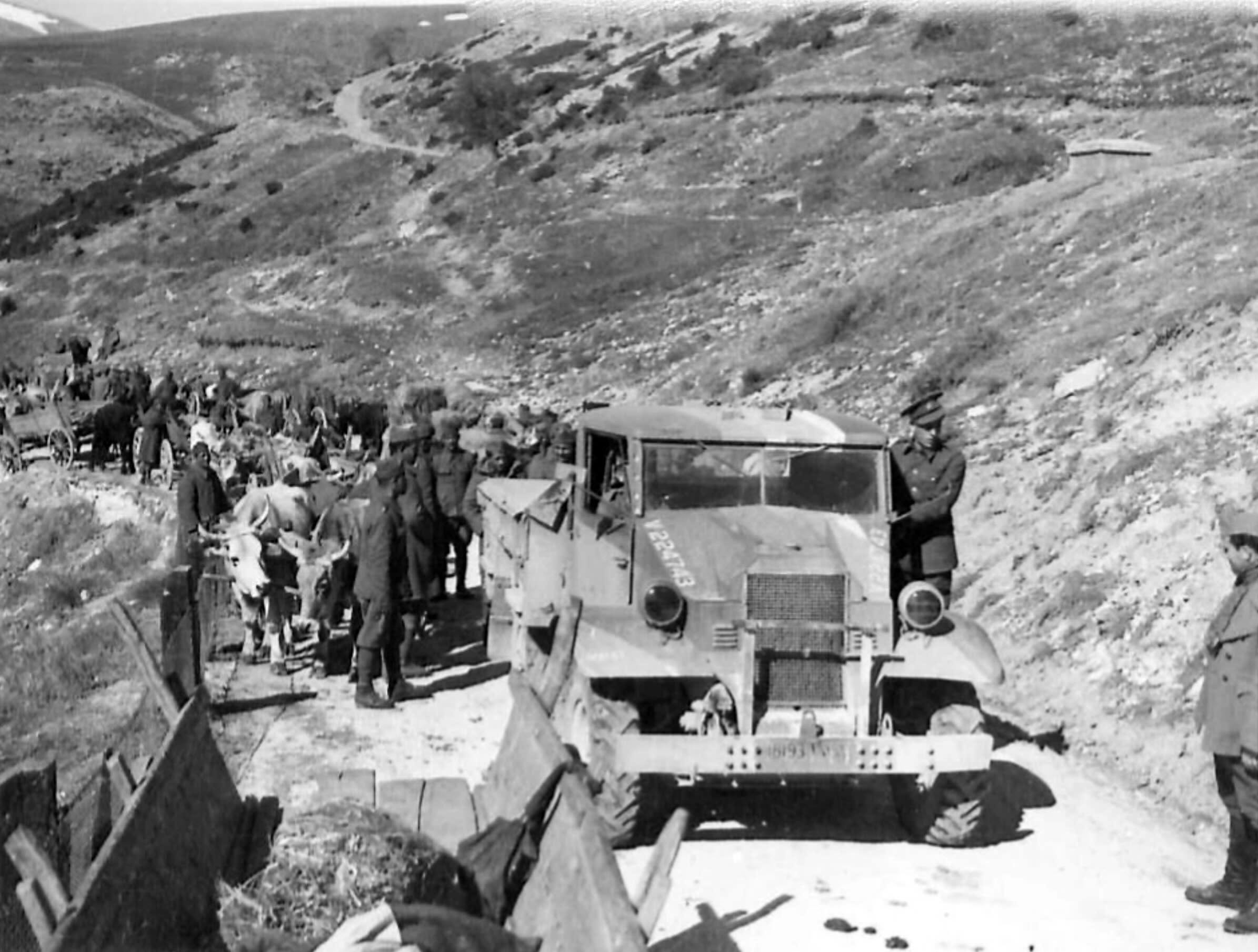
Koryzis’ suicide climaxed the intense depression that seized the entire country. Morale in the RHN [Royal Hellenic Navy] was now crumbling, along with that in the army. With the King George knocked out, Rear Admiral Mezeviris transferred his flag to the Queen Olga, but he hardly had time to settle in when a mutiny on the destroyer Aetos occupied his attention. Lieutenant Commander Ioannis Toumbas, who has masterminded the scuttling of the shore batteries at Thessaloniki, was sent to the Aetos to restore order after the captain and two senior officers had walked off. Addressing the surly crew from the bow, Toumbas said he didn’t want to have to arrest anyone at this critical stage, so ‘any member of the crew who doesn’t realize his duty should leave this ship now. Those who stay will continue the fight out of the country’ . All but three of the Aetos’ petty officers and half the ratings promptly left the ship.
Some of the mutineers had sabotaged some of the anti-aircraft guns (though not irreparably). Among them was the ship’s purser, who was stopped at the gangplank and found to be carrying a case full of the ship’s money; the man was court-martialled and shot. The ugliness also spread to the crews of the Spetsai, but it was nipped in the bud with harsh measures.
Such negativity, fortunately, was the exception rather than the rule. When the air raid sirens sounded on Easter Day, 20 April, the Psara was at anchor off Megara. The crew had gathered on the deck for the Easter service and looked skywards anxiously, but nothing appeared. At 2.45 pm, just after lunchtime, Commander Konstas was ordered to join a convoy that had been put together to escort the Averof to safety at Alexandria. At 6.15 pm, about four hours before the destroyer was due to sail, fifteen Ju87s screamed down on it out of the sunset. As the Psara’s anti-aircraft guns blasted away at full strength, bombs fell on the Queen Olga and Panthir alongside.
‘Heads and body parts were all over’
Two bombs smacked into the foredeck of the Psara, almost severing the bow from the main structure, and knocking out the forward gun control. The Stukas strafed the decks, blasting any crewmembers there literally to bits. ‘Heads and body parts were all over’ , wrote Konstas, trying to describe the hell. The Psara’s bow began to sink, though Konstas had the satisfaction of seeing his remaining guns blast at least two Stukas out of the sky.
The Luftwaffe attacks ceased half an hour later. Konstas had the shattered ship towed to Megara, but it was too far gone for repair. The bow was under water and the engine room was flooding. Reluctantly he gave the order for the brave little Psara - the first RHN vessel to fire a naval shot in anger by shelling Italian positions in Epiros - to be abandoned. Documents and portable weapons were removed, as well as the ship’s emblem with the motto, ‘Freedom or Death’ . The Greek ensign was left flying on the mainmast.
Konstas described his own experience during his ship’s last moments,
as darkness was falling: I go down to my quarters, which are dark and full of water. I light a match to see my way. The door to my bedroom is jammed, so it can’t open. I pick up the photograph of my children, say an emotional farewell to my cabin and go back up on deck ... It is time to abandon our beloved ship. We draw away in boats. Now nothing is visible of the ship but the flag fluttering on the mast. It’s twenty past seven. The sea is about to cover the mast. We doff our hats and cry, ‘Long live the Psara? with tears in our eyes. At the same time we hear the boilers explode, the sea churns and the hulk of the Psara vanishes from our sight... We leave the place in deep sadness, yet proud, because the Psara up to the last moment performed her service to the Country.
When the Psara died, forty of her crew died with her. Fifty-seven others were wounded, two lost their wits in the horror, and two were missing. It was an Easter the survivors would never forget.
… near-vertical dive bombing followed by a devastating strafing of the decks.
Two days after that, the destroyer Hydra was ordered to accompany the submarine Papanikolis to Alexandria, along with a Danish freighter carrying munitions. The skies seethed with Luftwaffe reconnaissance aircraft. Between Aigina and the mainland a large formation of dive-bombers approached from the north. Half of the formation - about three dozen planes - peeled off and dived on the Hydra. Mezeviris, on the bridge, ordered a high-speed zigzag course and readied the anti-aircraft guns. The Stukas’ attack was identical to that on the Psara - near-vertical dive bombing followed by a devastating strafing of the decks. One bullet caught the ship’s commanding officer, Commander Theodoros Pezopoulos, hatless as he was hastening up from his quarters, killing him instantly. Mezeviris saw him ‘slip and sit down on the deck, his back supported by the rail, with his eyes closed and a slight smile on his face, showing the calm of having done his duty till the last’ .
Bombs burst around the Hydra, immobilising the engines and putting out of action all but a few light machine guns below the bridge. The ship had not actually been hit, but many near misses had cracked the hull and water was pouring in. The decks were strewn with dead and wounded. When the destroyer was visibly fatally crippled, the Ju87s broke off the attack. Rear Admiral Mezeviris, himself bleeding from a flesh wound, stumbled over the foredeck awash with blood, ‘stepping over dismembered bodies’ and ordering whoever he met to abandon ship.
Only one lifeboat was left, and the most seriously wounded were placed in it. The rest of the survivors had to swim a few hundred yards to an islet called Lagosa (one of the advantages of Greek seas is that a ship is never far from some island or speck of rock in an emergency). A few minutes after the last man got off, the Hydra dipped its prow suddenly, its stern rearing up, and went down vertically, carrying Commander Pezopoulos and its dead with it.
An exhausted Mezeviris lay down on the rock of Lagosa for an hour or so. Wounded and soaked men were everywhere. One medic, himself lacking part of a leg, crawled up to the admiral. ‘How are you feeling, sir?’ the medic said, oblivious of his own life-threatening condition. The men ‘cried like children’ when they learned that Pezopoulos, a well-liked commander, was dead. As the entire scene had been visible from Piraeus, a host of rescue craft sped to Lagosa. The Papanikolis, which had waited in vain for its escort to show up, proceeded unprotected to Souda Bay in Crete. That same evening, Mezeviris ordered the Queen Olga, Lerax, and Panthir to leave for Crete ahead of schedule. They only just made it.
© John Carr 2013, ‘The Defence and Fall of Greece 1940-1941’. Reproduced courtesy of Pen & Sword Publishers Ltd.
Affiliate Links
Recently on World War II Today ...


I’m 82 yo ,my dad fought in ww2 ..having graduated from u of Cincinnati in 1941 w ROTC commission and after basic training deployed to France as combat engineer and therefore I was always keenly interested in anything of ww2 nature…I’m 20 y vet myself..
Somewhere i had change my attitude towards instigators of ww2..yes after America beat them ,we heaped rebuild those countries and became allies..since I was old 3nough I’ve read, attended museums,viewed documentaries ,interviewed all kinds of veterans…with time and my exposure to all that I think we were too easy on those countries..their action caused all kinds of human suffering and destruction of everything..sure politically ,economically it was best course of action at that time …its still stuck in my crawl though…
It doesn’t effect me in any serious manner ..in action or behavior but >>
Also I think it is of paramount importance to understand causes of how and why such disruptions ,maddness happen and prevent it from ever happening again ..