


In mid-September, the Germans had cut off Leningrad and begun a siege intended to starve the population to death. They had deliberately bombed the city's centralised food warehouses, cutting the food supplies for the city at a stroke.
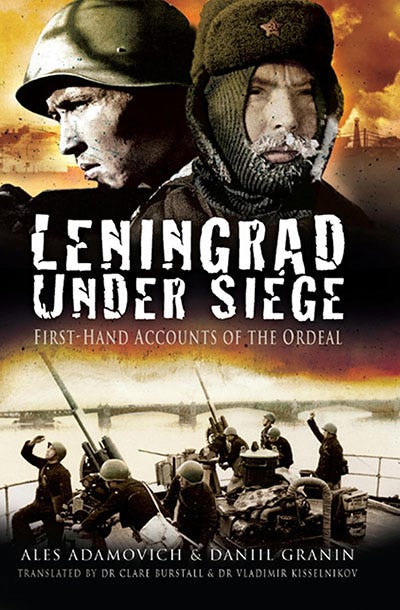
3.3 million men, women and children were isolated from the rest of Russia, imprisoned by the German troops surrounding the city in an ordeal that was only just beginning. Between 1.1 million and 1.5 million of them would die. Their story is told in Leningrad Under Siege: First-Hand Accounts of the Ordeal.
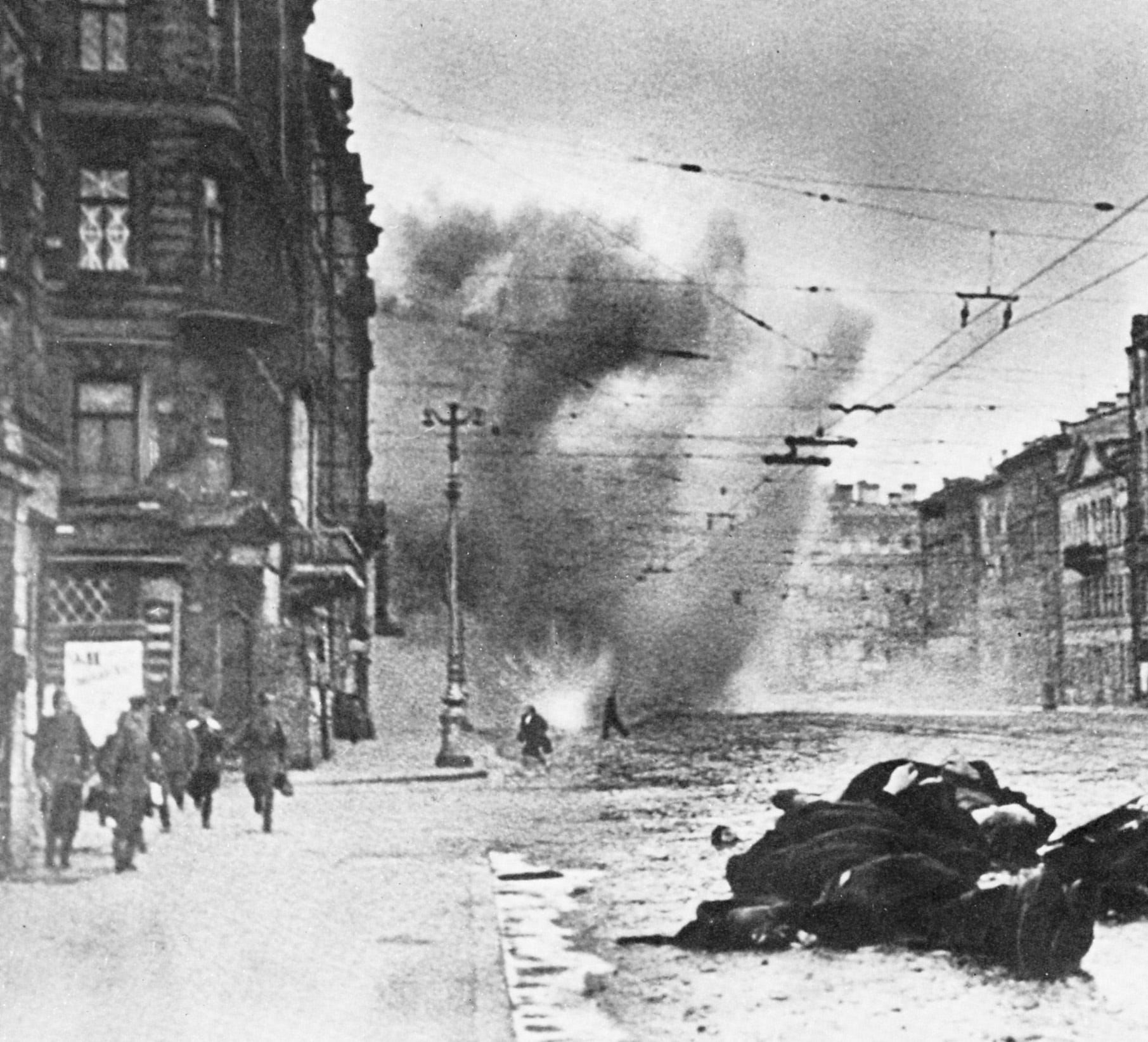
What little food remained was strictly rationed - at about a third of normal daily nutritional requirements. Rations were cut again during November. Alternative supplies of food had rapidly been used up, pets had disappeared, the zoo animals were killed, and the burnt-out remains of the food warehouses were dug up and sifted through.
Even with a rationing system in place, no one could guarantee an individual would actually receive what they were due. Of the three diaries that comprise this volume, that of sixteen-year-old schoolboy Yura Riabinkin paints a complete picture of the appalling situation that an average family had to face:
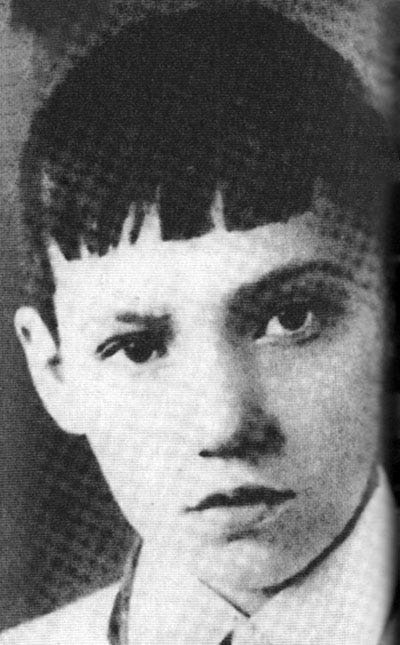
9 and 10 November 1941.
When I am falling asleep I always see bread, butter, pies and potatoes in my dreams. And, as well as that, before sleep comes, there is the thought that in twelve hours’ time the night will be over and you will have a piece of bread to eat. Mother repeats to me every day that she and Ira have only two glasses of hot, sweetened tea and half a bowl of soup during the day. Nothing more. And then a bowl of soup in the evening. Ira has even been known to refuse an extra helping of soup in the evening. They both keep telling me that I eat like a worker, meaning that I have two howls of soup in canteens and that I eat more bread, than they do.
These days my whole nature seems somehow to have changed abruptly. I have become sluggish, feeble, my hand trembles when I write, and when I walk my knees are so weak that it seems to me that if I took another step it would be the last, and I would fall down.
If I didn’t have well-fed people around me, I am absolutely sure that I would have got used to all this by now. But when every sound you hear speaks to you of something cheerful, something satisfying... When I am sitting in the kitchen, I am faced with the sight of a pan left on the stove with the uneaten remains of dinners, suppers and breakfasts, left there by Anfissa Nikolaievna [his next door neighbour], and I can’t stand it any longer.
I am being torn to pieces - I don’t mean literally? of course — but that’s what it feels like. And the smell of bread, pancakes and porridge tickles my nostrils, as if to say: ‘Look, here it is! Here it is! You’re starving hungry, but it’s not for you!’ I have got used to the shelling, I have got used to the bombing, but I can’t get used to this - I simply can’t!
On the various fronts the situation remains unchanged. It is only in the Kalinin direction that our detachments have moved forward a few kilometres. The enemy is stubbornly determined not to surrender his positions around Leningrad.
Again today my ear was struck by Anfissa Nikolaievna’s cheerful laugh. Yesterday Mother borrowed a piece of sugar from her and today she intends to borrow another from the Kozhinskys. But today is the last day of the current ten-day ration period, so tomorrow we will have sugar of our own and bread as well. Bread as well! Only one night to go...
We haven’t been able to buy our full rations in this ten-day period: we are due 400 grams of cereal, 615 grams of butter and 100 grams of flour — but these items are nowhere to be found. And where they do come on sale, huge queues form, hundreds and hundreds of people out in the street, in the bitter cold, and the amount delivered is usually just about enough for 80 to 100 people. So people stand there, get chilled to the bone, and leave with nothing to show for it. People get up at four in the morning, queue outside the shops until nine in the evening, and still come away with nothing. It is killing, but there is nothing that you can do about it.
You don’t get enough to eat, you don’t get enough sleep, you are cold and, on top of all that, you are expected to study. I can’t do it.
At the moment there is an air-raid alert in force. It has already lasted for about two hours. Need and hunger drive people out to the shops, in the freezing cold, to join the long queue, the crush of people. You only have to spend a few weeks like this to find that you have absolutely no desires left. All that remains is a dull, cold indifference to everything going on around you. You don’t get enough to eat, you don’t get enough sleep, you are cold and, on top of all that, you are expected to study. I can’t do it. Let Mother solve the problem of what I should be doing. And if she is incapable of doing so, I’ll try to do it instead. And what does the evening hold in store for me?
Mother and Ira [his younger sister] come home, hungry, frozen and tired. They can barely drag themselves along. There is no food in the house, there is no firewood for the stove. And then come the raised voices, the insinuations: how is it that the people who live downstairs managed to get cereal and meat, but I did not? There was meat to be had in the shops, but I didn’t get any. And Mother flings her arms wide, puts on an innocent expression, and says plaintively: ‘Well, I’m busy too, you know. I’ve got a job to do. I can’t go and get it.’
So I have to go and queue again, and all to no avail. I realise that I am the only one who can fetch the food that brings all three of us back to life. But I don’t have enough strength, enough energy to do it. Oh, if only I had a pair of felt Loots! But I haven’t. And each time I stand in a queue, it brings me closer to pleurisy, to illness...
I am sitting here crying. I’m only sixteen years old, you know! What bastards they are to have brought this whole war down on our heads!
Farewell, childish dreams! You will never again return to me. I will avoid you like madness, like the plague. Let all the past be swallowed up into hell, so that I won’t know what bread is, what sausage is! So that I won’t be haunted by thoughts of past happiness! Happiness! There is no other word to describe my previous life. Being able to view my future calmly! What a feeling! I will never experience it again...
How I wish that Tina could take my diary and read it through in her room in Schlusselburg, over a cup of tea and a sandwich. Never in her life has she had to go through what we in Leningrad are going through now.
After the alert this evening I went to the shop in Sennaya Square. In hand-to-hand fighting in a huge crush of people — such a crush that grown-ups were shouting, moaning, sobbing - I managed at the cost of incredible physical effort to squeeze myself in, to get inside the shop, having jumped the queue, and to get 190 grams of butter and 500 grams of sausage made from horsemeat and soya.
There are only two effective means to combat pleurisy: …
When I got home, I felt an intense pain in my chest, exactly like the one I had two years ago. I am undoubtedly having a dry pleurisy attack. The pain is acute, the same in every respect as what I had before. What torture! Tomorrow I will go to the tuberculosis clinic without fail. When it comes down to it, I don’t want to die of pleurisy here and now. What can I do about it? What? I am powerless. There are only two effective means to combat pleurisy: 1) excellent food with plenty of fats and 2) a dry, clean, warm atmosphere. And both of these means are lacking...
Mother and Ira have had ‘breakfast’ and have gone to work. I will go to the tuberculosis clinic. However, before that, I will have breakfast in ‘comfort and cosiness’. I will read for a bit... Today I got four litres of beer on the ration cards and gave it to Anfissa Nikolaievna. She gave me half a litre of it back to drink. I enjoyed it. Truly, if these were the old days, I would have become a dedicated alcoholic!
Oh, I forgot to mention a most important thing. Mother’s legs have swollen up and become as hard as stone. What a do! I shall have to go to the tuberculosis clinic tomorrow, the one where Anfissa Nikolaievna goes. It is near the Maltsevsky marketplace, which comes under shellfire every day.
‘… I order that, at whatever cost, the Bolshevik capital Moscow be wiped out with minimum delay.’
They are quoting this order of Hitler’s in the Leningrad Pravda: ‘Taking into consideration the importance of coming events, in particular the winter and the poor supply of materials to the troops, I order that, at whatever cost, the Bolshevik capital Moscow be wiped out with minimum delay.’
I must get to the queue by five in the morning without fail. We are all overstrained. I haven’t heard calm words from Mother for a long time. Whatever topic she touches on in conversation leads to swearing, shouting, hysterics, or something of the kind. The reason? There are many reasons, among them hunger and the everlasting fear of the shelling and the bombing. In our family - which consists of just three people — there is constant bickering, serious quarrelling.
When Mother shares something out, Ira and I watch like hawks, to make sure she does it accurately. It’s a bit embarrassing to write such things down.
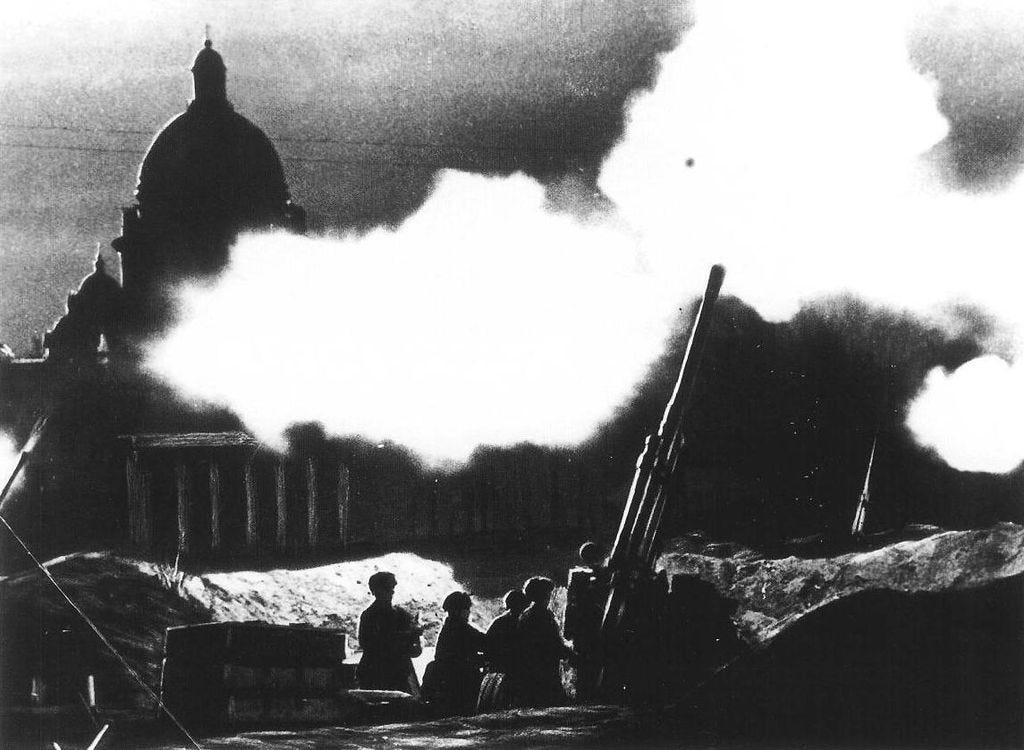
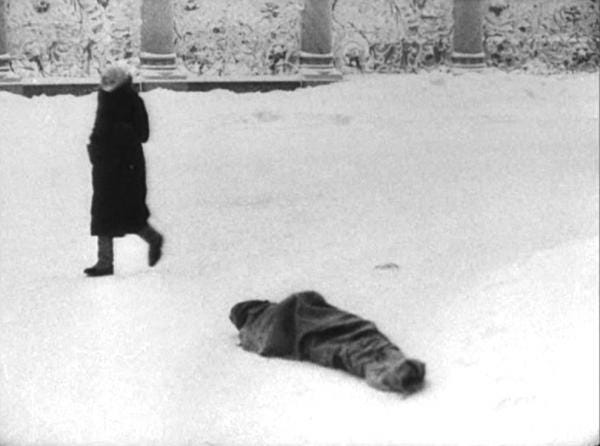
Over 11,000 people would die in Leningrad in November alone. It was just the beginning. Yura Riabinkin would survive into the New Year, but by then he and his family were severely ill. When his mother and sister were evacuated on 8th January 1942, Yura was too weak and emaciated to travel and was left behind in the apartment. Records show he died between 8th January and 2nd March 1942. He died alone.
© Alesʹ Adamovich & Daniil Alexandrovich Granin 2007, ‘ Leningrad Under Siege: First-Hand Accounts of the Ordeal’. Reproduced courtesy of Pen & Sword Publishers Ltd. NB: Not all of the above images are from this volume.
Affiliate Links
Recently on World War II Today ...

