


Almost 130 years earlier, the bloodiest battle of the Napoleonic Wars had been centred on the fields around the village of Borodino. Napoleon invaded Russia in June 1812 with nearly 300,000 troops and marched toward Moscow all summer. On 7 September 1812, the Tsarist Army finally gave battle sixty miles from Moscow, and both sides suffered devastating losses. Stretched thin at the end of an increasingly difficult supply line, the French had no way to replace their losses. The Russians retired to rebuild their forces.
The French had just enough strength to occupy an abandoned, burnt-out Moscow for five weeks. But they could not force Russia to surrender, and they were eventually forced into a humiliating retreat, with the greater part of the army succumbing to cold, starvation and disease on the long march home. As Tolstoy1 put it:
After the shock that had been received, the French army was still able to crawl to Moscow; but there, without any new efforts on the part of the Russian troops, it was doomed to perish, bleeding to death from the mortal wound received at Borodino.
Tchaikovsky’s commemorative ‘1812 Overture’ captures the emotion that Borodino holds in the heart of many Russians, then and now.
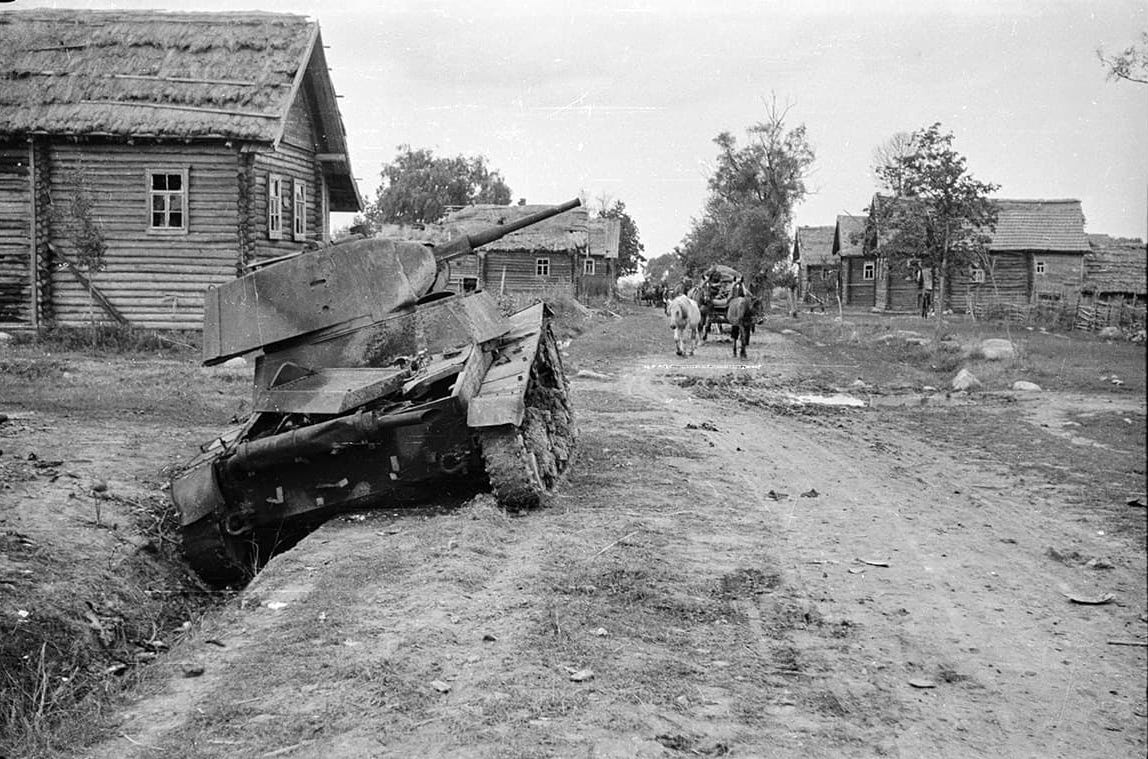
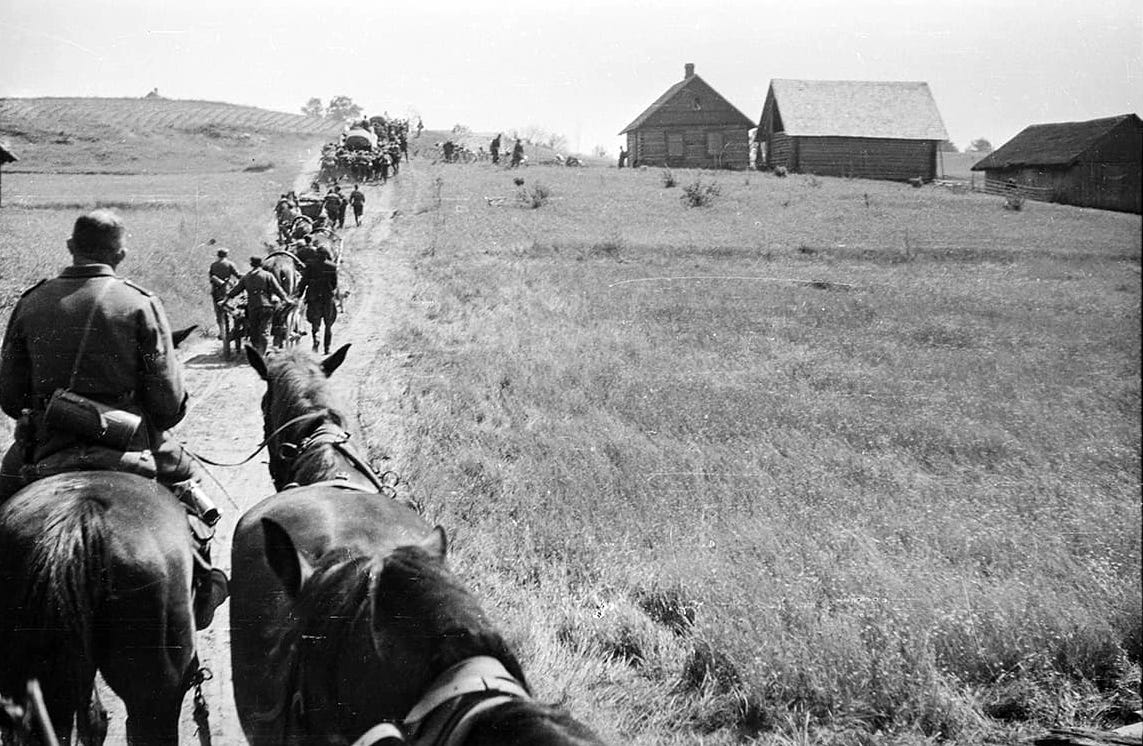
Hitler invaded Russia with ten times as many men but took a month longer to reach Borodino. Like Napoleon, most of his men travelled on foot, and a large part of the supply line relied on horses. Many Wehrmacht men knew their history and had time to reflect on what their fate might be as they marched east.
