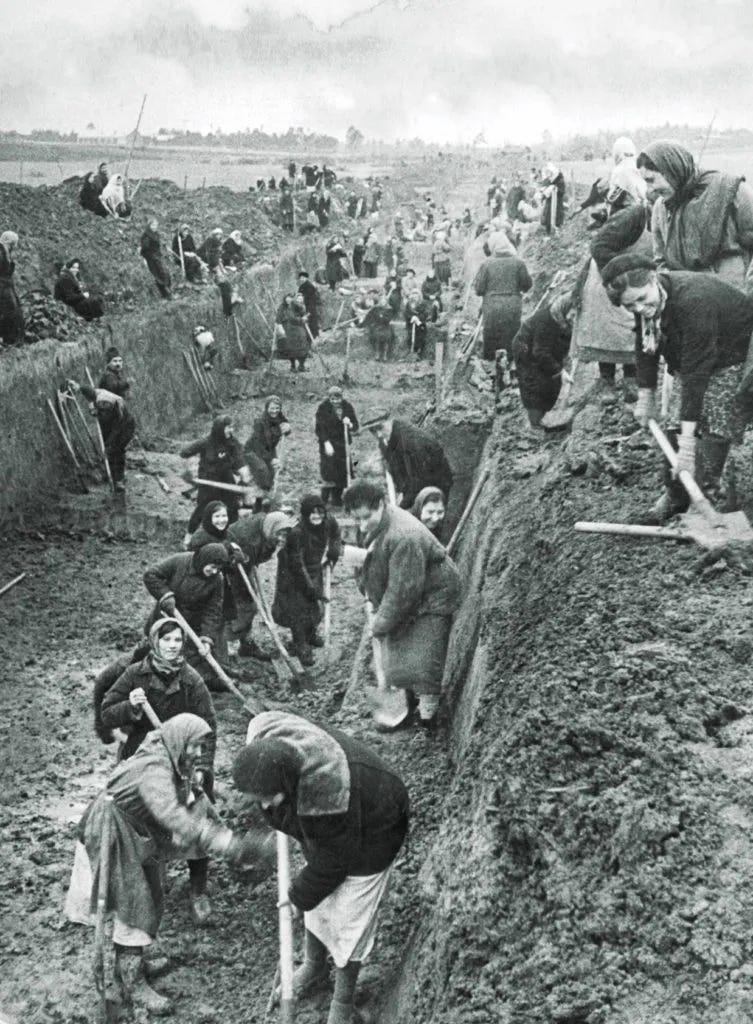
Despite the arrival of autumn rain and the accompanying mud of the rasputitsa, some elements of Army Group Centre pressed on toward Moscow. A Soviet communique stated that:
During the night of October 14-15 the position on the Western Front became worse. The German-Fascist troops hurled against our troops large quantities of tanks and motorised infantry, and in one sector broke through our defences.
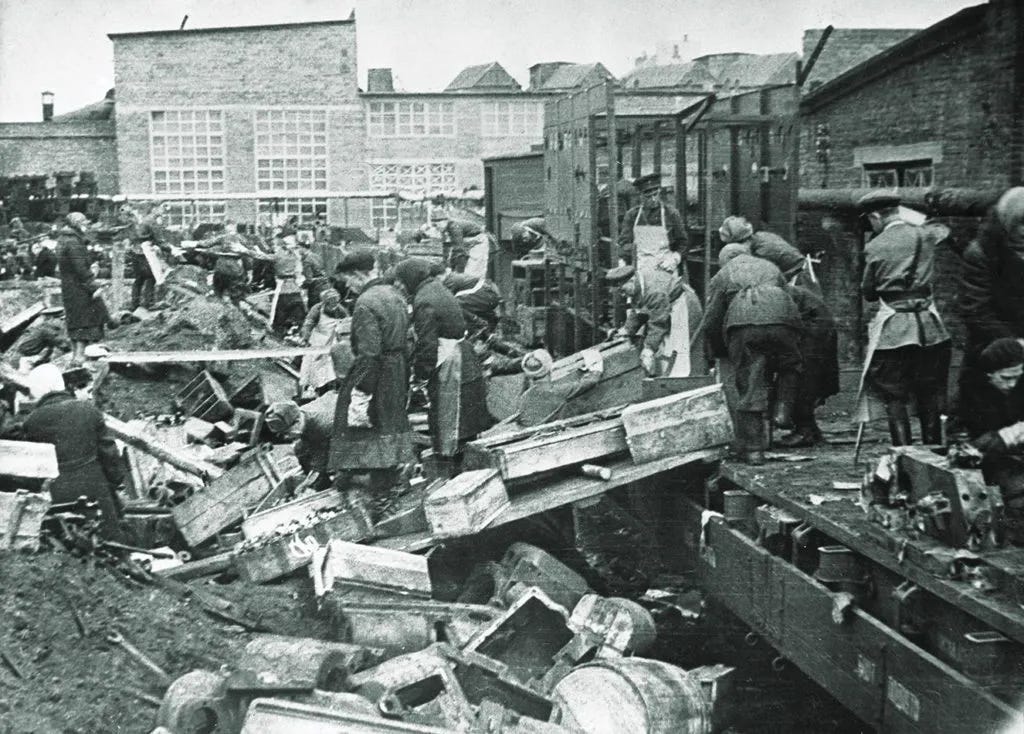
Plans to evacuate Moscow began to be implemented. Alongside vital armaments factories, the Soviets prioritised evacuating officials. But Moscow's citizens were unclear about what was happening, who should go, and who should stay to fight. As rumours spread, the disciplined Soviet state began to fail.
Victor Kravchenko1, later to defect to the United States, wrote in his memoir:
A city, like an individual, can suffer a nervous breakdown. Trams and autobuses worked in fits and starts. The shops were mostly empty, but people queued up anyhow. Homes and offices were unheated; water and electric service was intermittent and uncertain. For the first time in twenty years, I heard cursing of officialdom.
The Soviets were not keen to publicise that this culminated in a significant panic on 16th October. The English journalist Alexander Werth2 was subsequently able to piece together events by interviewing many people who were there:
In describing the great October crisis in Moscow, it is important to distinguish between three factors. First, the Army, which fought on desperately against superior enemy forces, and yielded ground only very slowly, although owing to relatively poor manœuvrability, it was unable to prevent some spectacular German local successes, such as the capture of Kaluga in the south on the 12th, of Kalinin in the north on the 14th, or that breakthrough in what was rather vaguely described as “the Volokolamsk sector” to which the “panic communiqué”, published on October 16, referred.
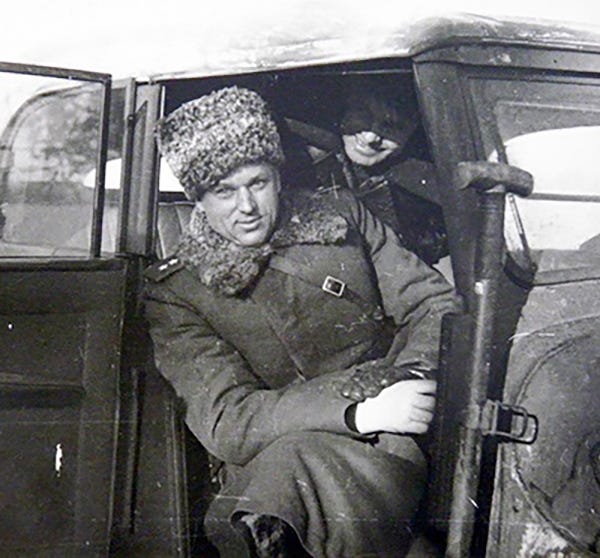
Even long afterwards it was believed in Moscow that on the 15th the Germans had crashed through much further towards Moscow than is apparent today from any published record of the fighting. Only then, it was said, did Rokossovsky stop the rot by throwing in the last reserves, including scarcely-trained opolchentsy, and troops from Siberia as soon as they disembarked from the trains.