

The original Wehrmacht plan for Barbarossa called for a hard drive toward Moscow. Hitler had changed that plan in July 1941, causing enormous tension within the High Command. A southern diversion aimed to seize Ukraine's economic resources, as Hitler suddenly realised he faced a long war.
The German strategy was to fight encirclement battles, using the mobility and coordination of their Panzer armies. They had successfully trapped huge numbers of Soviet troops in the battles for Bialystok-Minsk and Smolensk. But the battle for Kiev exceeded even these in numbers killed and captured.
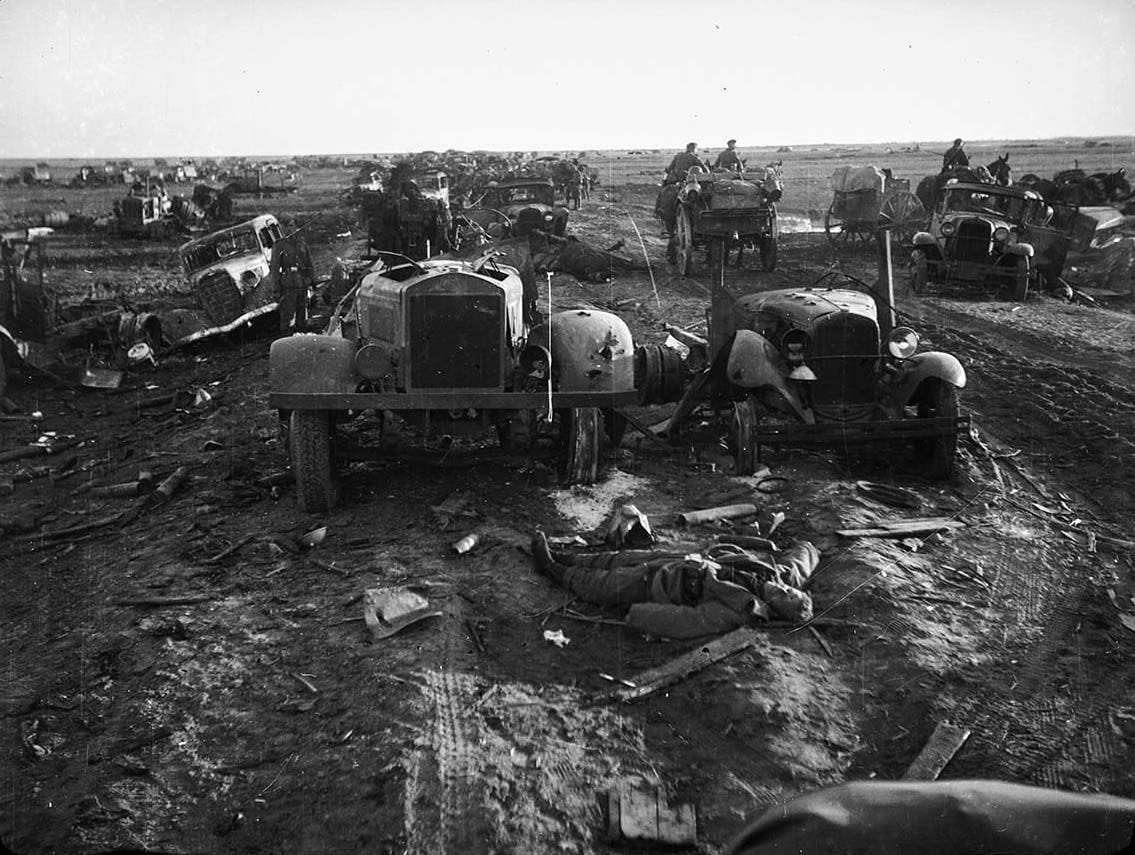
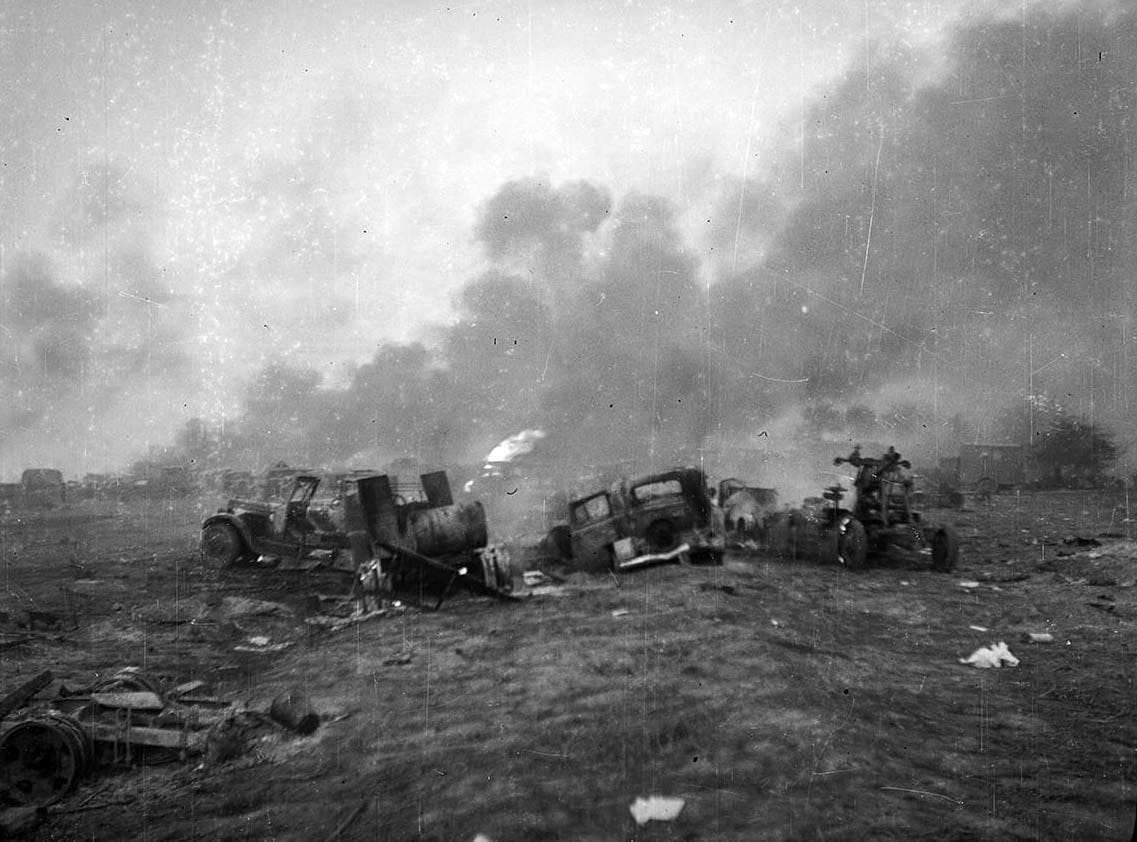
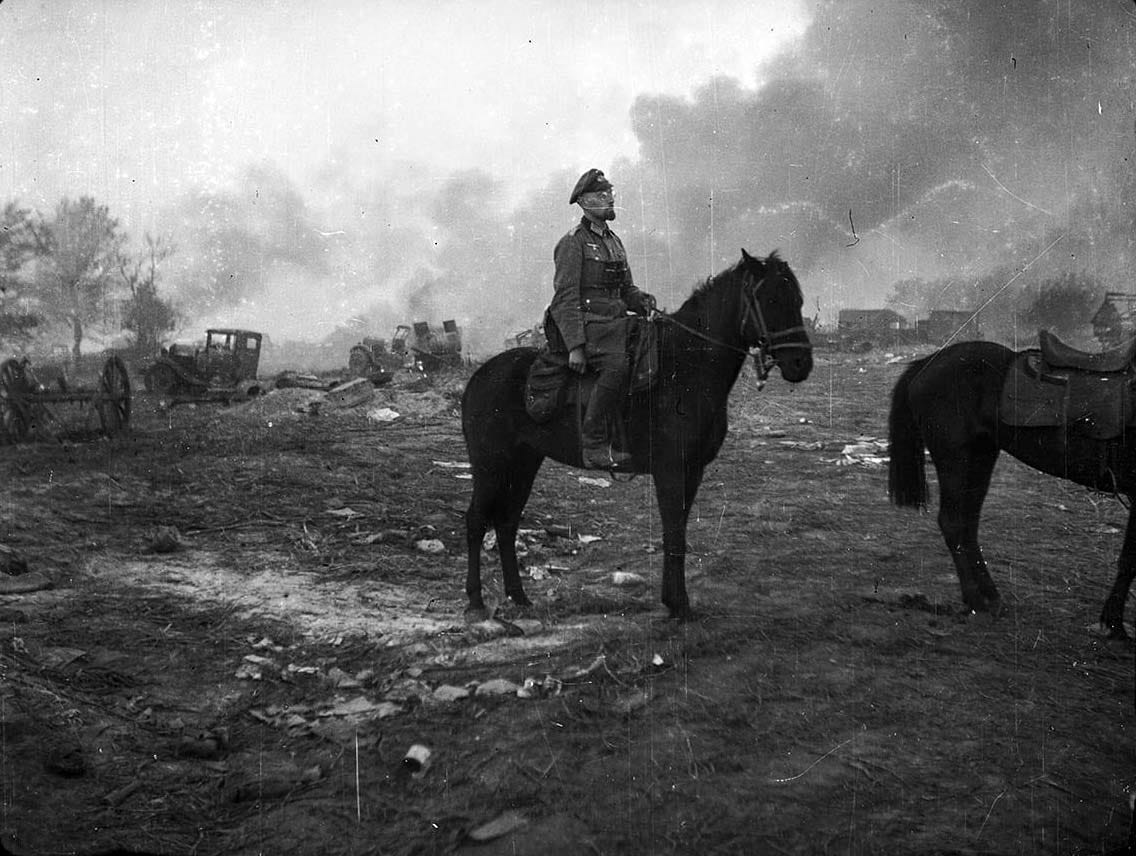
On 19th September the two German pincer movements met up, completing the largest encirclement of an army yet seen in any war. In total, five Soviet Armies were caught in the pocket, and most of their troops were killed or captured. A vast area, equivalent to a triangle drawn between Paris, Frankfurt, and Milan, fell to the Germans.
