

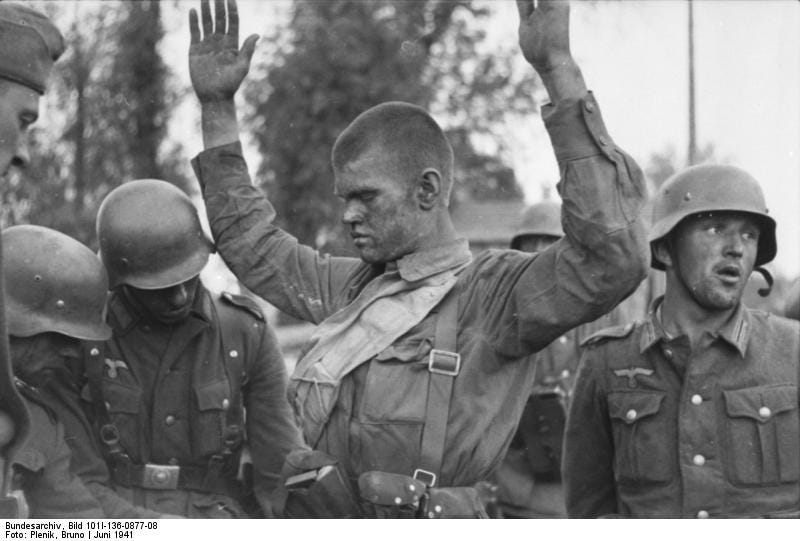
Although there is argument over the extent to which regular Wehrmacht units were aware of the activities of the Einsatzgruppen, few were ignorant of the treatment of the hundreds of thousands of Soviet prisoners of war coming into German custody.
The German High Command had anticipated that they would take huge numbers of prisoners, but they had made virtually no plans as to how to deal with them. Their main strategic aim was to fight huge battles of encirclement in which whole armies would fall into their hands. For the Red Army soldiers captured during 1941, this usually amounted to a death sentence.
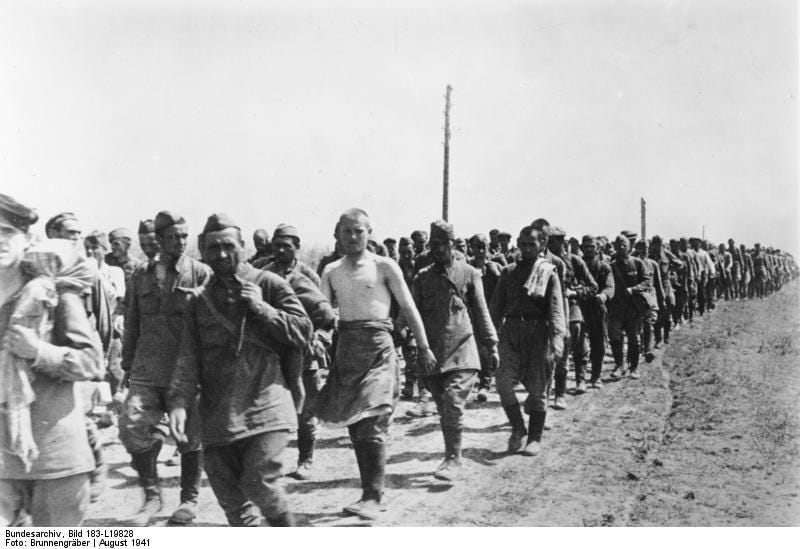
The Germans disregarded all the usual conventions for the treatment of Prisoners of War when it came to the 'Russians' - although this term encompasses many different nationalities that were then part of the Soviet system. There were many instances of prisoners being routinely shot, not just Soviet Commissars and Jews. There were few proper POW camps established during 1941 - most were simply barbed wire enclosures with no shelter.
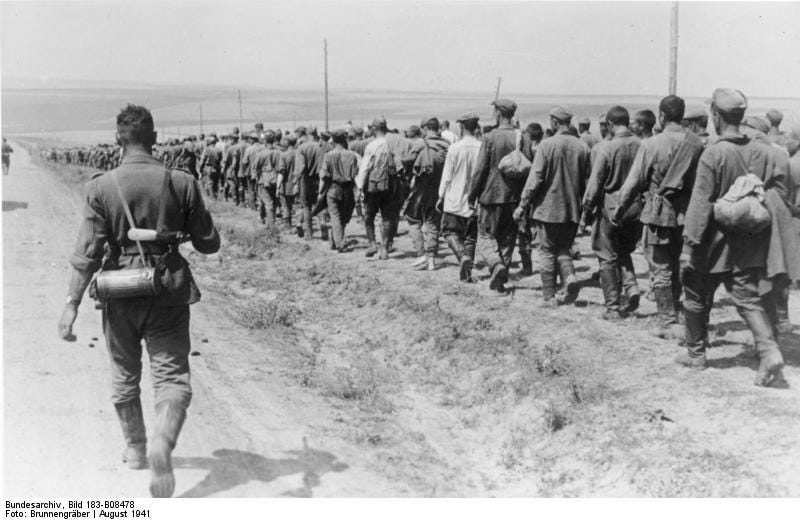
Most often the men were marched long distances with little food or water to reach the 'camps', those that fell by the wayside were shot. When they arrived starvation, disease and exposure to the elements were allowed to take their course.
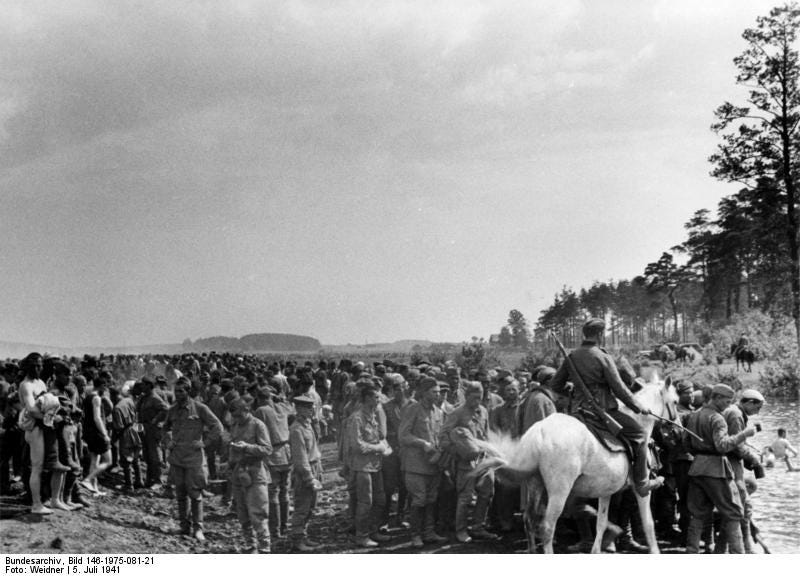
‘In late 1941 more Soviet POWs died every day than American and British POWs died in German hands during the course of the entire war.’
During the course of the war, 57.5% of the Soviet POWs in German hands died - nearly 3 million soldiers. Most of them died during 1941 - only later would they be recognised as a useful source of labour and allowed to survive in order to work - on a starvation diet - for the Germans.
During this period it was far more lethal to be a Russian POW than to be in any German concentration camp. It is estimated that during the last months of 1941 more Soviet POWs died every day than American and British POWs died in German hands during the course of the entire war.
Some German soldiers recorded what they saw; Benno Zieser was one of them:
