

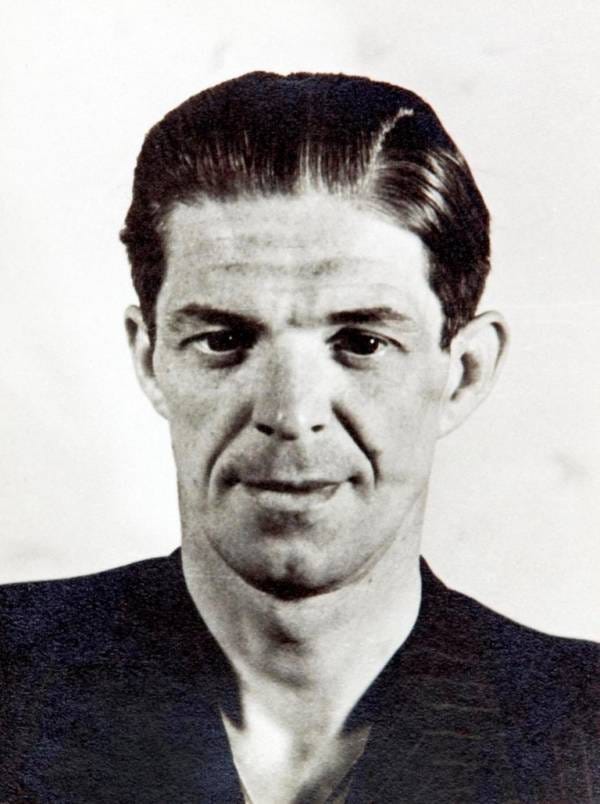
Nigel West, the pen name of Rupert Allason, has become well known as the semi-official historian of MI5, the British Security Service, which runs counter-espionage operations. His ‘MI5: British Security Service Operations, 1909–1945: The True Story of the Most Secret Counter-Espionage Organisation in the World’ published in 2019 benefited from access to MI5 archives and interviews with former operatives.
Nigel West's book traces the history of MI5 from its modest beginnings in 1909 to 1945, focusing on its important role in World War II. By the end of 1940, MI5 had built up not only a very good picture of the Abwehr, German Military Intelligence, but was actually feeding them information. The ‘double cross system’ run by MI5 had rounded up all the German spies in Britain and was using them to communicate false ‘intelligence’ back to Germany. One of their double agents supplied the identity ‘George Rymer’ for use in future operations. When the name appeared on a radio intercept, they had good reason to believe he would arrive soon.
The following passage is one of dozens of individual cases that West addresses in this study. This is the MI5 version of their dealings with Josef Jakobs, aka George Rymer, in 1941:
The agent using the name George Rymer dropped by parachute into a field near Ramsey in Huntingdonshire on the night of 31 January/1 February, 1941. His arrival was first noted by two farm labourers, Charlie Baldock and his brother-in-law Harry Coulson, who were walking to work across their small holding, Dove House Farm, at around half-past seven in the morning. They were discussing the sound of a low-flying aircraft they had heard the previous night, and both agreed that it had been a German bomber.
Suddenly a shot rang out and both men dropped to the ground in surprise. Another shot was fired and almost immediately they spotted the source - someone lying in a potato field a few hundred yards away. They cautiously approached the figure, who began to wave his arms in the air. He was evidently injured and needed their help.
The man on the ground was middle-aged, and introduced himself as a parachutist from Germany. When the two farm labourers had recovered from their surprise, they examined the leg of the injured man. It was badly broken, and all three agreed he could not be moved without help.
Coulson elected to stay with the distressed figure while Baldock ran over to Shelton's Farm to raise the alarm. The foreman at Shelton's promptly telephoned Ramsey police station and also warned his son. Harry Godfrey, of Baldock's discovery. Harry Godfrey held the rank of Lance-Corporal in the local Home Guard so he quickly slipped on his uniform, armed himself with a rifle and went to arrest the German parachutist.
In the meantime, Coulson had taken the opportunity to talk to his immobilised captive, who began to explain that he was not, in fact, a German. He was, he claimed, a Luxembourger by birth. He had spent a miserable night in great pain and had smoked only a part of his cigarette supply before his lighter had run out of fuel.
Underneath his Luftwaffe regulation flying tunic he wore a grey pin-striped suit with spats. Beside him was a smart brown trilby, a steel helmet with some pieces of chocolate in it and a flask of brandy. A few feet away lay a small military-issue shovel and a partly concealed fibre suitcase. When this was eventually dug up and opened, a five-valve radio transmitter was found inside. Coulson also searched his prisoner's pockets and recovered a forged identity card in the name of George Rymer and an unused ration book.
At nine o'clock a single policeman from Ramsey arrived on his bicycle to take command of the situation. He borrowed a horse and cart from Shelton's Farm and transported the wretched German spy to Ramsey police station in the back of it. Once safely in his cell he was given a thorough search and relieved of some five hundred one-pound notes in two bundles.
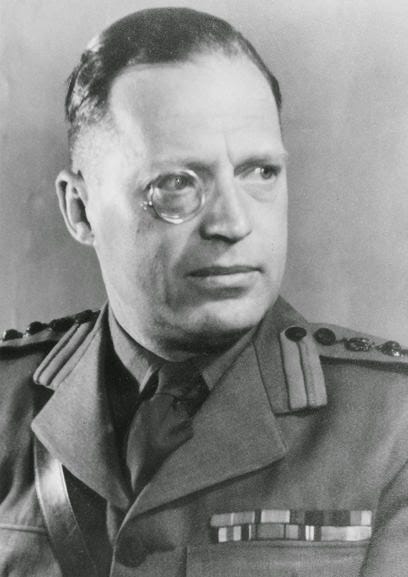
“I am not saying this in any sense of a threat,” Stephens told one captive, “but you are here in a British Secret Service prison at the present time and it’s our job in wartime to see that we get your whole story from you. Do you see?”
There was little doubt in anyone's mind that the prisoner was a spy so he was driven the same day down to Scotland Yard, and finally [Camp] 020. There he underwent the usual intensive interrogation by Colonel Stephens and 'the Board'. The parachutist gave his name as Josef Jakobs, born in Luxembourg on 30 June, 1898.
In civilian life he had been a dentist, typewriter salesman, mortgage broker, bookseller and in a variety of other trades. When war broke out he was a Reservist and had been called up for service in the Wehrmacht before transferring to the Abwehr in Hamburg in September 1940.
For three months he had undergone wireless training until he could achieve sixteen words per minute in Morse. On 8 January, 1941, he moved to The Hague for instruction in weather reporting, and upon completing it, he was dispatched on his mission.
Jakobs also claimed to have joined the Abwehr in an attempt to escape Germany and sabotage the war effort. A mysterious Dr Burgos had asked him to join the Abwehr as an agent of a secret Jewish society. His aim was to make contact with Jews in Britain and resist the Nazis. None of this impressed 'the Board' much, and it was decided to place Jakobs on trial.
According to West, Jakobs was executed at 12 minutes past noon on the 14th August 1941 after being held as a prisoner in a special cell at the Tower of London since the end of his trial on 6th August. This is an interesting difference from other sources that give the date of his execution as the 15th August.
© Nigel West 2020, ‘MI5: British Security Service Operations, 1909–1945: The True Story of the Most Secret counter-espionage Organisation in the World. Reproduced courtesy of Pen & Sword Publishers Ltd.

Affiliate Links
Recently on World War II Today ...

