

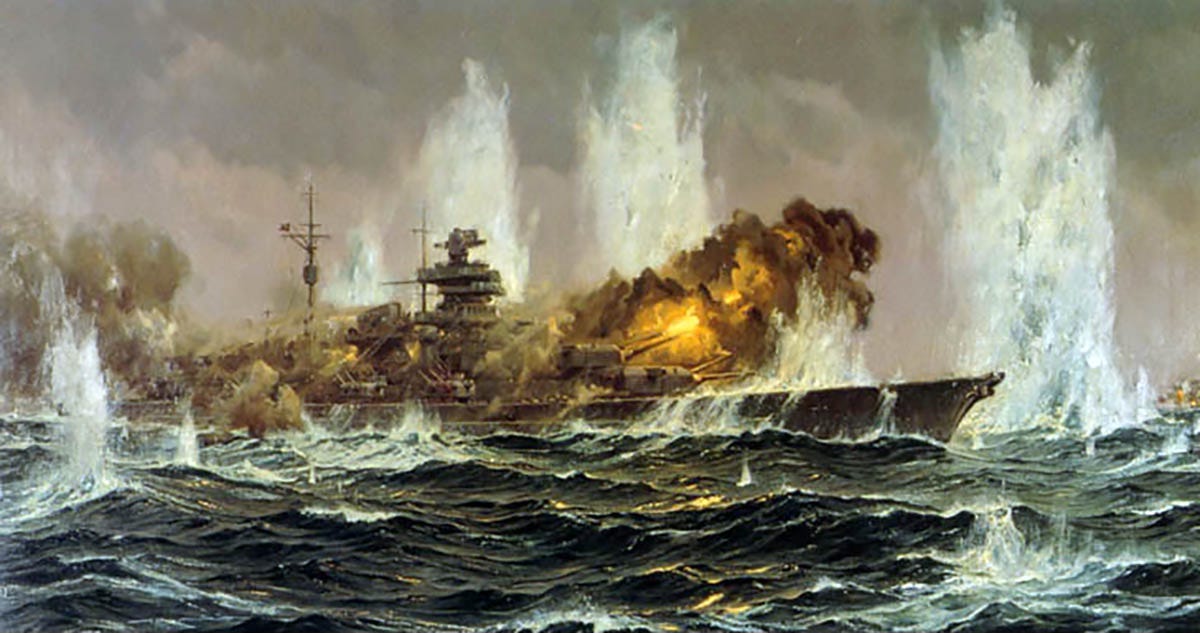
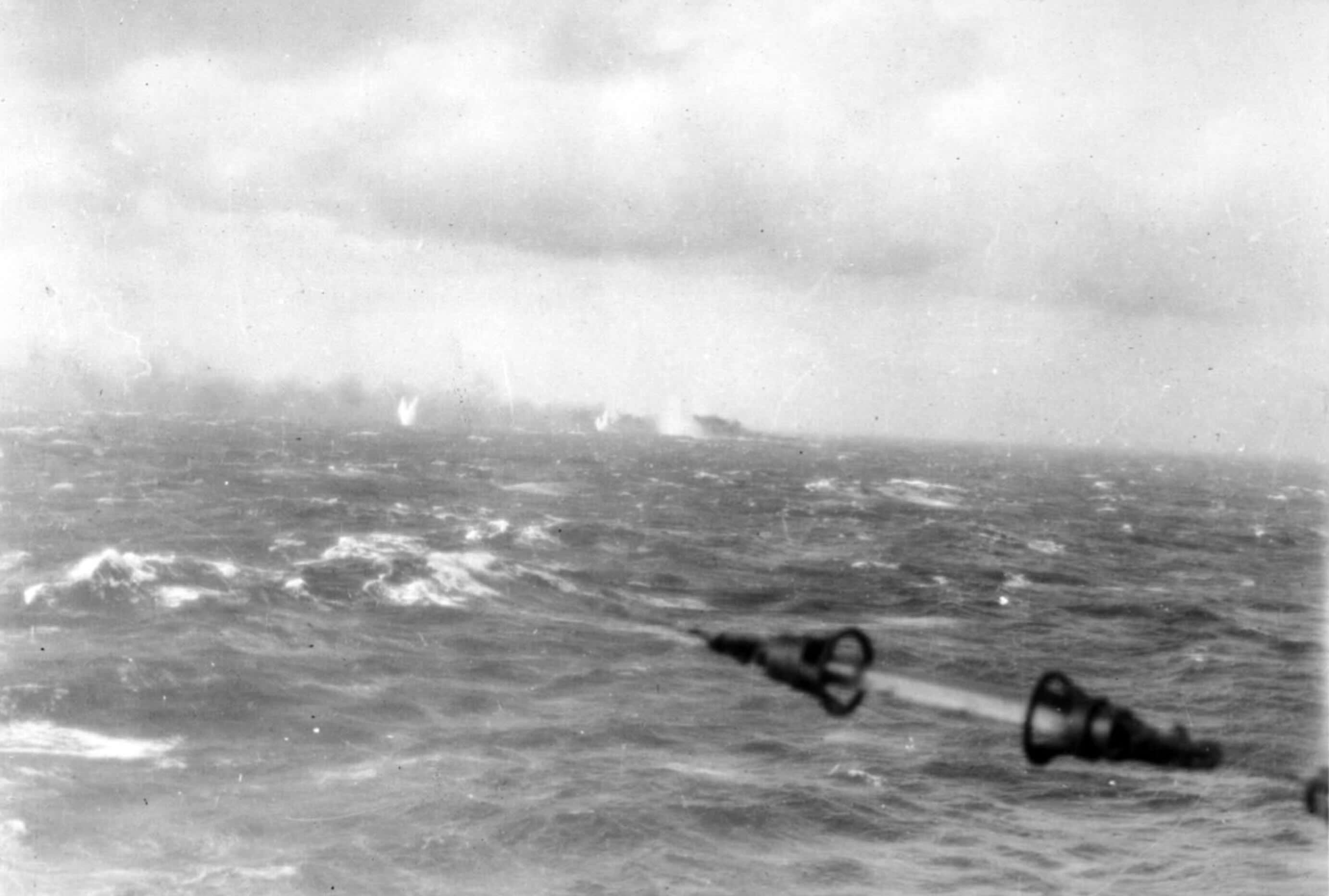
After her steering was disabled by a torpedo hit to the stern, the Bismarck was a crippled ship, slowly turning in circles. Desperate attempts were made to free the rudder to no avail. It gradually became more and more apparent that she was helpless, simply waiting for the arrival of a combination of overwhelmingly more powerful Royal Navy ships that would finish her off. Morale plummeted as the inevitable end drew closer. During the night of the 26th, a Destroyer flotilla made successive attempts to torpedo her, but she was saved by the rough seas.
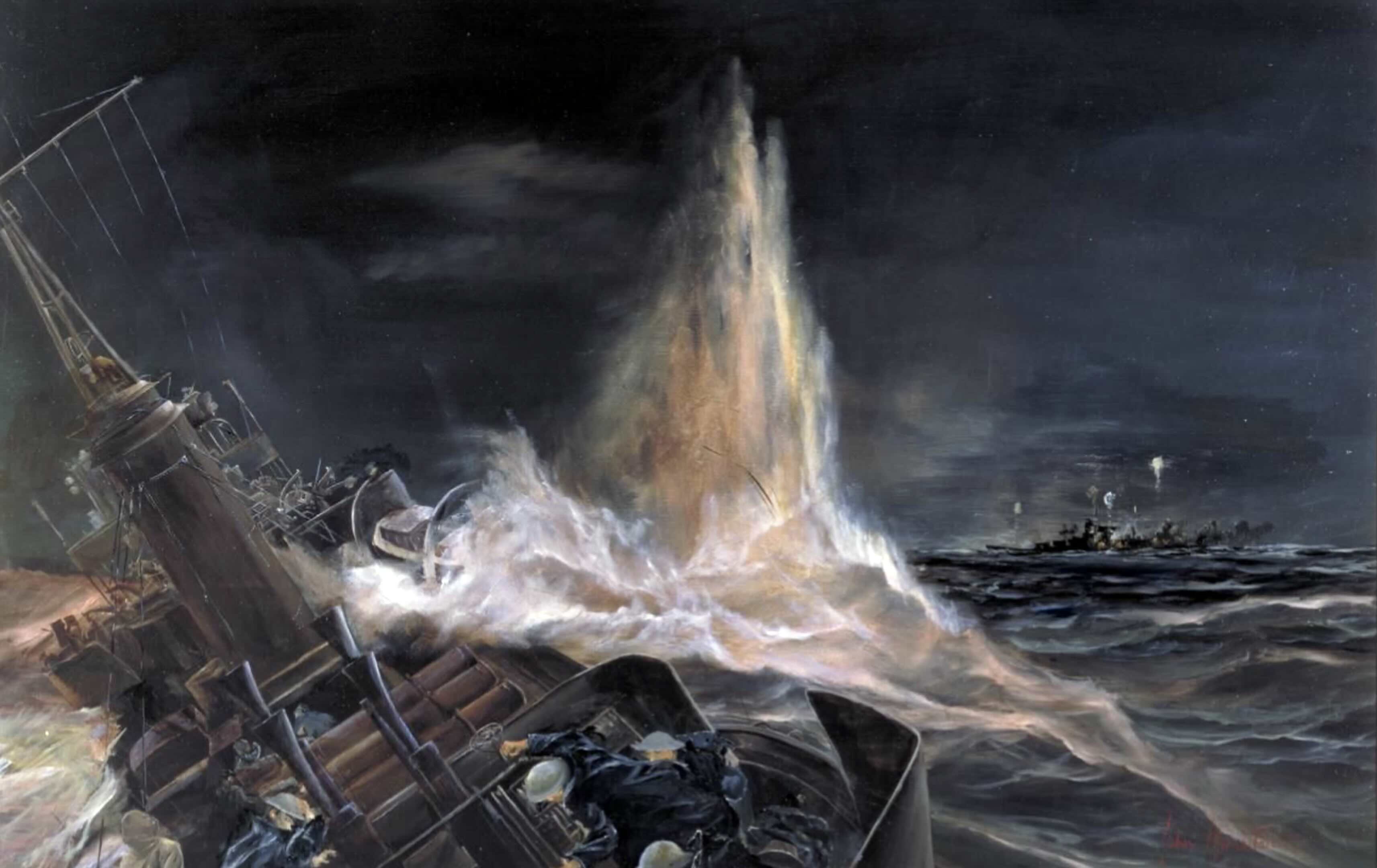
It was not until morning on the 27th that the battleships HMS Rodney and HMS King George V arrived on the scene, and at 0847, opened fire. Bismarck fired back and came very close to hitting HMS Rodney, but her inability to control her steering meant her fire became increasingly inaccurate. Within ten minutes, she was taking regular hits from the British warships, and although she continued to fire, it was no longer effective.
Orders were given to flood and the imprisoned men were drowned.
Subsequent interviews1 with survivors paint a grim picture of what it was like on the Bismarck during this bombardment:
”Bismarck” was taking severe punishment. According to one prisoner, one officer drew his revolver and shot down some of the crew when they refused to obey him. Another prisoner refers to officers committing suicide. Still another prisoner mentioned that members of the crew lost their nerve and jumped overboard long before action ceased.
It is known that almost the entire 400 men of the “flak” became casualties. No special protection had been arranged for these men during surface action, they merely being ordered to shelter behind the superstructure on the disengaged side, and, huddling together for protection, groups of forty or more men were wiped out at a time. With the ship listing to port and rolling and seas coming inboard, there were washed over the side scores of bodies, both the killed and of the wounded, whose grasp had weakened on whatever object they had been able to clutch. Hit after hit was now being registered on the upper deck, which was speedily reduced to a mass of twisted steel. Boats and lockers had been smashed to pieces, machinery and instruments twisted and broken. Ready use ammunition was exploding.
