

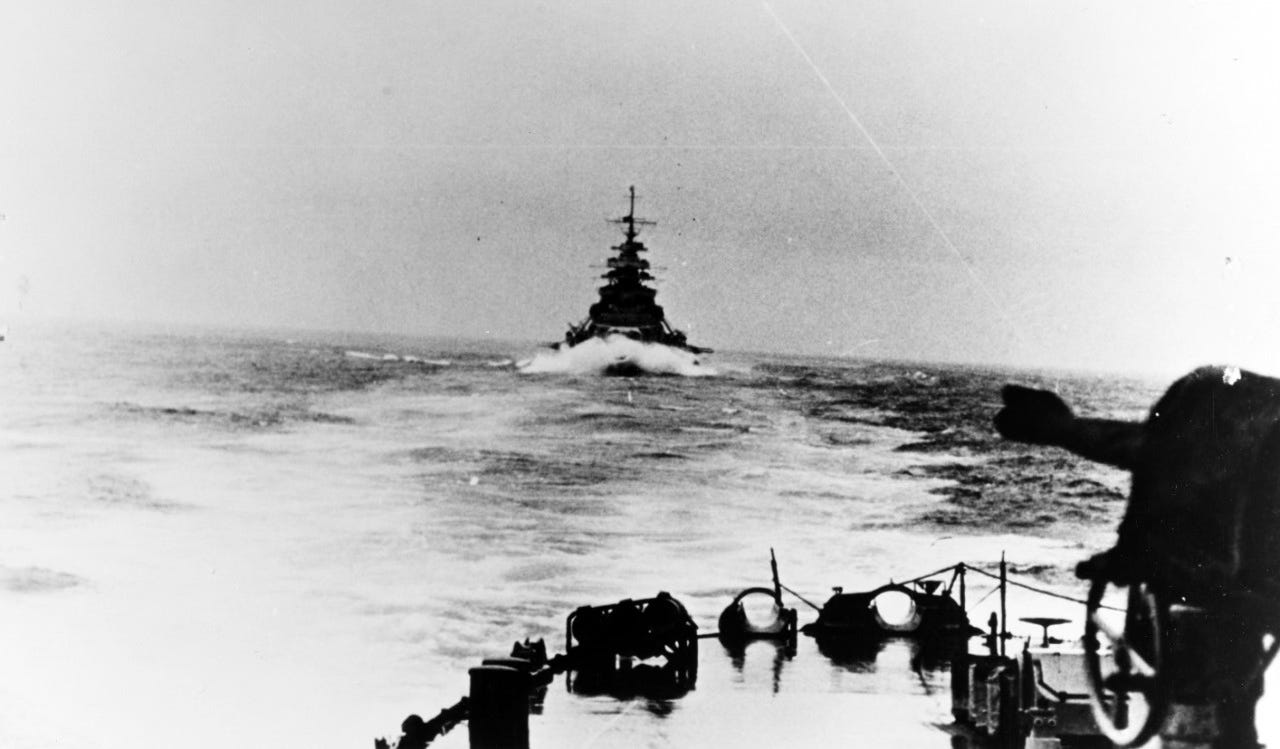
After sustaining damage from her engagement with HMS Hood and HMS Prince of Wales, the Bismarck suffered reduced speed and range. Yet she had successfully shaken off the Royal Navy ships that had been tracking her on radar and was making for the French port of Brest for repairs. There seemed every prospect that if she remained undetected, she could make it to the safety of port.
On the 26th May, the hunt for the Bismarck involved every available ship in the Royal Navy. The British Home Fleet under Admiral Tovey led the charge from the North Atlantic ( after a detour north when the probable course of the Bismarck was miscalculated), “Force H” with HMS Ark Royal was coming up from Gibraltar, and a large number of other warships had been detached from their Atlantic convoy escort duties and were making their way independently.
According to immediate post-war history, it was a United States Naval Ensign who made the first crucial sighting at 1010 on the 26th.
In March 1941, Ensign Leonard B. “Tuck” Smith of the US Navy had answered a call for “volunteers to go to England, observe Royal Air Force (RAF) Coastal Command, and check them out on the new Mk. 1 Catalinas (PBY-5As)”.
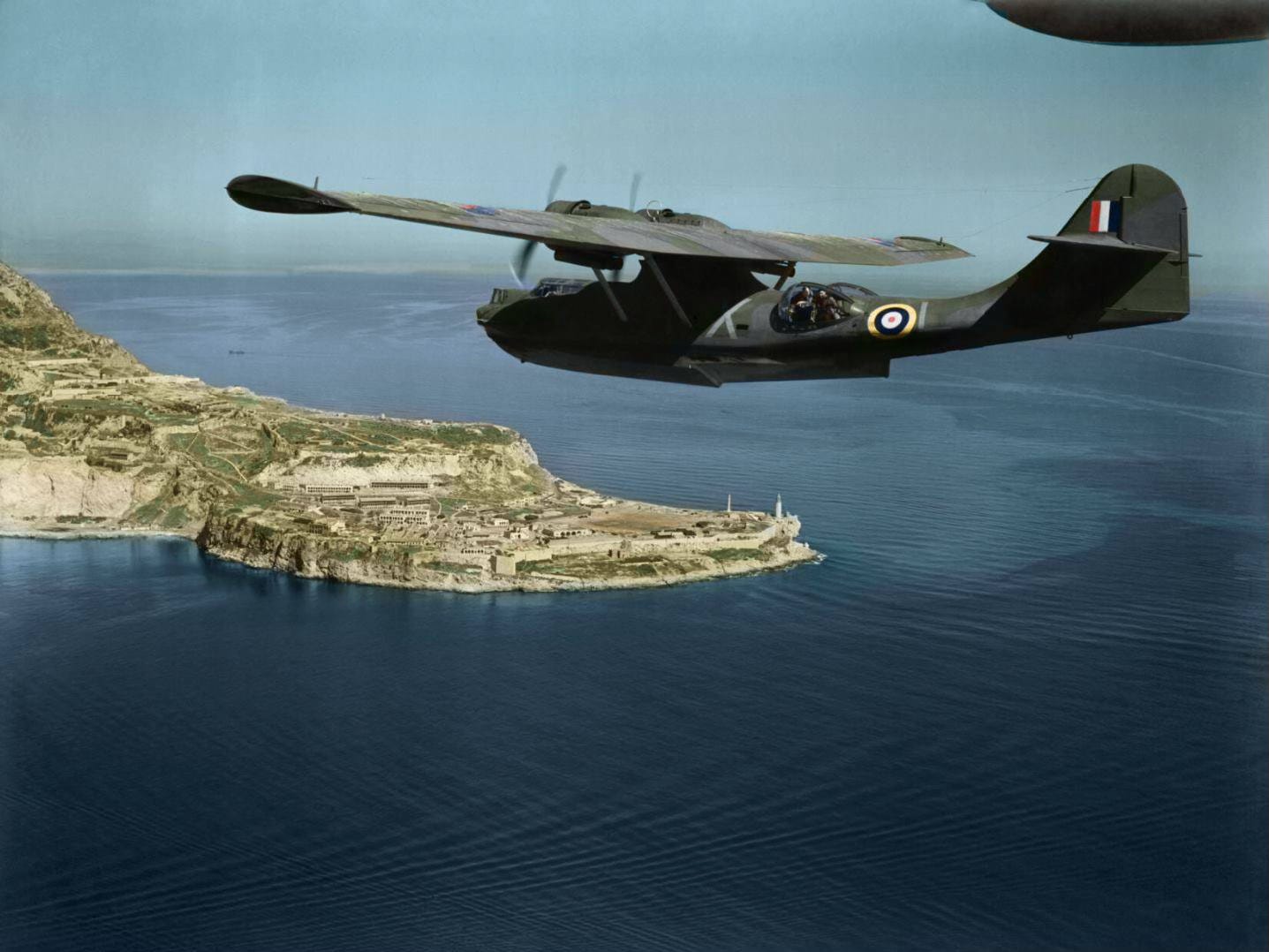
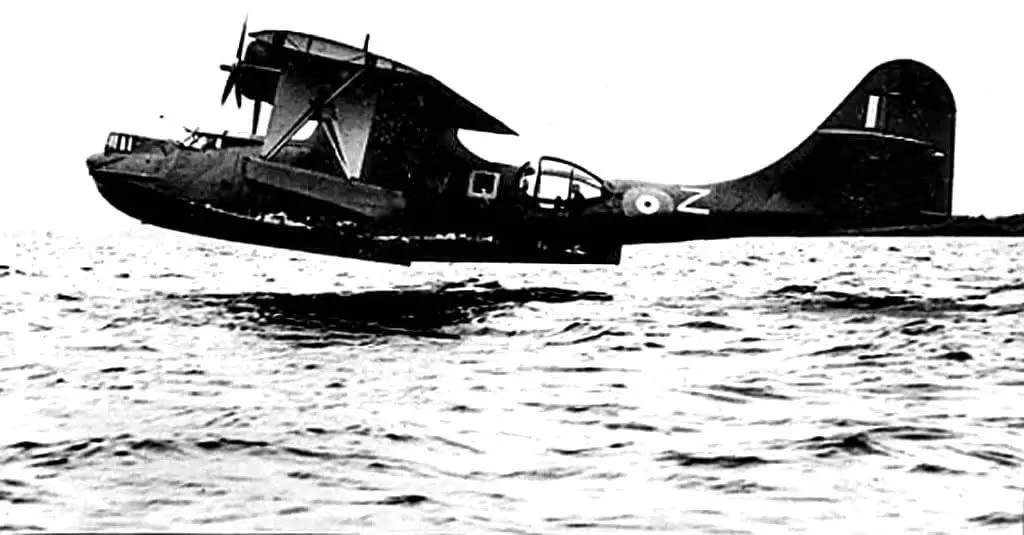
In fact, the assignment was very much more than that. The Catalinas supplied under the Roosevelt’s ‘Lend Lease’ arrangements were based in Northern Ireland. But the planes of 209 Squadron RAF were largely flown by a small group of US pilots, with RAF officers accompanying them. They were there to gain immediate experience of British strategies for tackling the U-boat threat in the North Atlantic. But since the United States was still neutral, the scope of what they were actually doing had to remain secret. Ensign Leonard B. Smith was officially a ‘co-pilot and special observer’.
On the 26th May, Smith1 took off from Lough Erne in Northern Ireland at 0325. The long range of the Catalina meant that he was way out in the Atlantic at 1010 when he glimpsed the Bismarck through the clouds. He came round for a closer look - his report shows that he was not taking an entirely neutral, passive role in affairs:
We started leg EG of area at 1000 and at 1010 I sighted what was first believed to be Bismarck, bearing 345º at 8 miles. Definite recognition was impossible at the time due to visibility. I immediately took control from ‘George’ (automatic pilot); started slow climbing turn to starboard, keeping ship sighted to port, while the British officer [Flying Officer Briggs] went aft to prepare contact report.
My plan was to take cover in the clouds, get close to the ship as possible; make definite recognition and then shadow the ship from best point of vantage. Upon reaching 2000’ we broke out of a cloud formation and were met by a terrific anti-aircraft barrage from our starboard quarter.
Immediately jettisoned the depth charges and started violent evasive action which consisted of full speed, climbing and “S” turns. The British officer [Dennis Briggs] went aft again to send the contact report. When making an “S” turn I could see the ship was a BB [battleship] and was the Bismarck, which had made a 90 starboard turn from its original course, (This was evident from wake made by his maneuvering), and was firing broadsides at us. The A.A. [anti-aircraft] fire lasted until we were out of range and into the clouds.
The barrage was so close that it shook the aircraft considerably…
It was very intense and were it not for evasive action we would have been shot down. The barrage was so close that it shook the aircraft considerably (one man was knocked from his bunk) and the noise of the burst could be hear above the propeller and engine noise. Numerous bursts were observed at close quarters and small fragments of shrapnel could be heard hitting the plane. The fitter came forward to pilots compartment saying we were full of holes.
The presence of American servicemen in such a crucial role was not the only matter being kept secret. In fact, they had not been ‘searching’ a wide expanse of the Atlantic to find the Bismarck. They had been directed to look in a very specific area. As a consequence of ‘Ultra’ secret decrypts of German radio messages, it was known that Bismarck was headed to the French port of Brest, and her likely route.
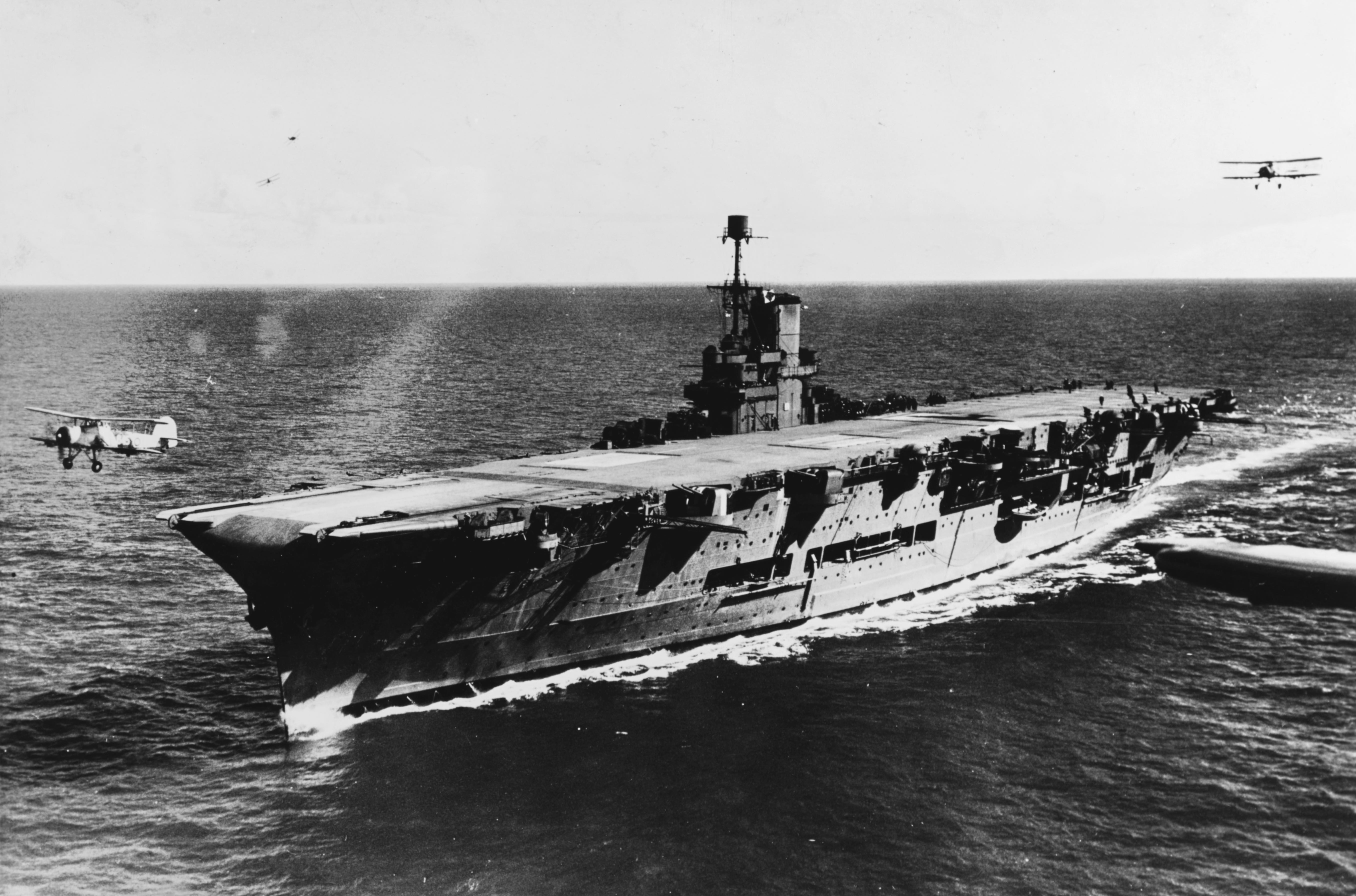
It was now only a matter of time before other aircraft could join the scene. The Swordfish aircraft from HMS Ark Royal very quickly joined the battle. Unfortunately, they had not been advised that the cruiser HMS Sheffield was on the scene and, in their first attack, launched all their torpedoes at her. Only good fortune prevented an epic Royal Navy disaster because the magnetic torpedoes failed to explode.
I went down, as low as I dared, though even that took an act of will to overcome my fear of hitting the rough sea.
