

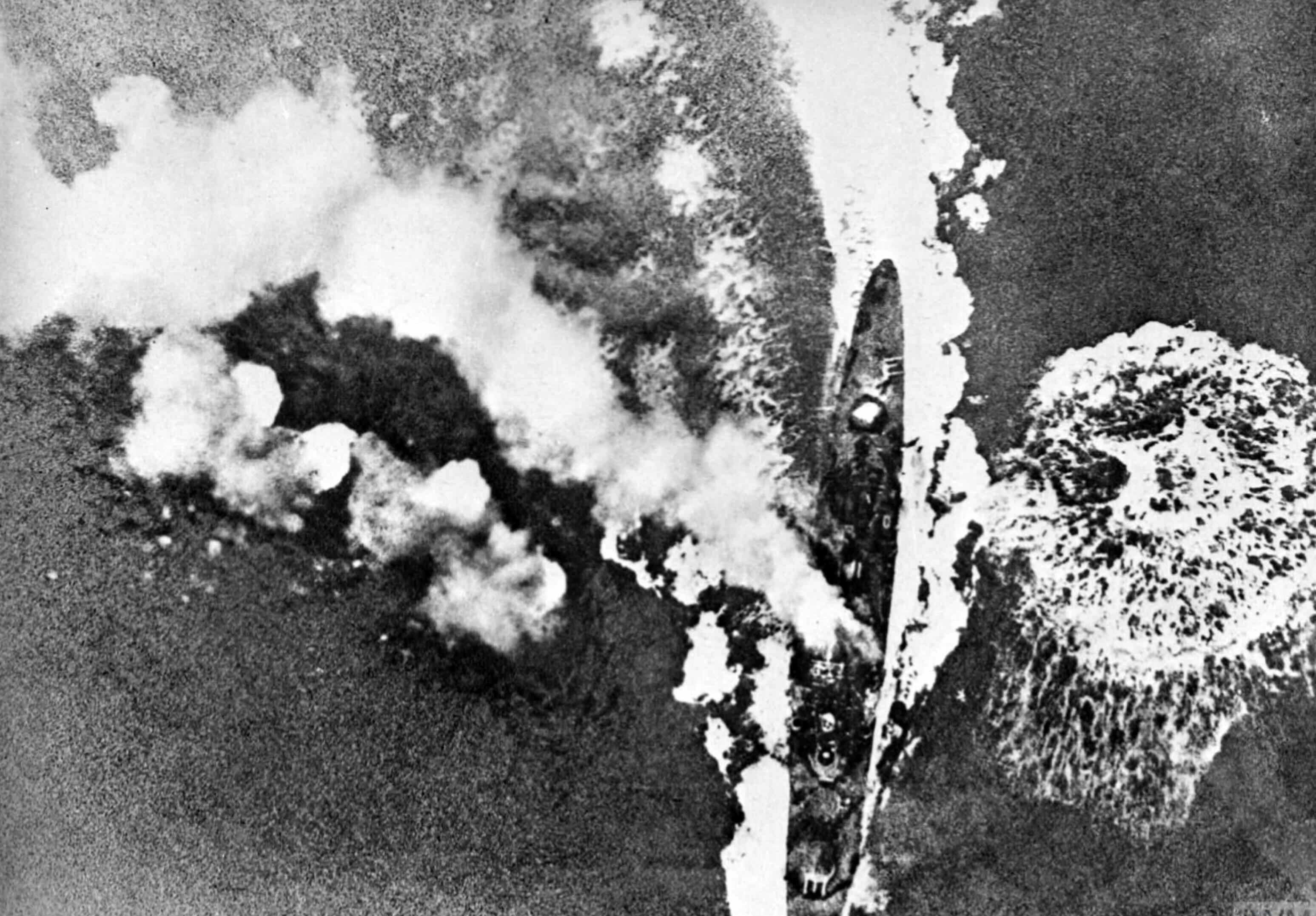
The Royal Navy had sunk large numbers of German troop ships and Greek caiques bringing reinforcements to the airborne invaders. In doing so, they had suffered significant losses. The Luftwaffe dominated the air, and Stuka divebombers were able to bomb any ship at sea within range of the mainland.
As the battle of Crete intensified, the guns of the Royal Navy were now needed to support land operations.
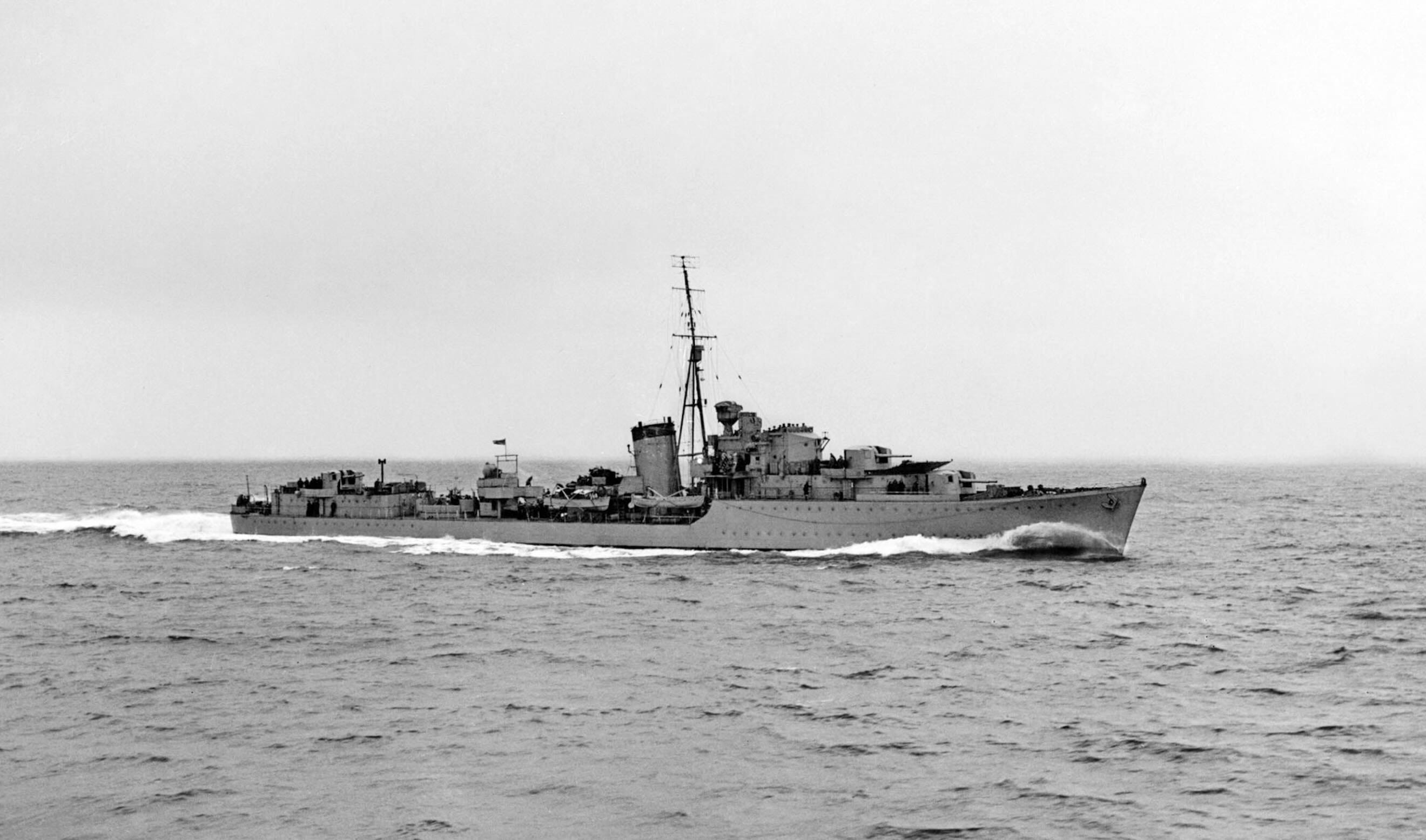
The destroyers HMS Kelly, HMS Kipling and HMS Kashmir were under the command of Lord Louis Mountbatten. In a well-publicised action, he had saved HMS Kelly from near-certain sinking just a year earlier.
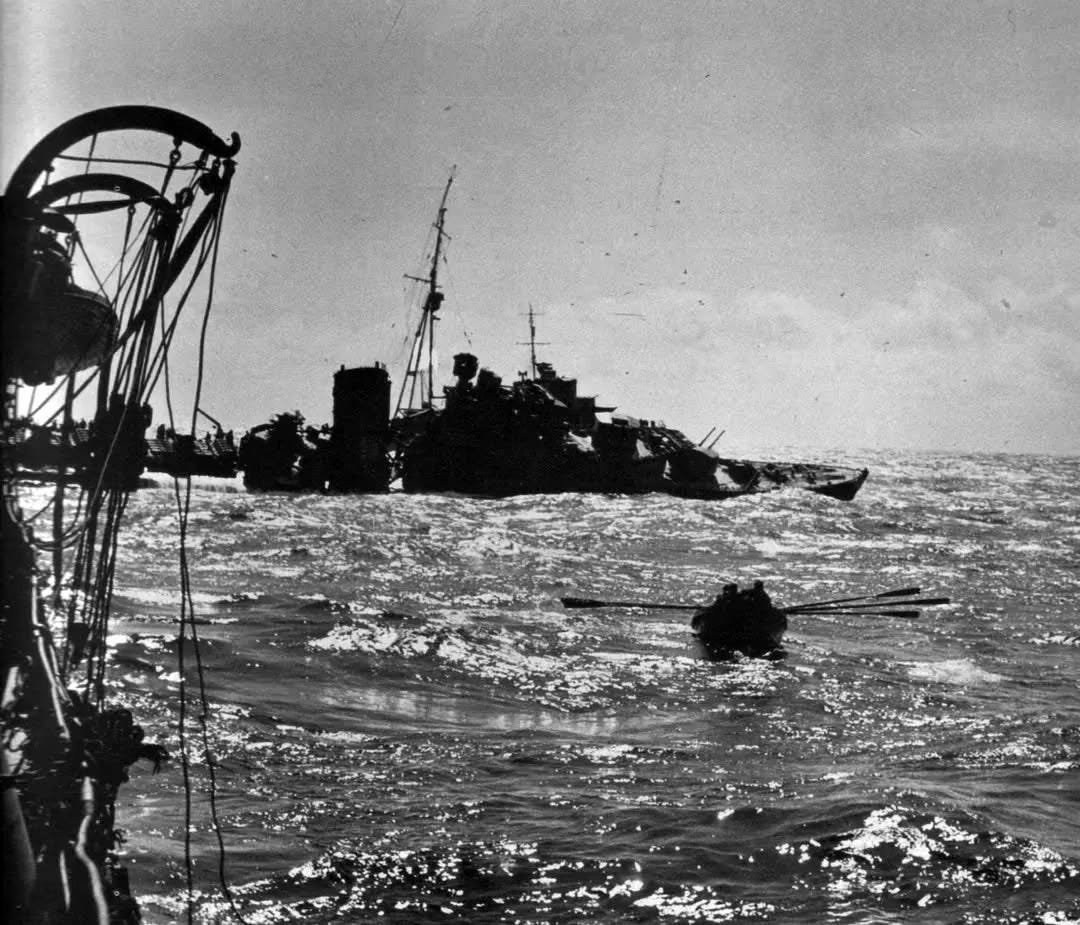
Just about 8 a.m. we suddenly saw 24 ominous black objects.
On 23rd May, Mountbatten was directed to Crete, where they were to bombard Maleme airfield, which had just been captured by German airborne troops, in support of a counter-attack by British forces. HMS Kipling developed steering problems and was detached. Mountbatten’s account comes from a letter to his sister Louise, Queen of Sweden1:
As we entered Canea Bay a large caique was sighted loaded with German troops steering towards Crete. Both ships opened fire and sank her very quickly, the wretched Germans jumping into the water in full marching order. In any other circumstances we would have stopped to pick them up, but even at 30 knots it was doubtful if I could get into position to carry out the bombardment in time, so I had to push on.
We hadn’t got the exact position of the aerodrome, but worked out from a contour map where the airstrip must be. After having completed our bombardment we withdrew at high speed and came across another caique carrying ammunition. Shortly after we started firing at her she blew up in a very spectacular way.
