

Later in the war, the Nazis would go to extreme lengths to destroy all evidence of the Holocaust. The SS hunted down any photographs, whether from official records or taken privately. There were thousands of such images because, in the early years of the war, the Nazis were proud of their persecution of the Jews. Many images survived the efforts of the SS because they had already been widely published.
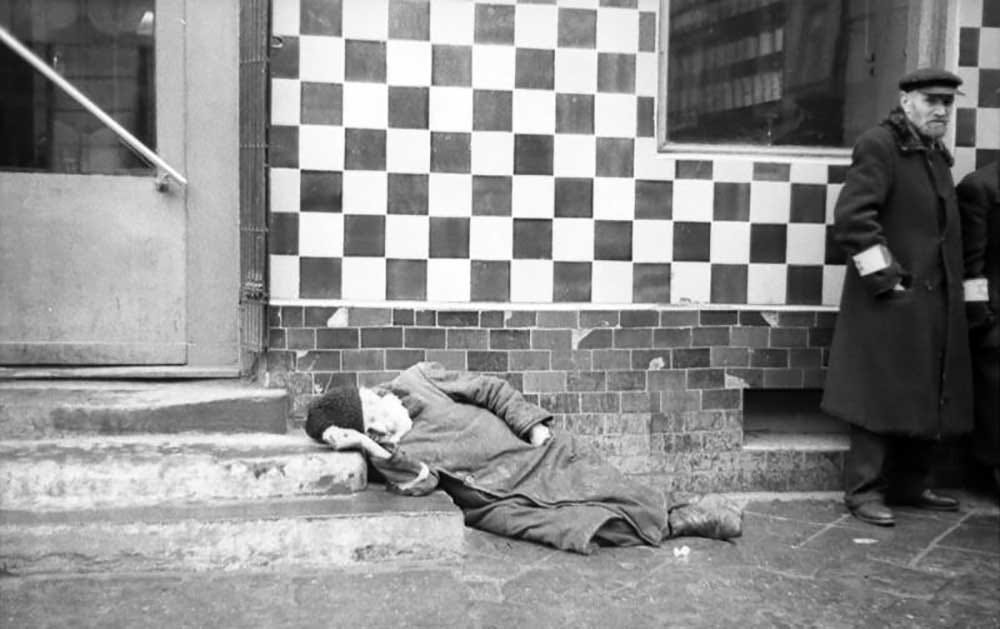
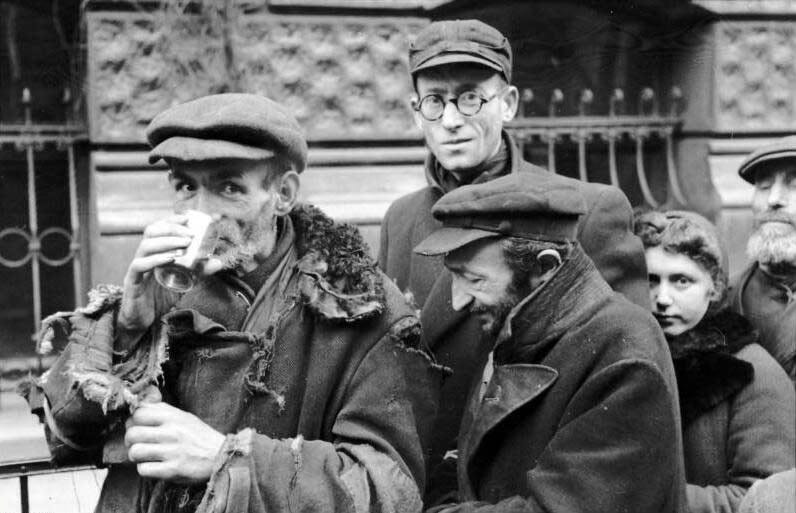
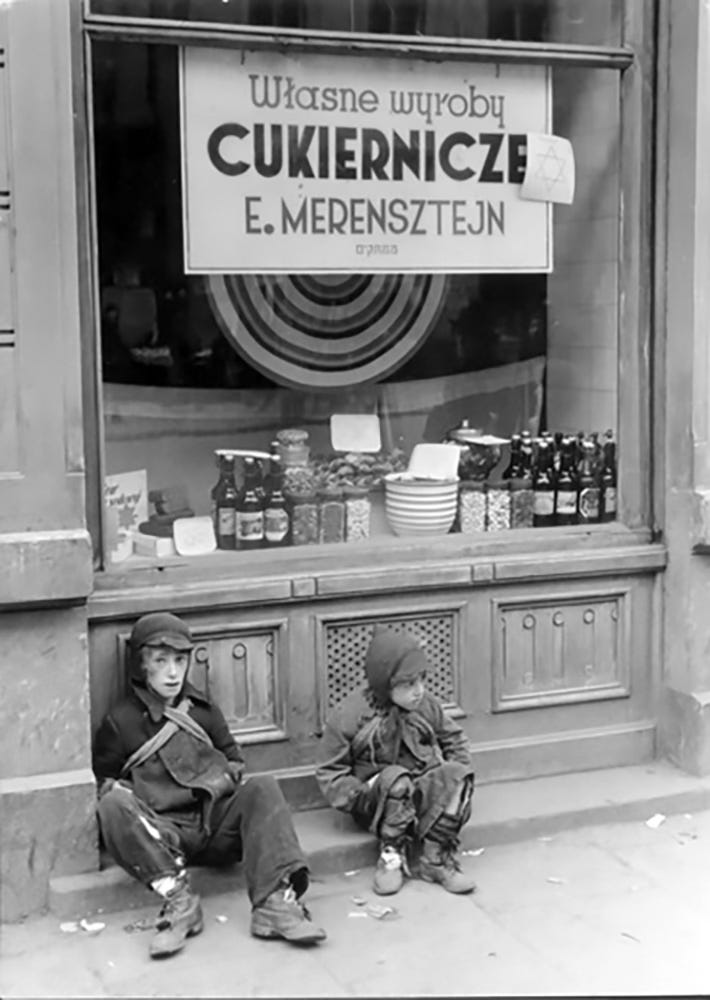
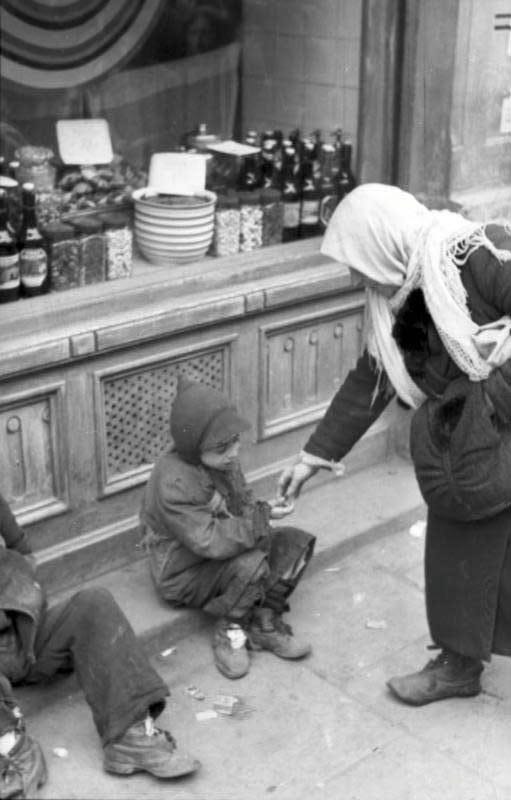
In May 1941, Ludwig Knobloch (1911-1943), a photographer with Wehrmacht Propagandakompanie 689, entered the Warsaw Ghetto. The ostensible aim was to show how the Jews lived in a state of destitution - the implication being that this was the fault of the Jews. The fact that the Germans were responsible for setting extreme limits on the foodstuffs allowed into the ghetto was never admitted.
This was a deliberate policy of starvation. The 180–184 calories per person per day often consisted only of a small amount of bread and a thin, watery soup. By comparison, the allocation was roughly a 699-calorie ration for non-Jewish Poles and over 2,600 calories for Germans in occupied Poland. Only Jews with private resources to access the Black Market could hope to survive. In time, a rigorous system of pooling resources was established by the Jewish authorities in the ghetto, which saved many lives in a prolonged typhoid outbreak1.
There are many written accounts of conditions inside the Ghetto’s of Poland, such as the following anonymous account2. But in May 1941, every picture told a story.:
Hunger grew increasingly severe. More and more patients complained to their doctors of swelling due to hunger, and more and more corpses lay on the ghetto streets. Pale, emaciated children with huge, horribly hungry eyes sobbed and moaned and asked for bread. Living skeletons covered in rags became an increasingly common sight.
There was scarcely a night when you didn’t hear the groans of people dying on the street. The typhus spread. Doctors made superhuman efforts to control the disease: daily rounds of assigned buildings, lectures maintaining hygiene, attempts to obtain soap rations and disinfectants, and long hard hours in the hospital. But the epidemic grew, owing to the conditions inside the ghetto.
Hundreds of dirty, starving Jews who had been declared unfit for work in the labor camps were relocated in Warsaw, and even more people were resettled from the provinces. Typhus decimated the population - in private homes, public shelters, children’s boardinghouses, and in the punkty.
From the anonymous diary of a woman living in the ghetto in 1941, collected in Words to Outlive Us: Eyewitness Accounts from the Warsaw Ghetto