

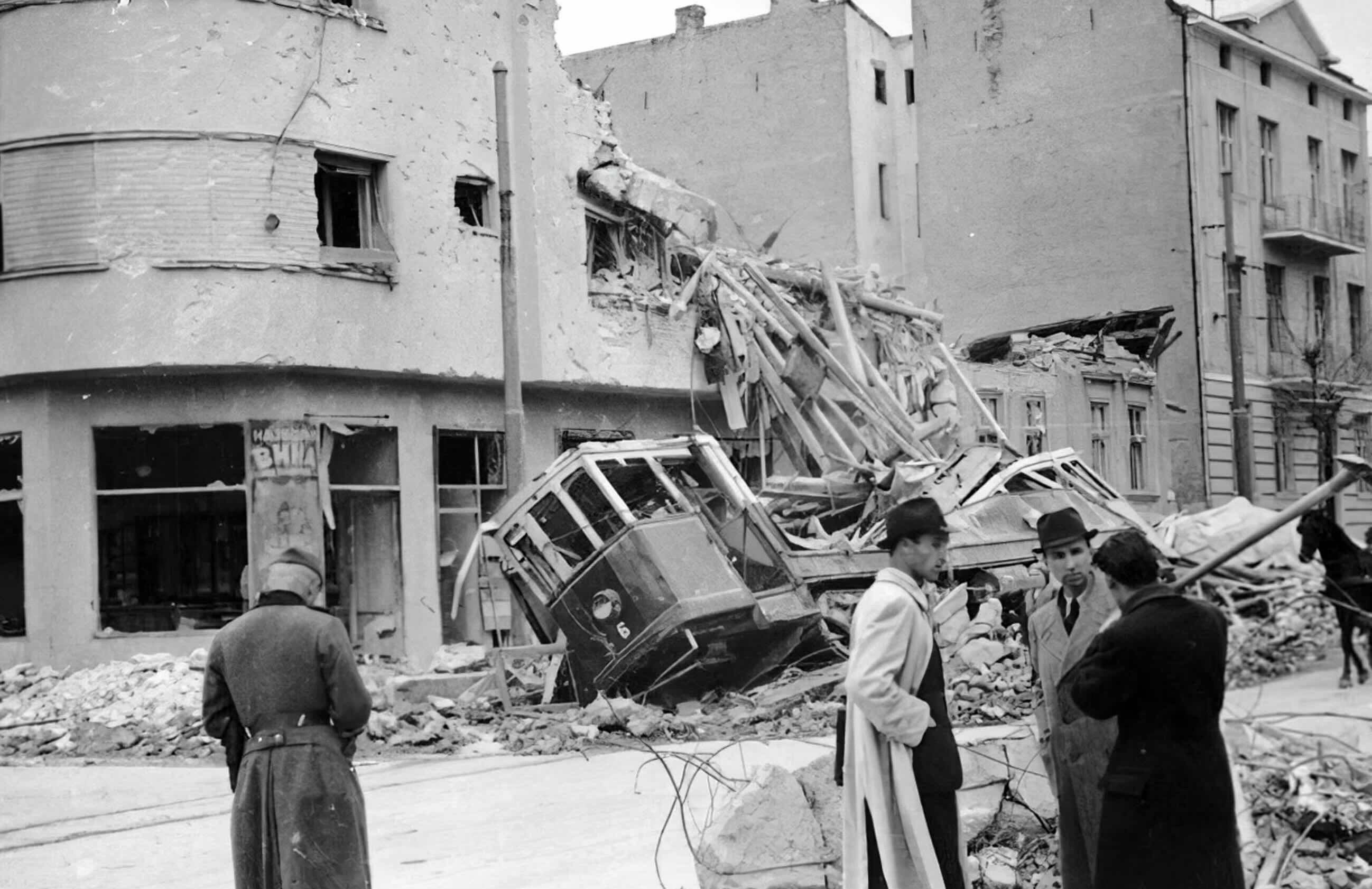
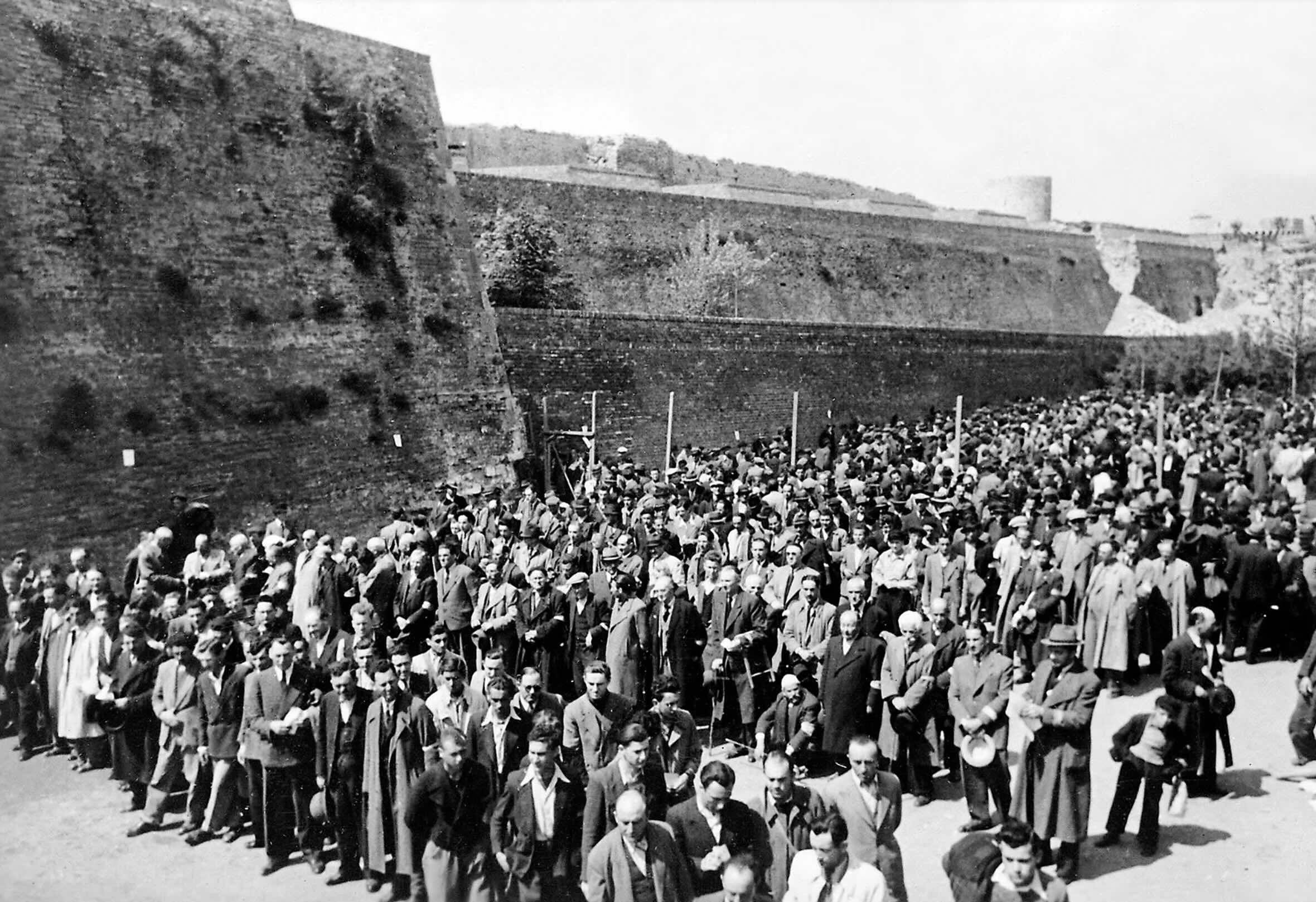
A massive bombing raid on Belgrade, the capital of Yugoslavia, was Hitler’s answer to the popular uprising that had opposed joining Germany in the Tripartite Pact. Hitler demanded a raid of ‘merciless severity’ as a prelude to a ground invasion, which began the same day.
The Luftwaffe transferred around 500 aircraft from northern France, where they had been engaged in the Blitz on Britain, to the region. Early in the morning of the 6th April, Stuka dive bombers, protected by Me 109 fighters, struck at will. The small Yugoslav air force was no match. Many significant buildings in the centre of the city were destroyed, and thousands died in later raids which hit residential areas.
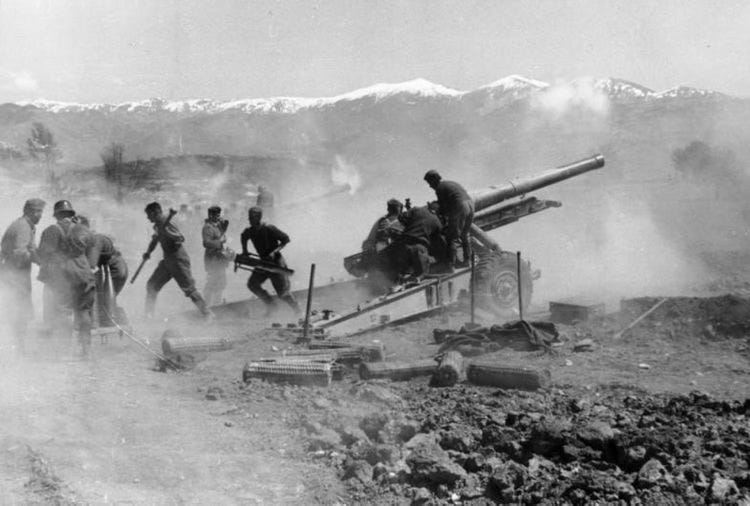
Simultaneously, Hitler launched a ground invasion of Greece, supported by his Axis Allies, Hungary and Bulgaria.
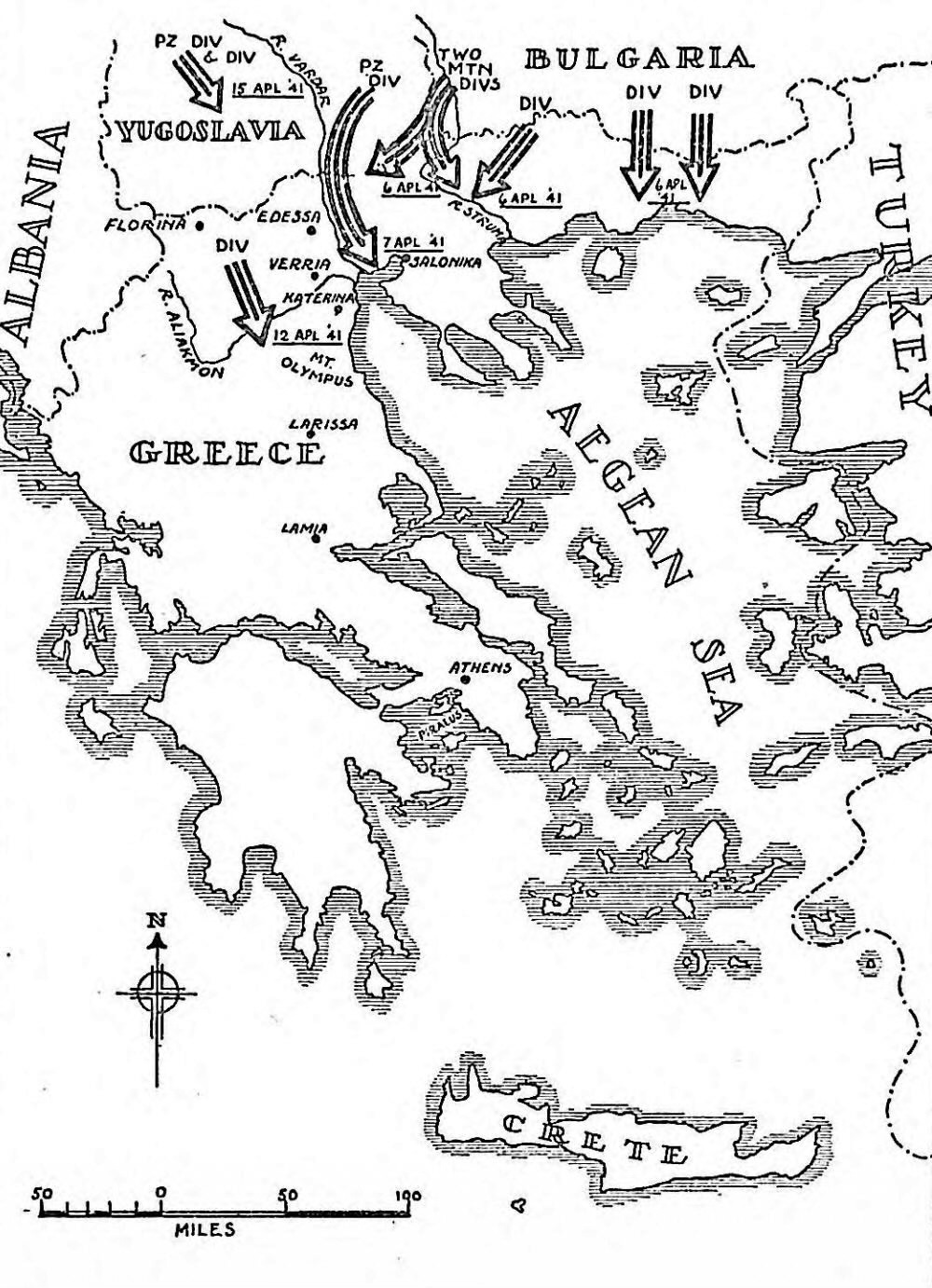
Churchill’s strategy of trying to build a new front in the Balkans was immediately exposed as a weak facade that could do nothing to halt Hitler in the region. He had sent his Foreign Secretary, Anthony Eden, to get Greece to allow British forces into the country. The Greek Prime Minister had insisted that it must be a substantial force, capable of resisting the Wehrmacht, not merely a provocation to Hitler.
Churchill had ignored the advice of his most senior generals that the British lacked the resources to arm the Greeks and Yugoslavs, and that diverting troops from North Africa to Greece would undermine the successful campaign in Libya.
But this difficult situation was now compounded by Rommel’s unauthorised offensive against the British in North Africa. This had never been part of an overall German plan; it was merely an opportunistic move when Rommel detected weakness.
For the British commanders in the Middle East, this was now a very dangerous moment, as Brigadier Freddie de Guingand was to observe1:
