28th January 1941: The need for food ration coupons and the general shortage of food affects everyday life in Britain
∙ Paid
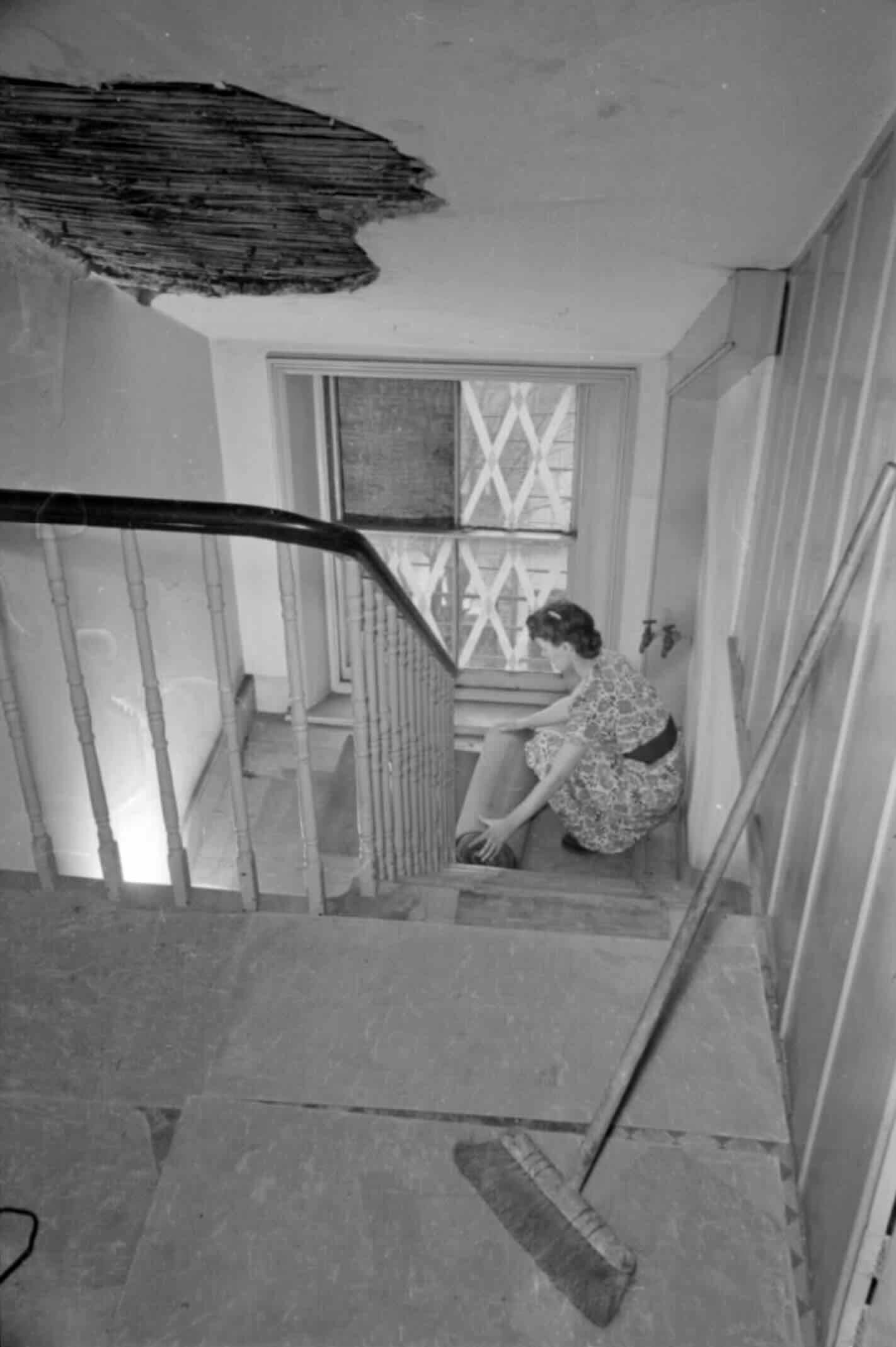
The Ministry of Information produced a Photographic essay - A Day In The Life Of A Wartime Housewife: Everyday Life In London, England - in early 1941. This followed Mrs Day and documented how the war was affecting every household, albeit this example was from an affluent neighbourhood. “Mrs Olive Day rolls away a rug that was on the staircase of her South Kensington home. All carpets have been removed and asbestos laid in their place, in an attempt to combat fire bombs. Behind her, part of the window has been boarded up, with the rest of the panes have criss-crosses of tape across the glass.
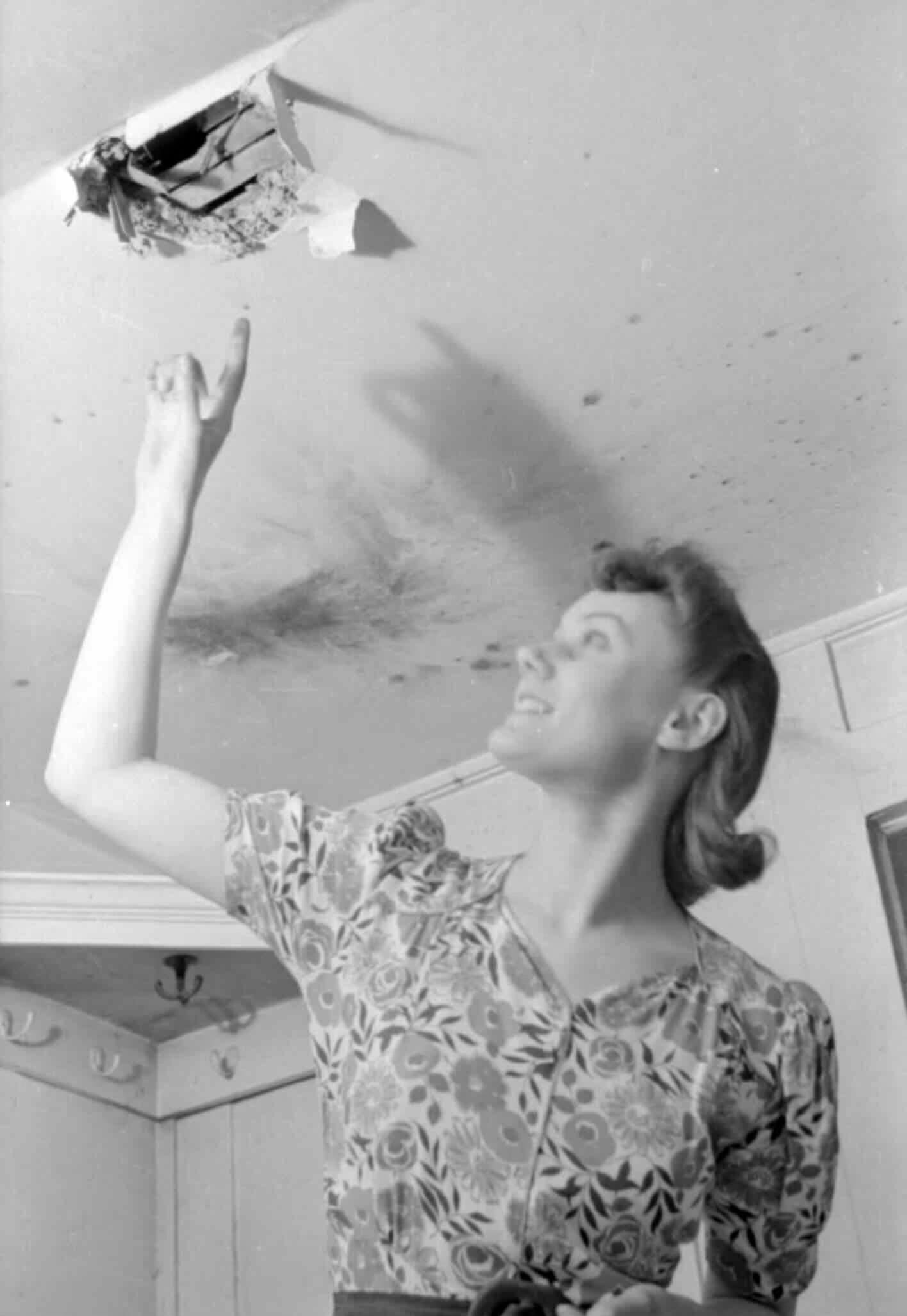
Mrs Day points to a hole in the ceiling where a fire bomb recently came through into her South Kensington home. Scorch marks can be seen on the ceiling next to the hole
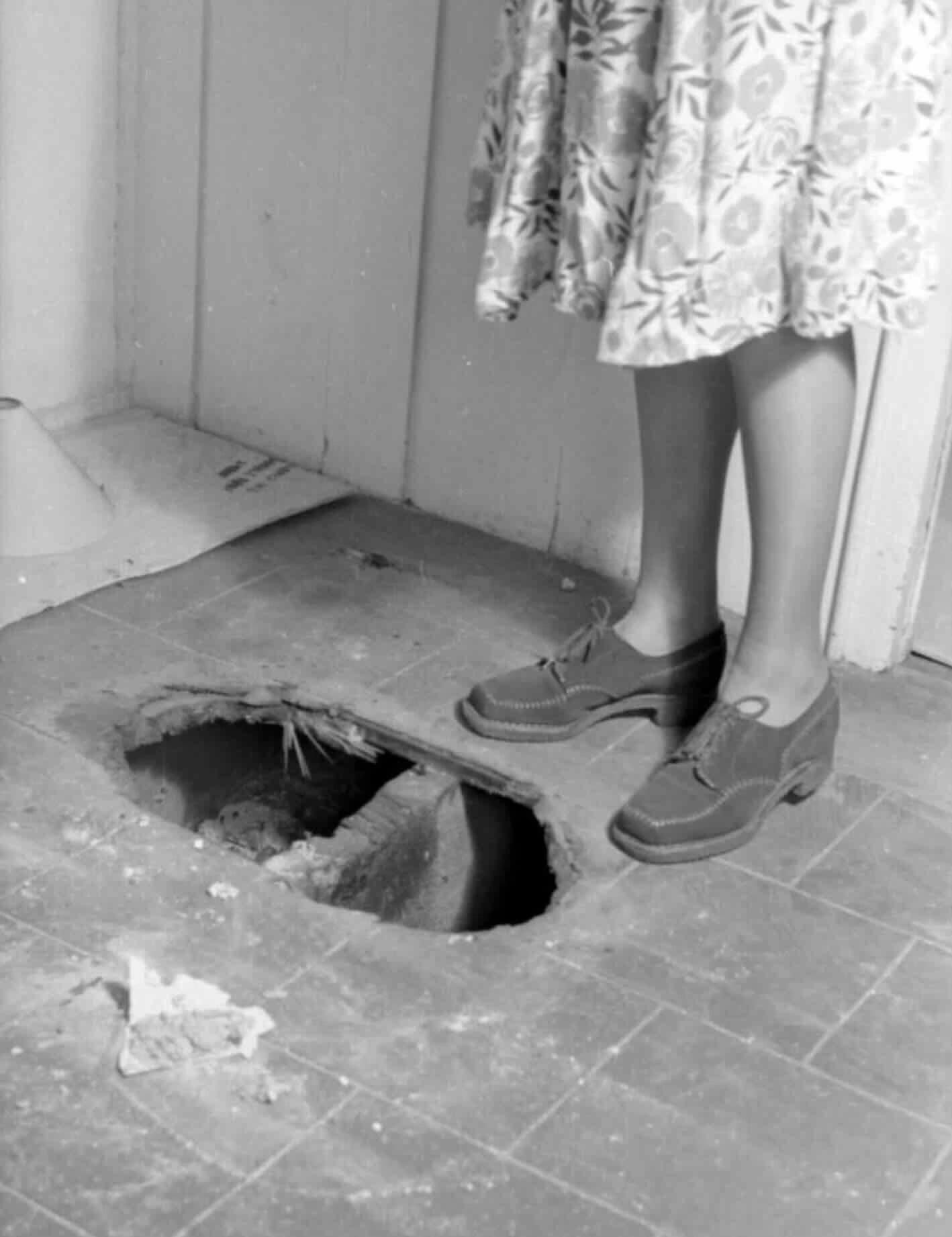
Mrs Day stands alongside a hole in the floor which was made by a fire bomb before the fire was brought under control. This area of the house does not have asbestos sheeting on the floor
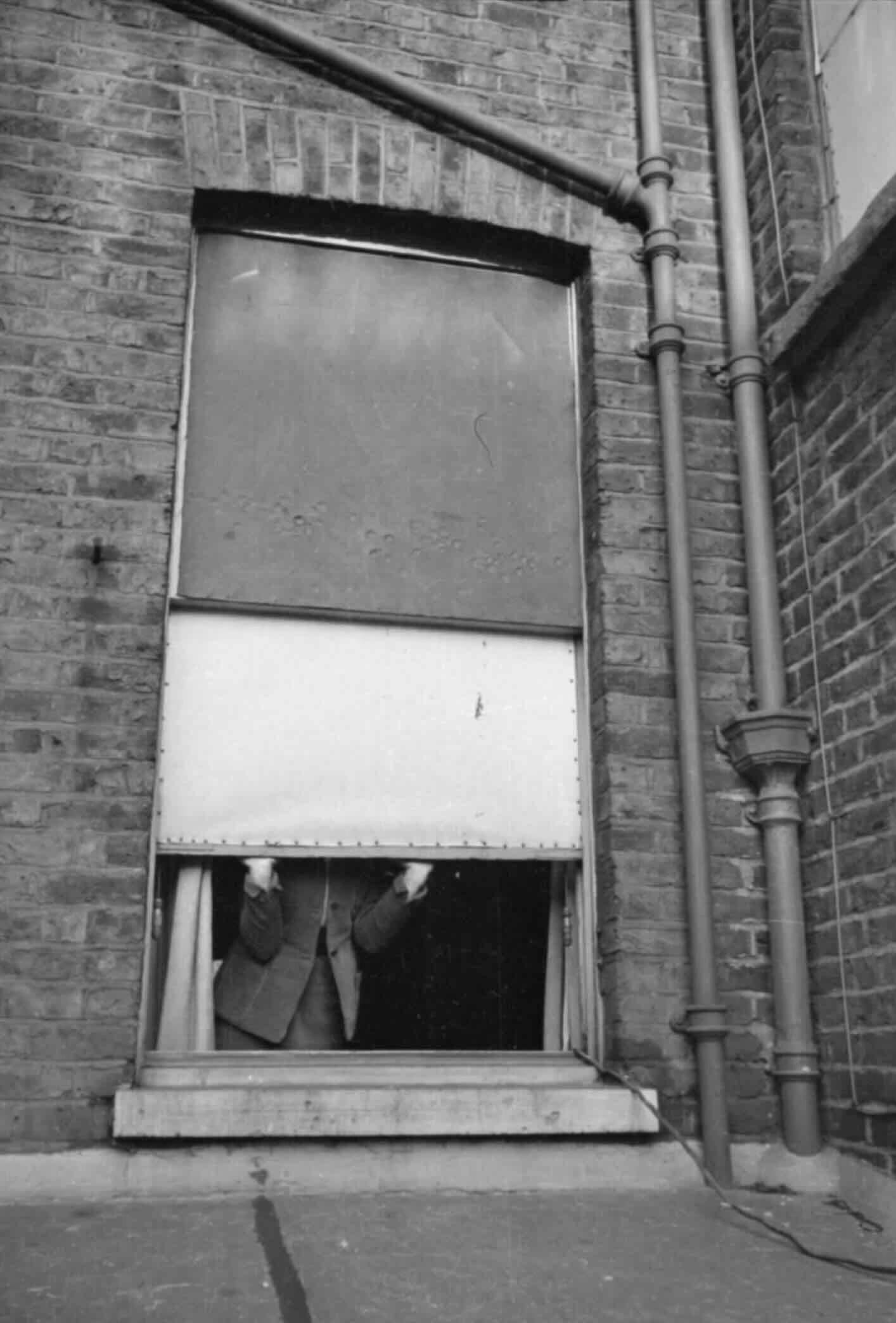
Mrs Olive Day opens her window to let some air, and light, into her South Kensington home. The window panes have been replaced by oiled linen stretched over the frame, as the glass was knocked out by a nearby bomb a short while ago.
Besides the bombs and the widespread death and destruction, there was one factor affecting everyone in Britain. The shortage of food and the impact of food rationing are mentioned in many diaries. Quite apart from the real hunger this produced, there was the inconvenience of the surrounding bureaucracy, the time spent hunting for rare items like eggs or fruit, and the hours spent queuing. Very, very quickly, the restrictions on imports produced by the U-boat blockade of Britain were felt across the country.
Continue reading this post for free, courtesy of Martin Cherrett.