World War II Today

World War II Today

Churchill praises Roosevelt

9th January 1941: In a 'sublime cause', they are standing on 'the watch towers of history' in an 'awe-striking climax in world affairs'

Jan 09, 2026
∙ Paid
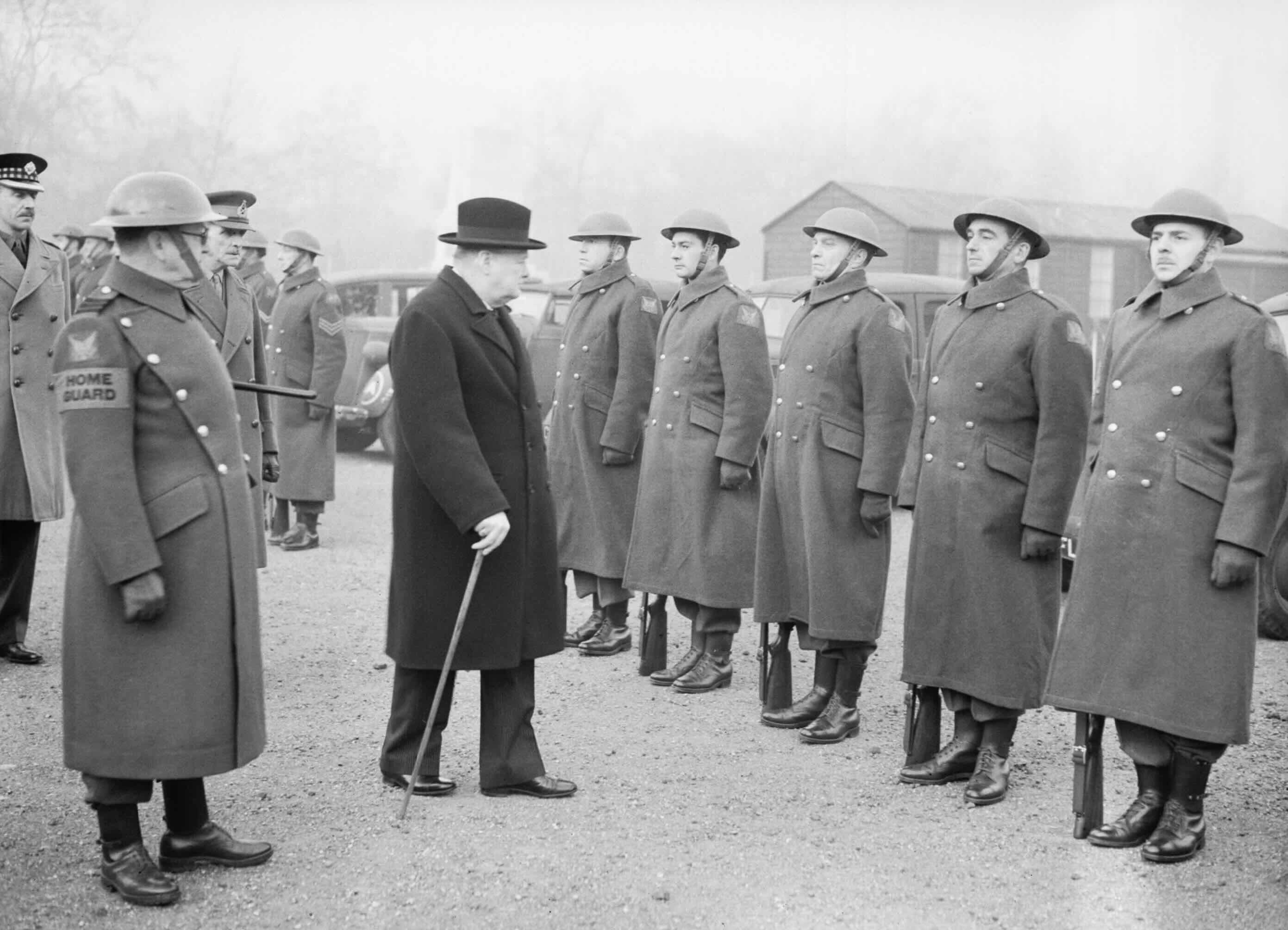
The Prime Minister Winston Churchill inspects the 1st American Squadron of the Home Guard on Horse Guards Parade, London, on 9 January 1941.
Winston Churchill raises his hat in salute during an inspection of the 1st American Squadron of the Home Guard at Horse Guards Parade in London, 9 January 1941. Behind, Mrs Churchill chats to a Guards officer. Lieutenant General Sir Bertram N Sergison-Brooke (GOC London Area) is standing on the right.

Churchill once again set out his view of the epic struggle that faced the world. On the 9th January, he addressed the Pilgrims Society1 at a luncheon in London:

It is no exaggeration to say that the future of the whole world and the hopes of a broadening civilization upon Christian ethics depend upon the relations between the British Empire or Commonwealth of Nations and the USA.

The identity of purpose and persistence of resolve prevailing throughout the English-speaking world will, more than any other single fact, determine the way of life which will be open to the generations, and perhaps to the centuries, which follow our own.

If the co-operation between the United States and the British Empire in the task of extirpating the spirit and regime of totalitarian intolerance, wherever it may be found, were to fail, the British Empire, rugged and embatded, might indeed hew its way through and preserve the life and strength of our own country and our own Empire for the inevitable renewal of the conflict on worse terms, after an uneasy truce.

But the chance of setting the march of mankind clearly and surely along the highroads of human progress would be lost and might never return.

… the fire of resistance to aggression and oppression, and whose sympathies and nature make him the sincere and undoubted champion of justice and of freedom …

Therefore we stand, all of us, upon the watch towers of history, and have offered to us the glory of making the supreme sacrifices and exertions needed by a cause which it may not be irrelevant to call sublime.

I have always taken the view that the fortunes of mankind in its tremendous journey are principally decided for good or ill - but mainly for good, for the path is upward - by its greatest men and its greatest episodes.

I therefore hail it as a most fortunate occurrence that at this awe-striking climax in world affairs there should stand at the head of the American Republic a famous statesman, long versed and experienced in the work of government and administration, in whose heart there burns the fire of resistance to aggression and oppression, and whose sympathies and nature make him the sincere and undoubted champion of justice and of freedom, and of the victims of wrongdoing wherever they may dwell.

From some perspectives, the eventual defeat of Germany was inevitable once the United States' industrial might was behind Britain and the other Allies.

But the 9th January marked another significant development in the future conduct of the war. Almost by accident, a new aircraft came into being, the aircraft that would enable Britain to turn the tables on the Luftwaffe. Bombing Germany was the only direct means of hitting back at Hitler for several years. The first flight of the Lancaster bomber showed that it was now a realistic possibility. It was all due to the persistence of one man.

Roy Chadwick (1893-1947) was Avro's chief designer, responsible for 35 production models.

Roy Chadwick, the chief designer at Avro, had designed the twin-engined Manchester bomber to an Air Ministry specification. It was not a success, and there were particular problems with the powerful Rolls-Royce Vulture engines, which were unreliable. Chadwick independently began developing the airframe design to accommodate four of the tried-and-tested Rolls-Royce Merlin engines.

The twin-engined Manchester proved to be an underpowered death trap for the men who flew her when she went into service.

From this process, the Lancaster bomber emerged, destined to become the principal aircraft of Bomber Command and one of the most famous aircraft ever built. Sam Brown the test pilot of Avro described the aircrafts performance following the test flight as ‘marvellous - easy to fly and light on the controls’.

Prototype Avro Lancaster BT308 at Ringway, January 1941

Roy Chadwick2 was a driven man, demanding of those working for him but also of himself. When Chadwick’s daughter, who watched the flight alongside her father, suggested he should be very pleased he merely replied ‘Yes I am, but in this business one cannot rest on one’s laurels. There is always another and another aircraft’.

The Lancaster still flies today, as part of the Battle of Britain Memorial Flight. Here in the markings of No 460 Squadron RAAF.
1

The Pilgrims Society, founded in 1902, is a British-American society established 'to promote goodwill, good-fellowship, and everlasting peace between the United States and Great Britain'. King Charles III is a current member alongside many senior US politicians, diplomats and other notable figures.

2

Leo McKinstry: Lancaster - The Second World War’s Greatest Bomber

© 2026 Martin Cherrett · Privacy ∙ Terms ∙ Collection notice
Start your SubstackGet the app
Substack is the home for great culture