Persecution of the Jews in Poland
7th December 1940: Anti-semitism is so deeply embedded in the Nazi state that they are content to document their own persecution of destitute people

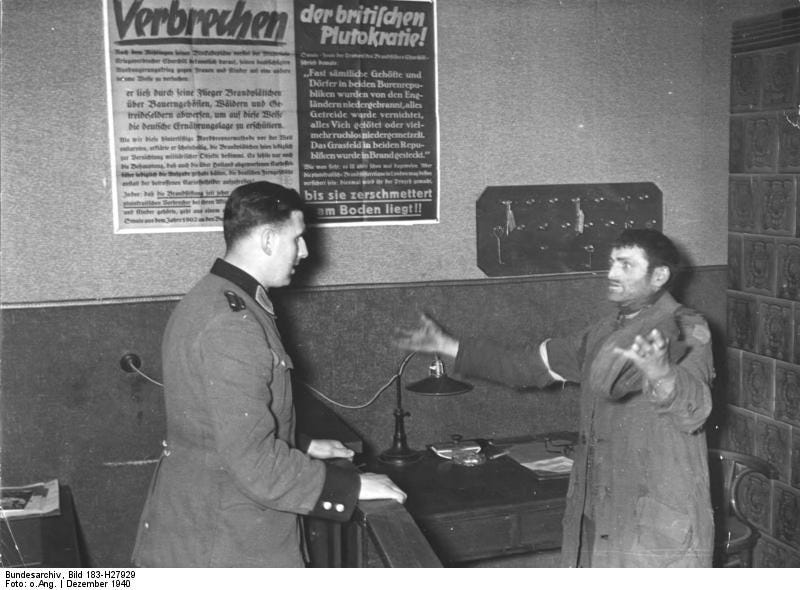
The persecution of the 400,000 Jews in the Warsaw Ghetto is relatively well documented. But the same system of confining the jews to ghettos applied to the whole Jewish population in the German-occupied area of Poland, around 1.7 million people. And the Nazis were so proud of their actions that they were documenting them in photographs to be used as propaganda at home.
In this series of German propaganda photographs, the occupying forces chose to document a minor incident. A formal ghetto was not established in Lublin until March 1941, but long before then, the life of the Jewish population was very difficult. Many people were rounded up on the streets and sent to the labour camp at Belzec, where poor living conditions, little food and harsh work killed many.
There was every incentive to hide from the regime. Once the Holocaust got under way the population of the Lublin ghetto would be among the first to be sent to the death camp at Sobibor. 40,000 Jews lived and thrived in Lublin before the war, a commercial area with many different craft industries and a long Jewish cultural tradition. It is estimated that less than 250 survived.
The full explanation for these pictures is not clear. In general, the anti-Semitic propaganda sought to portray the Jewish population as furtive, unclean and somehow despicable. German propaganda explicitly sought to associate them with vermin, a feature of the propaganda film ‘The Eternal Jew’, and that association may lie behind these images. The fact that it was the Germans themselves who had reduced the Jews to a state of destitution made no difference to this logic.