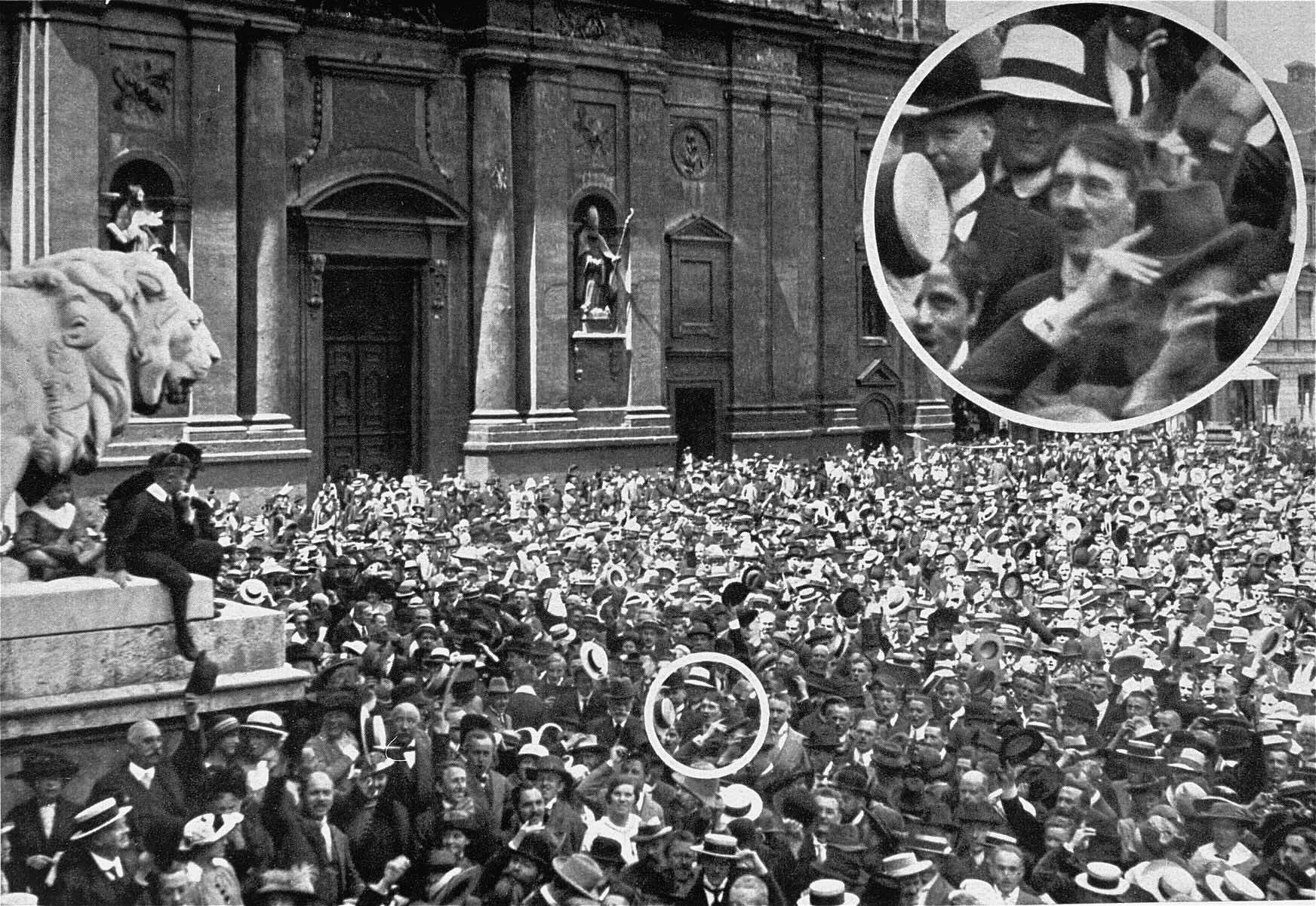
As Roger Moorhouse notes in his introduction, Heinrich Hoffmann could claim to be ‘one of the most important photographers of the 20th century’. He had ‘exclusive and intimate access’ to not just ‘a major Head of State’ but to a key figure in world history. He was an established professional photographer who had photographed the Kaiser and the visiting British Royal family long before he took up with Hitler. He was a pioneer in taking his new Leica outside, for images beyond the established tradition of studio portraits. He stood by Hitler from the earliest days through almost the very end, occupying a unique position in the inner circle.
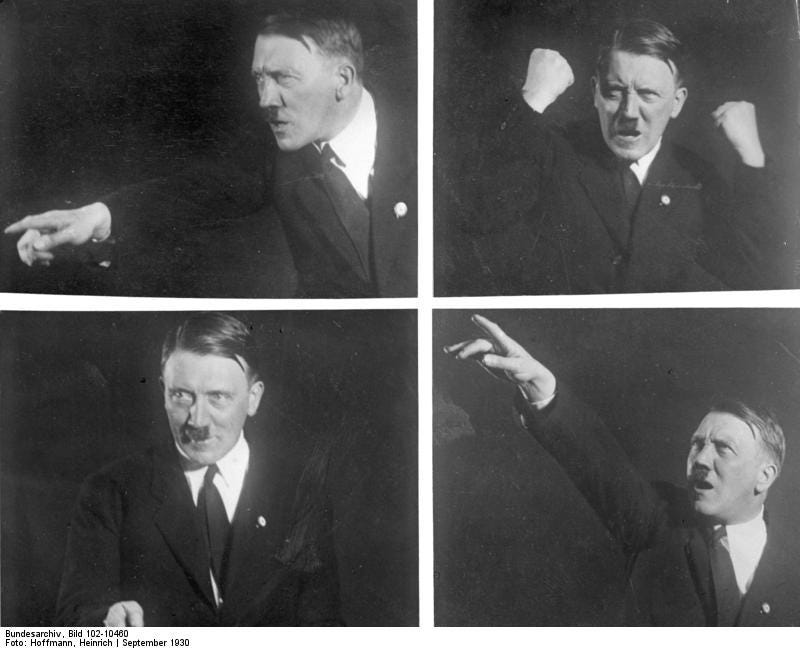
And he was not just taking photographs of Nazi cronies and, later, State occasions; he was not just keeping a record. He helped shape Hitler’s image worldwide; he introduced him to Eva Braun, his young assistant, and he was a sympathetic ear at, it seems, any hour of the day or night. His photographs were even instrumental in helping Hitler develop his oratorical style.
So ‘Hitler Was My Friend’ is an important document, even though it was completed only after the war, as a collection of reminiscences. The following excerpt describes how he lived alongside Hitler for much of the war:
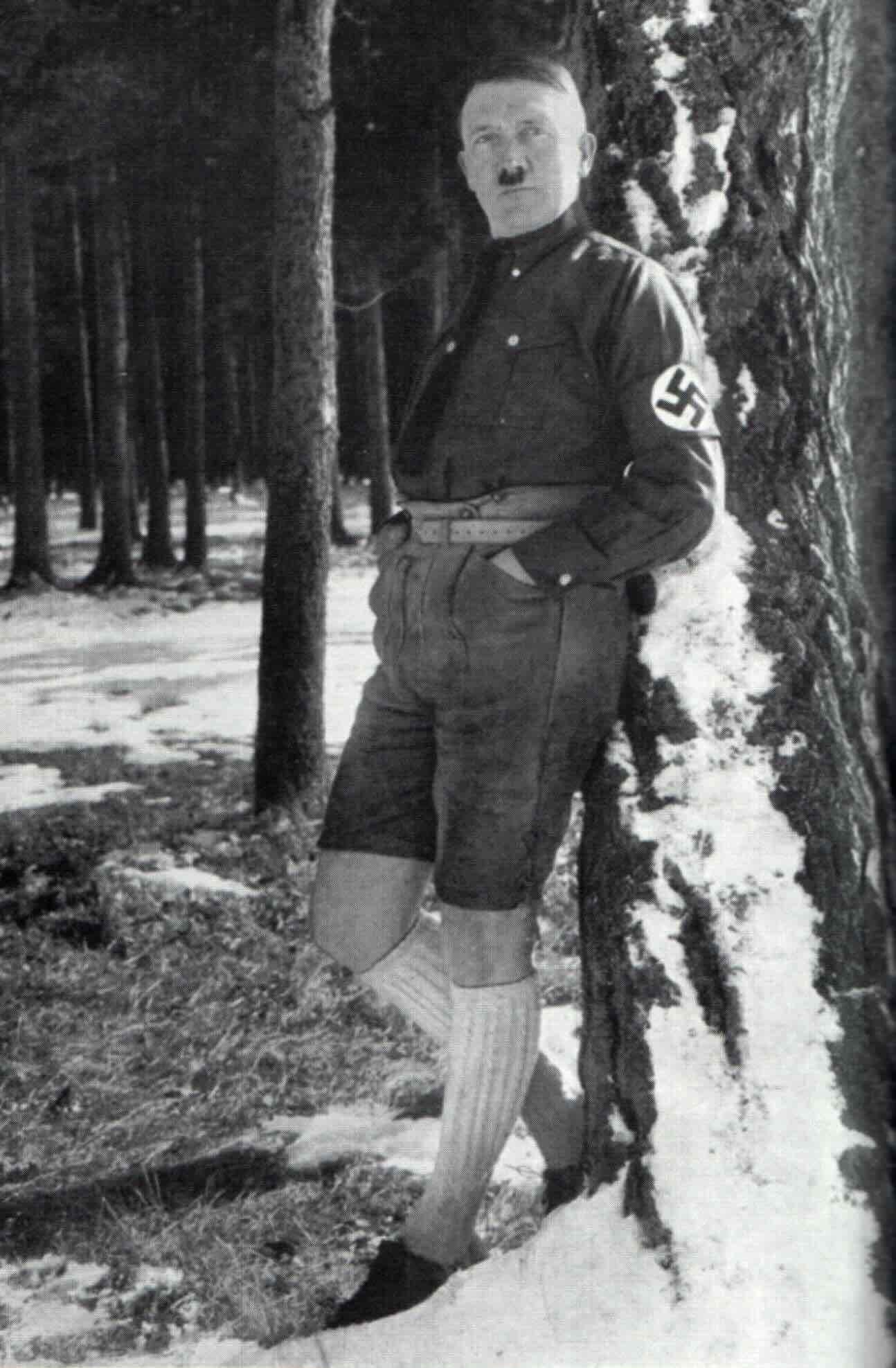
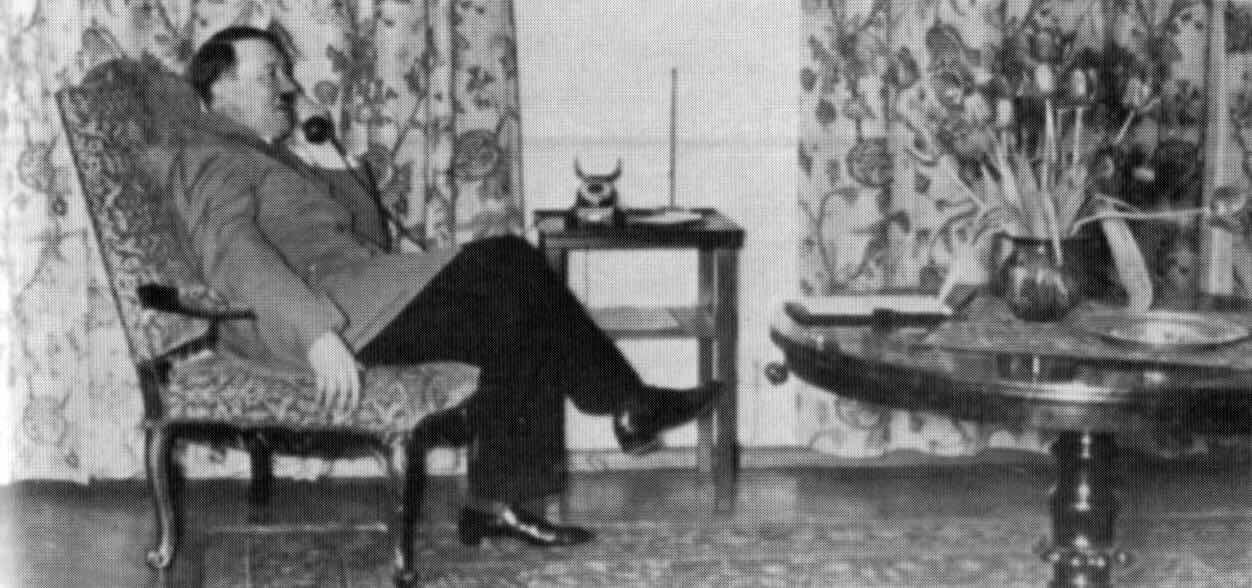
With the exception of the Felsennest in the Eifel [during the invasion of France], all of Hitler’s Headquarters bore names that had some connection with the wolf - Wolfsschanze, Werwolf, Wolfsschlucht; this was because, at the beginning of his political career, Hitler had used the pseudonym Wolf.
At these Headquarters the invitation to the ‘evening’ cup of tea usually came about three o’clock in the morning, after the last of the situation reports had been discussed. Usually very few people were present, and the party normally consisted of Hitler’s aides and secretaries, a doctor and any liaison officer from Ribbentrop or Himmler who happened to be at Headquarters. Unbeknown to Hitler, these latter had been given the task by their chiefs of intimate circle, reporting every minute detail of what happened in the Führer’s intimate circle.
My own quarters were simple but well-furnished and comfortable, consisting of a sitting-room, bedroom and bathroom, and, to help me to while away my many free hours, I was also given a wireless. In the same barrack with me lived Professor Dr Morell, Admiral Voss, General Bodenschatz, who was Göring’s Adjutant, and Obergruppenführer Wolf, Himmler’s Adjutant and the man who later made the first overtures for an armistice in Italy. My job at Headquarters consisted exclusively of taking photographs of officers and men who had come to be presented with various decorations - hardly a full day’s work!
These talks took place for the most part in the middle of the night and often, by the time I left the Führer’s dugout, the sun was already high in the heavens …
Hider’s personal quarters were deep underground, with a cement roof 25 feet thick, dark, windowless and devoid of fresh air; night and day they were lighted by electricity, and a pump did its best to keep the atmosphere healthy. I just used to sit and wait until Hider sent for me, either to take a meal or to have a talk. These talks took place for the most part in the middle of the night, and often, by the time I left the Führer’s dugout, the sun was already high in the heavens, and I would fling myself on my bed sleepy, tired out and in a thoroughly bad temper.
Life in this inner ring was both boring and exhausting. As long as Hitler continued to take his meals with us, there was always something of interest to listen to, but once he had decided to eat alone, boredom reached its zenith. We lived in complere isolation, except for occasional arrivals commanded to attend by Hitler to he decorated by him personally with the Knight’s Cross of the Iron Cross, with Diamonds and Swords. While most of these heroes painted the situation at the front in the rosiest of colours, some of them spoke pretty bluntly, much to Hitler’s annoyance. When they had gone, he would say that each man could only see the situation on his own tiny bit of the front and was, of course, in no position to venture an opinion on the whole.
A frequent visitor was Field Marshal Rommel, of whom Hitler ar first held the highest opinion. I remember taking photographs when Rommel came to submit a report on his unsuccessful offensive against Egypt in the summer of 1942. Rommel, incidencally, was the only man to whom Hitler gave permission to talk to the international press reporters in Berlin.
After his crushing defeat at El Alamein by General Montgomery, Rome realised thac his position in North Africa had become untenable, and he flew at once to Führer-Headquarters - this time to be received very coldly. On various occasions, most of our Field Marshals and senior Generals - von Brauchitsch, von Rundstedt, von Leeb, Mannerheim*, Guderian, who was relieved of his command, and Hoepner, who was dismissed from the Army by Hitler in person - paid us visits, but beyond marking the occasion with photographs, I did not come into contact with any of them.
When, in the winter of 1941 the German armies became bogged down in the snow and terrible cold at the gates of Tula and Moscow, there was a scandal about the inadequacy of the troops winter clothing. Hitler immediately set to work and himself designed the types of clothing that were to be manufactured, but by the time they were in mass production, it was already too late, and many thousands had died of exposure.
Don’t you worry! Nothing like that can happen to us - I’ve studied my history far too well!
Hitler was completely confident of the ability of the German armies to defeat Russia speedily and decisively. Quite early on, I remember, I ventured to say that I hoped we would avoid making the same mistakes as Napoleon. Hitler laughed ‘You sound like one of the western propaganda merchants, my dear fellow,’ he replied. ‘If Napoleon couldn’t do it, Hitler can’t! - That’s the parrot cry with which they are trying to comfort themselves. Don’t you worry! Nothing like that can happen to us - I’ve studied my history far too well!’
© Heinrich Hoffman 1955, ‘Hitler Was My Friend: The Memoirs of Hitler’s Photographer’. Reproduced courtesy of Pen & Sword Publishers Ltd. Also available as an eBook.

Affiliate Links
Recently on World War II Today ...