Many military historians have been attracted to the relatively short battle for Crete, which unfolded in the last week of May 1941, including Antony Beevor and the late Professor Callum MacDonald. John Hall Spencer (1928-2022), who was first a Royal Marine officer, beat them all to it with ‘Battle for Crete’, published in 1962 to critical acclaim, subsequently reprinted twice.
The intensely fought battle pitched some of Hitler’s best troops, his Fallschirmjäger, against some of Britain’s best, amongst them the Australians and the New Zealanders. The British were forewarned but disorganised, the majority of men having just been evacuated from Greece with very little equipment, ammunition, etc., sometimes without their officers. Both sides made tactical mistakes, and there is much to pick over in determining the many factors that contributed to victory or defeat. This is a balanced account drawing on sources from both sides.
The following two excerpts look at German preparations for the invasion and the state of British forces waiting on the island:
Hitler did not have an operation against Crete in mind … when he launched the attack on Greece. He, too, had to decide quickly. It has been said that his object was to rid Greece of the R.A.F. who menaced the Italian and Romanian oil-fields, and the idea of completing this operation by airborne capture of Crete was first put forward by the Luftwaffe.
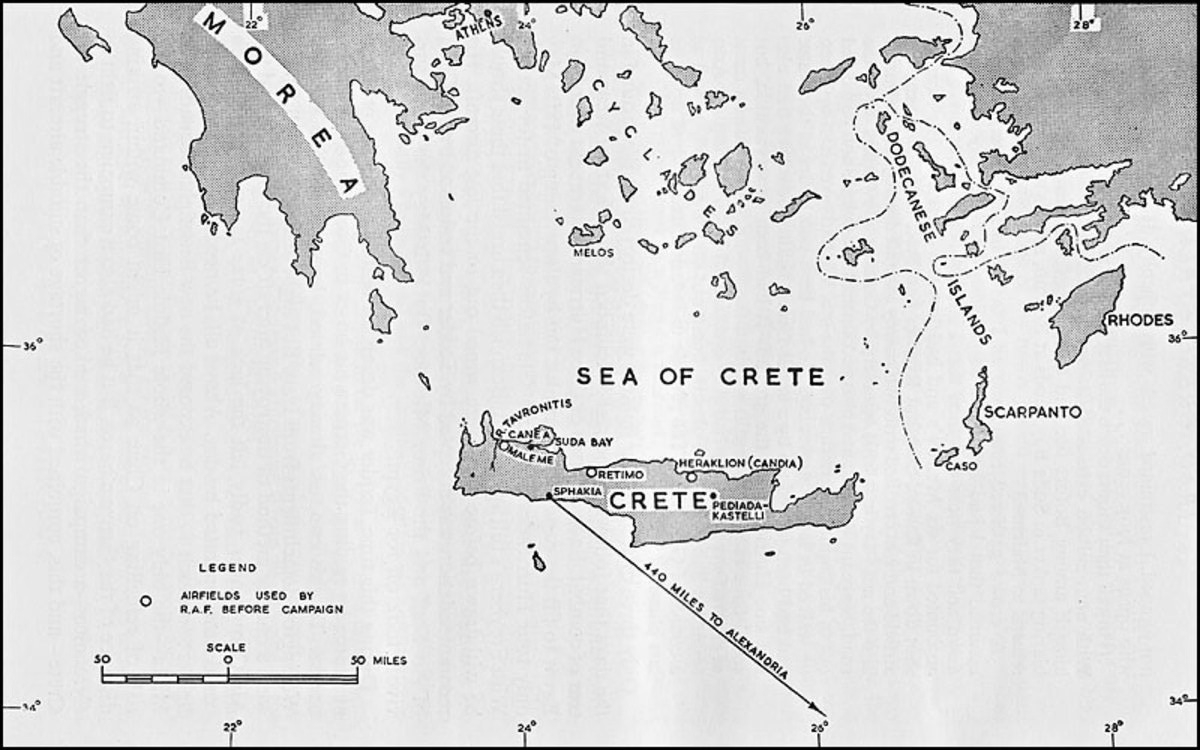
The strategic value of the island was obvious enough. On 28 October 1940, General Halder, the German army’s Chief of General Staff (O.K.W.) had recorded in his diary that the desert supply problem could never be solved until Alexandria was a German base, and that this in turn depended on mastery of the Mediterranean and possession of Crete by means of air landing. Suda Bay provided the British navy with a refuelling base.
The capture of Crete would close the Aegean to them, and make the sea route from the Danube through the Dardanelles and the Corinth Canal secure for the Italians’ oil supplies. And the airfields at Iraklion and Maleme would establish the German air force on the flank of the North African theatre and alongside the route from Malta to Alexandria. It was apparent that, if Crete fell into German hands, the whole British position in the eastern Mediterranean would be worsened; there would then be little to check German expansion into Africa and Asia.
Halder’s diary entry for October 26, that is two days before the Italian attack on Greece, reads: ‘In order to obtain conclusive results we must strike simultaneously at Crete and Egypt.’ With Rommel established in North Africa, this was now feasible.
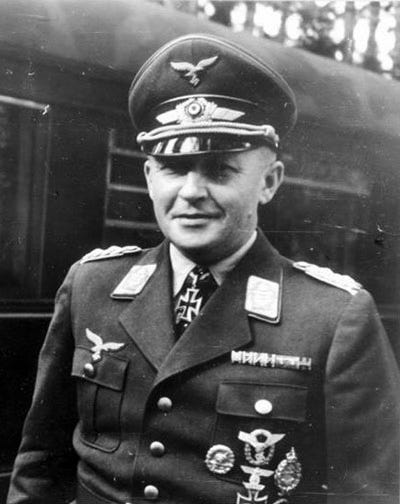
About ten days after launching the attack on Greece and Yugoslavia, the Commander of Luftflotte IV, Colonel-General Lohr, proposed to Goering that Crete should be captured by airborne and parachute troops of Fliegerkorps XI, itself commanded by General Student but acting wider his direction together with the ground support aircraft of Fliegerkorps VIII.
Reichsmarshall Goering then acted as spokesman. His was a powerful and compelling personality. Hitler was soon persuaded. And Directive No. 28 was issued on 25 April 1941. It began:
‘An operation to occupy the island of Crete, Operation Merkur, is to be prepared with the object of using Crete as an air base against Britain in the eastern Mediterranean.’
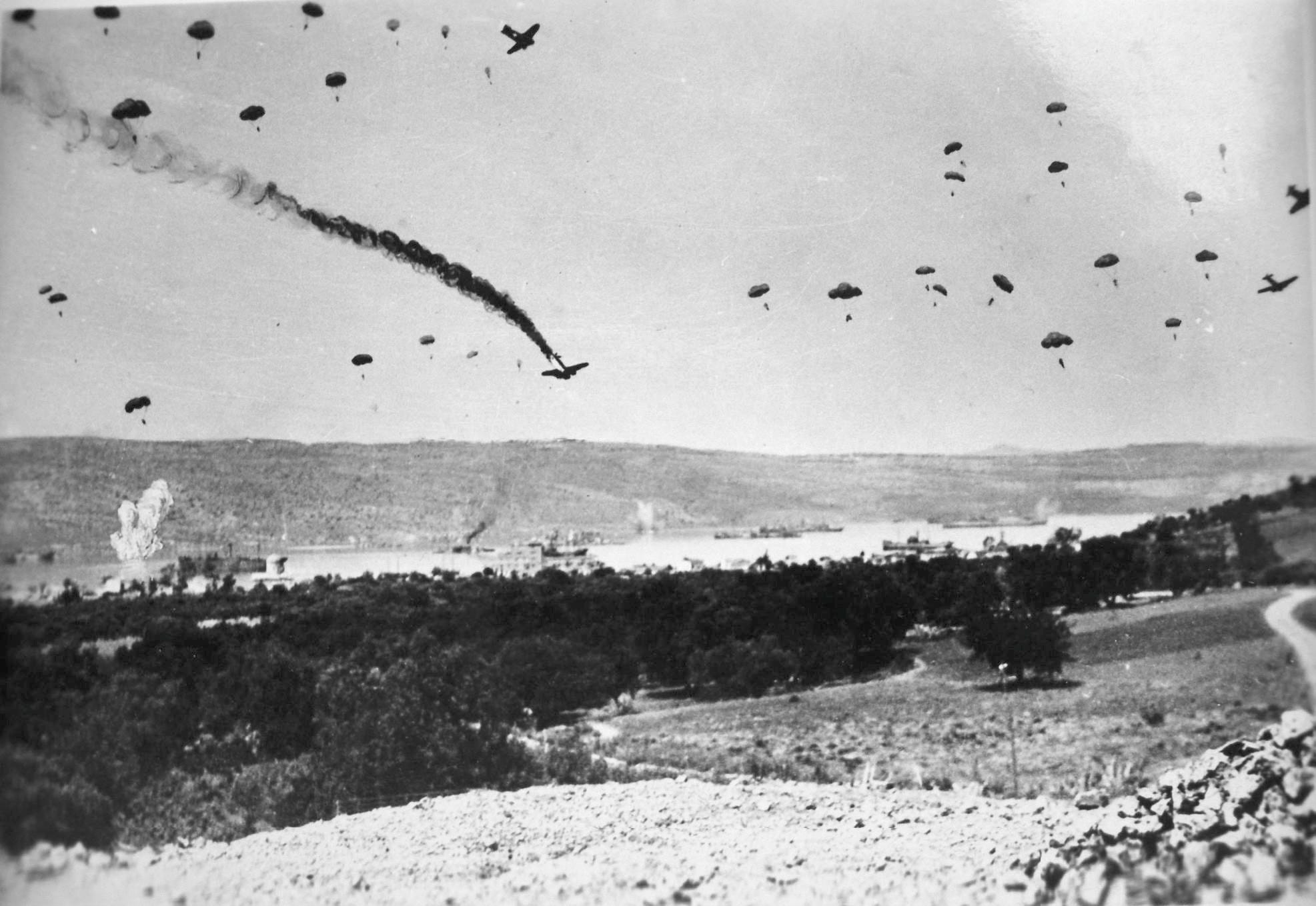
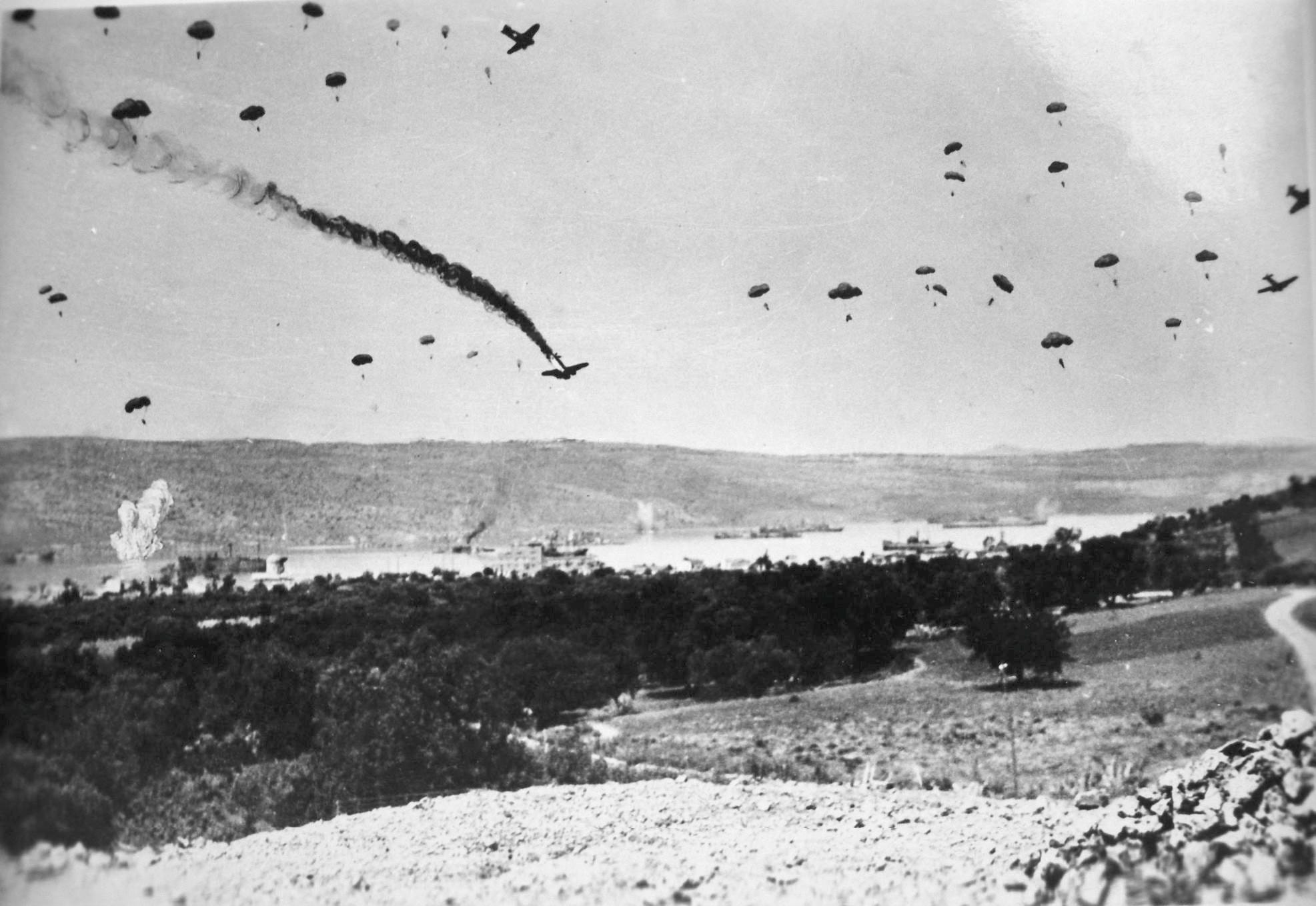
Command was delegated to the Commander-in-Chief, Luftwaffe. The assault was to be carried out by Fliegerkorps XI with ten bomber groups and 500 transport aircraft - about 1,000 aircraft in all. The transport aircraft would carry an assault regiment, parachute troops and a reinforced mountain division. After this agreement on broad lines of principle by the chief executive, debate then started on detailed planning.
General Lohr could not decide whether to concentrate his airborne attack on western Crete at Maleme or, alternatively, to let General Student have his way and land at seven points simultaneously. The first plan achieved concentration of force at the vital point and was academically beyond reproach. On the other hand, Student’s plan stood to gain the maximum advantage from the first shock. It had also the advantage mathematically that the two phase lift spread the load on the limited number of aircraft available.
The issue was referred back to Goering as Commander in Chief.
His clear and decisive ruling - by no means untypical - in contrast to the Führer, he had the qualities of a leader rather than those of the prophet manque - was that landings should be made around Maleme in the west in the morning and at Rethimnon and Irakhon in the afternoon.
Huge contingents of German troops were now gathering on the isthmus. They included paratroop artillery detachments, antiaircraft and anti-tank gunners and medical orderlies. They and all of Fliegerkorps XI and the mountain troops waited for essential supplies and the ground staff necessary to ensure smooth take-off.
The provision of petrol caused particular difficulty. Pumping equipment on the landing-grounds was unusable. Day after day the ground staff in sweltering heat rolled petrol-drum after petrol-drum to the waiting aircraft. The giant machines were voracious as locusts. Hand pumps were used to fill them with petrol. Valuable time was lost. And the German logistics staff calculated that 36,000,000 litres of petrol were needed for the operation.
Airfield construction was pushed ahead ruthlessly. At Molaloi the airfield was ready in a week. Milos island was occupied on May 10; a site chosen on the same day; and the airfield was ready in three days.
Dive-bombers and single-engined fighters were concentrated on these forward air-strips - at Milos, Molaloi, Scarpanto and with Corinth and Argos as base airfields. Bombers and reconnaissance aircraft were based as far off as Salonica, Bulgaria and Rhodes. Transport aircraft used the airfields in southern Greece. Concentration of the attacking troops round airfields at Corinth, Megara, Tanagra, Topolia, Dhadhion (Amfiklia), Elevsis and Faliron had been completed by May 14.
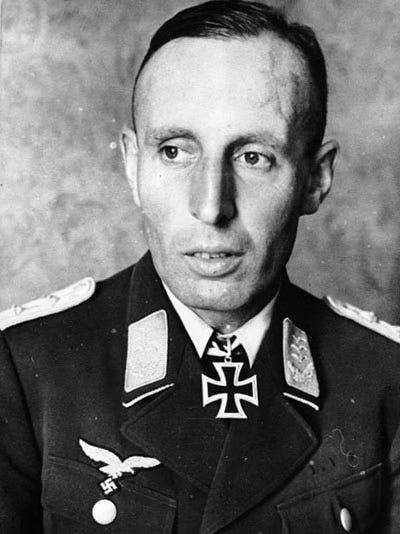
There was so far only speculation about the objective. Doubts for commanders were resolved at General Student’s briefing. Von der Heydte [‘Daedalus Returned: Crete, 1941’] has described the scene in the Hotel Grande Bretagne, so lately used for the conferences of Britain’s smiling, assured, young Foreign Secretary.
‘One look at the hermetically-sealed and shuttered room in the Hotel Grande Bretagne, where the commanders of all the paratroop regiments and battalions were gathered to receive orders, was sufficient to dispel the secret of our target: a large map of Crete was prominently displayed upon the wall.
‘In a quiet but clear and vibrant voice, General Student explained the plan of attack. It was his own, personal plan. He had devised it, had struggled against heavy opposition for its acceptance, and had worked out all the details. One could perceive that this plan had become a part of him, a part of his fife. He believed in it and lived for it and in it.
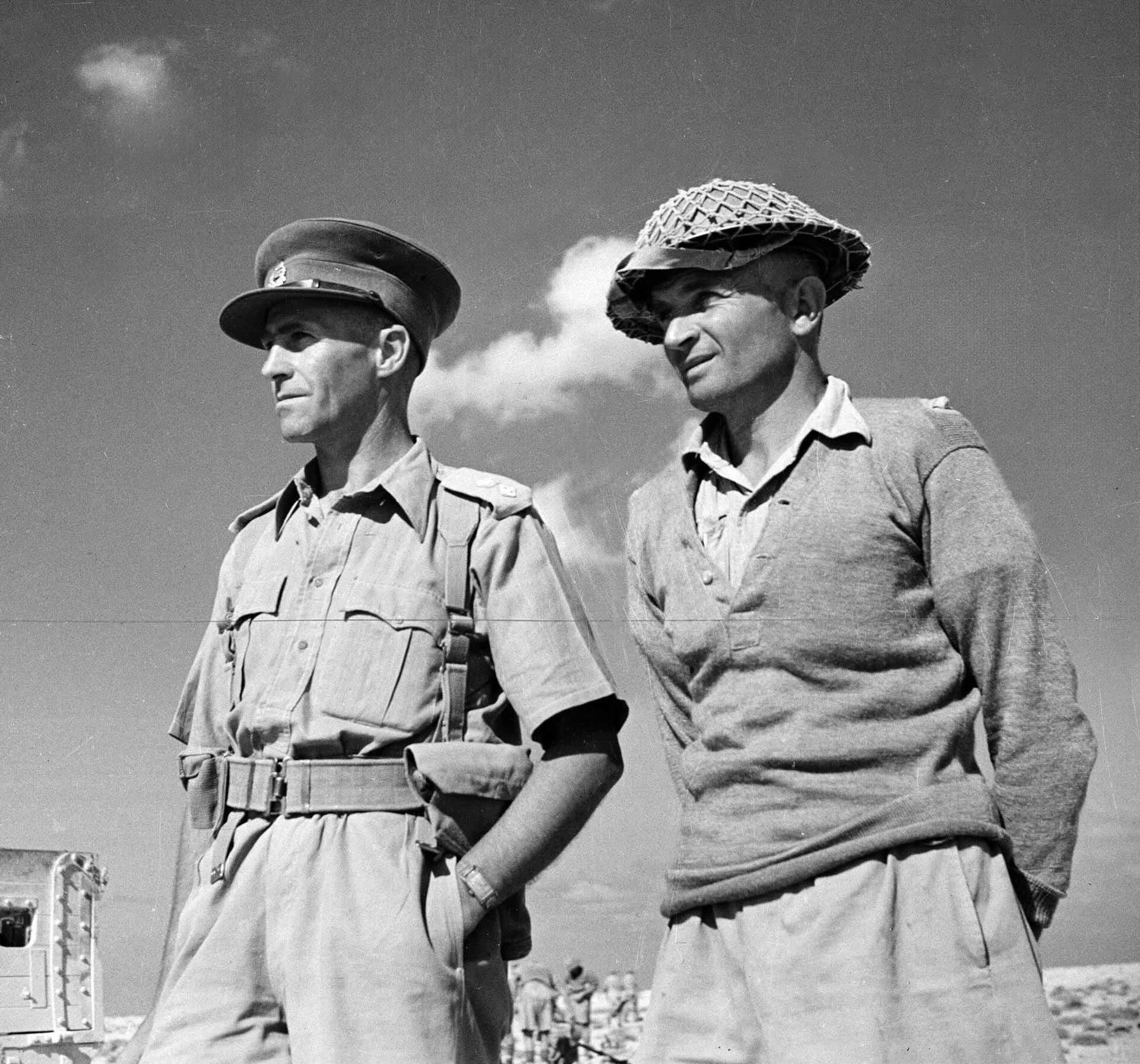
Meanwhile, the British forces on Crete prepared for an expected attack as best they could. The vast majority of troops on Crete had just been hastily evacuated from Greece without their heavy equipment. Some had arrived with only the clothes they stood in. The following excerpt describes the situation of the Australians and New Zealanders:
Their only cooking utensils were petrol tins. They had no mess tins, knives, forks or spoons. Food was eaten out of old herring tins with wooden spoons. One Australian described his condition:
‘It was hard to get clean clothes and lice appeared. We had a long fight with them - the boys would do a day in underpants while the women washed their clothes, and they are great washerwomen but until the great day when we were given a shirt and shorts each, lice were always with us. I had a blanket and greatcoat but for a week or more shared the blanket with three others. We would sleep in a row with greatcoats on and the blanket over our feet. I slipped into Canea and bought a brush and razor. Except for a table knife that was all my equipment.’
The New Zealanders, on the other hand, seemed in better case. The diarist of one of their units recorded: ‘Conditions very peaceful in the pleasant waiting existence. Parties bathe in the Mediterranean and bask in the sunshine; the area is fertile in vineyards, cornfields and vegetable patches, and orange vendors ply a steady trade.’
While these troops waited for code word ‘Cromwell’ , indicating enemy action imminent and troops to man battle stations at a half-hour’s notice, some of the promised tanks arrived in insufficient numbers.
On May 15, sixteen light tanks of an out-of- date type arrived. The guns lacked proper cooling systems and no wirelesses had been fitted before embarkation. Their engines had anyway already been run to death in the western desert. Four days later a further three I or ‘infantry’ tanks of 7th Royal Tank Regiment were landed with the Highlanders at Timbakion on the south coast.
During this time, enemy air attacks steadily increased in intensity. The diary of one New Zealand soldier, 36224, C. Trethowen, attached to 5th Field Park Engineers, gives the pattern:
April 27. Left Greece to board Ack Ack ship Carlysle [sic] at 1.30 a.m. Arrived at Crete 7.00 p.m. We lost track of one another in the rush to get ashore by barge in case of an air-raid.
April 29.I met up with the Norwegian crew off the ship took our vehicles to Greece on March 14. They had later been attacked by aircraft. A bomb had gone down the funnel and finished her. They were waiting for another ship just as though nothing had happened.
We moved up on hills above Maleme aerodrome and I was doing picket from 1.00 a.m. till dawn.
May 6. Digging slit trenches around Galatas the last few days; several reconnaissance planes came over.
May 12. Shifted camp to hills on the coast side of Soudhas [Suda] Bay; air-raids becoming heavy and more often now.
May 14. Fireworks most of the night, with bright flares over the harbour, and bombing of shipping and supplies.
May 15. Our unit is to dig a shaft in hillside to keep the records safe but it never gets finished.
May 16. One of the heaviest raids today. Bomb shrapnel everywhere after they finished, but we all survived.
May 17. Two heavy raids on Soudhas Bay port installations: they got three ships and a tanker from which the smoke is pouring as I write.
May 18. Fifteen raids today, gave the harbour another pasting. I saw one bomber drop a stick of bombs through a field hospital not far from us.
May 19. More heavy air-raids today.
© John Hall Spencer 1962, 2008, 2020, ‘Battle for Crete’. Reproduced courtesy of Pen & Sword Publishers Ltd.

Affiliate Links
Part of the Battle of Crete sequence:
29th May 1941: Many men who have survived the battle die during the evacuation by sea