

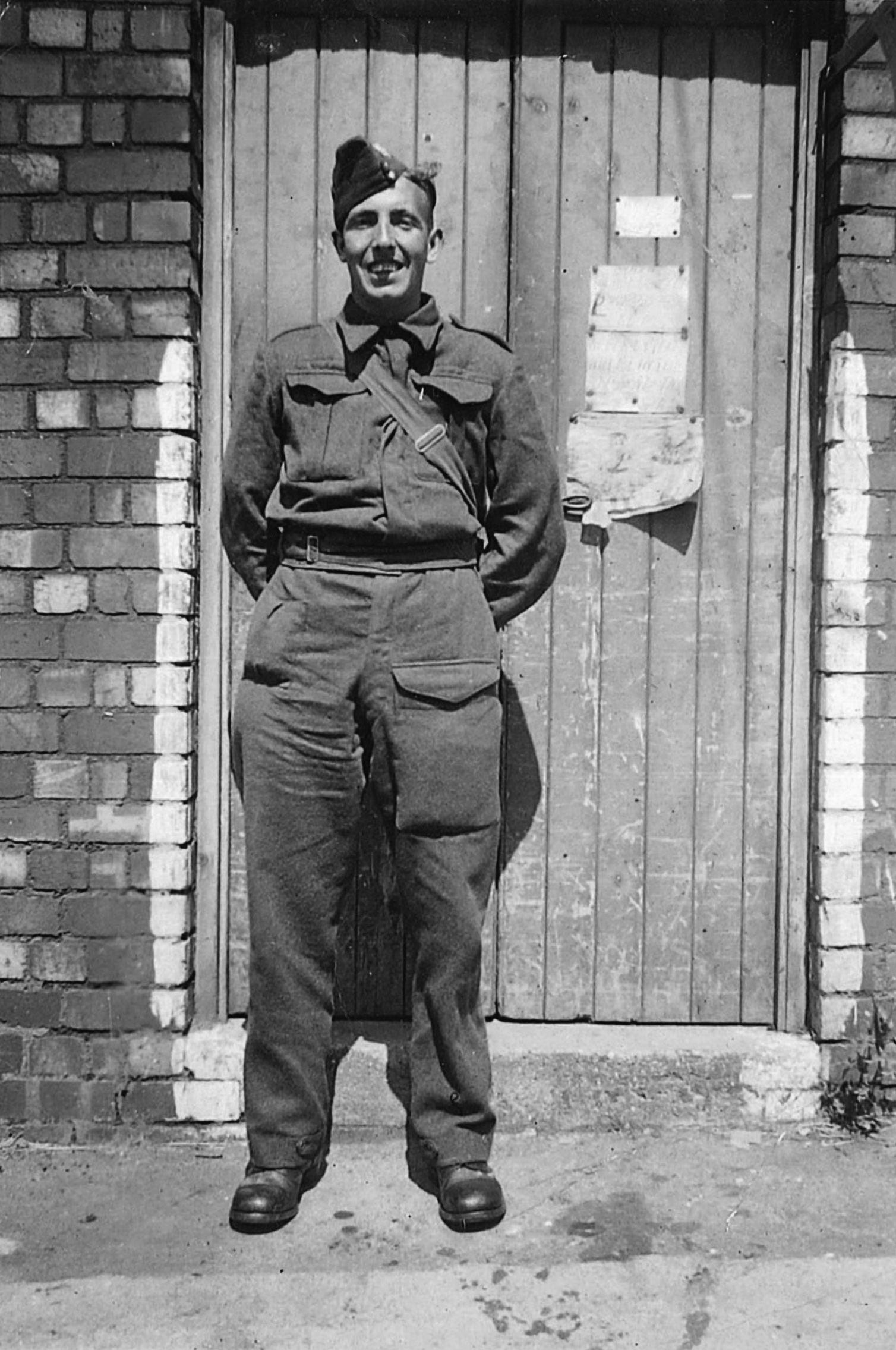
The story of war is so often the story of ‘ordinary’ people in extraordinary circumstances. Recently published is the memoir of William Gillanders, which he did not write until 1996. These ‘ordinary experiences’ of a private soldier would see him celebrated as a hero were he alive today. But he obviously did not regard himself as exceptional, and we must be grateful that his daughter brought his private family manuscript to publication.
Frontline Medic & SOE Agent: The WW2 Memoir of William Gillanders MM is a tale full of twists and turns, a young man who volunteers for the Army in October 1939 after watching German planes bomb ships outside Edinburgh - the first air raid on Britain. He should have gone to France with the Highland Division, most of whom became prisoners. But a spell in hospital with bronchitis meant he missed the departure - and instead was ‘volunteered’ as a driver with a blood transfusion unit - and in turn learnt how to give transfusions himself. Eventually, he had to make his own lucky escape from France. As a member of the Royal Army Medical Corps in Egypt in 1942, he was asked to pack medical supplies for the Special Operations Executive - and he found himself volunteering for the mission himself. Once in Yugoslavia, working alongside the partisans, he was often the only person with medical expertise available.
The following episode comes from relatively late in the war, when Gillanders is supporting the partisans in occupied Yugoslavia. They became aware of the many Allied aircrew who had been shot down and were on the run, and a plan had to be devised to get them out:
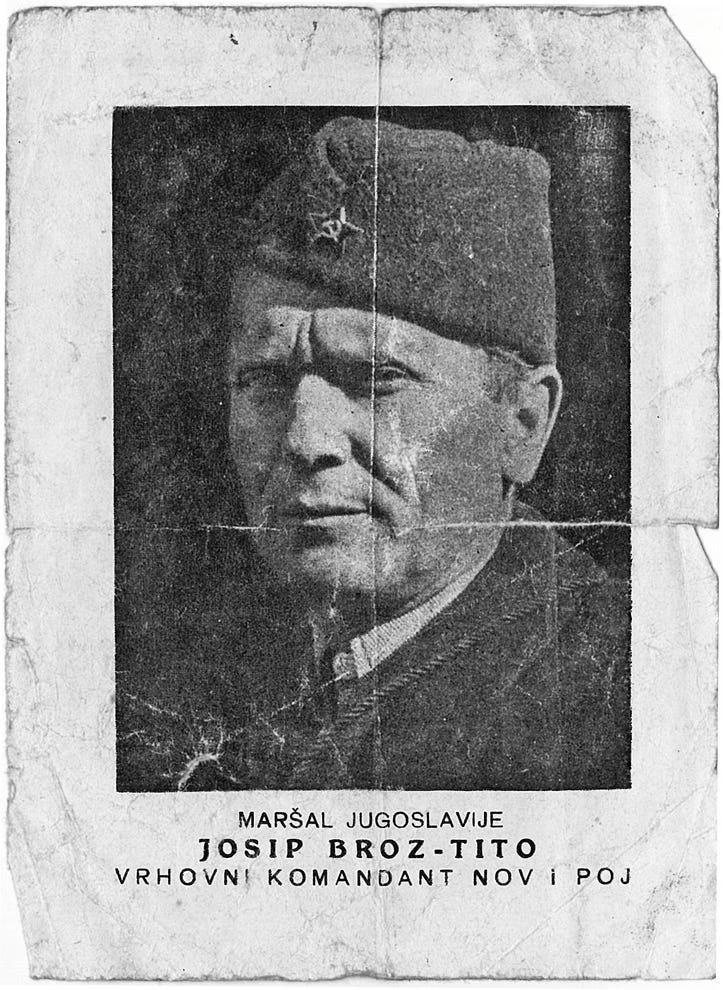
Major Reed was rather uncertain as to how we would get the growing number of men out. To his relief, and our horror, a message came from Brigadier MacLean that Ian and I were to proceed to Tito’s HQ in Bosnia by foot and to ensure the safe passage of the airmen to the same destination. Ian and I were ill-equipped to walk that distance, possibly 200 miles or more, as the partisans had taught us you never walked in a straight line. Ian had a fleece-lined leather jacket, whilst I had a sailor’s duffel jacket. We had no waterproof gear or sleeping bags. I did have a balaclava and a woollen scarf about 8 feet long, and thick socks that had all been hand-knitted by my granny (these were the envy of everyone, especially my socks). I would put on my balaclava, then wrap the scarf round my neck and head and Ian would tie it behind my back. Lack of a waterproof jacket with a hood was a handicap, but having no gloves or mittens was worst of all. My fingers were sometimes raw with burst chilblains and frostbite.
We rounded up all the aircrew known to be in the area, at least 100, and it turned out that almost all were American, with just a few Allied airmen. (The British, or RAF, which included New Zealand, Australia, Canada etc. were very independent and wanted to make their own way home.) In our group was an American Air Force major who had been living in Venice with a kind Italian woman who found him after he had baled out of his aircraft. A lucky break for one of them. He apparently got fed up, probably couldn’t stand the place, and left during the night in case she reported him to the authorities. He made his way to Trieste, then into the Yugoslavian hills, where partisans picked him up. He took a big chance by wearing civilian clothes. If the Germans had discovered him, he would have been shot. The partisans were very suspicious of him and kept him away from the other airmen. We had to verify his credentials by radioing Italy, who had his story confirmed by the Americans.
We were finally ready to start. We had no food with us. Our only first-aid gear was in my satchel. We had four partisans as escorts, and couriers, and Ivo was our interpreter. Our escorts had ltalian-300 rifles and Ian and I had a sub- machine gun and a revolver each. By the time we had reached the top of the first hill, there were huge gaps in our lines and it was at least twenty minutes before we could all start together on the next leg. With Ivo and one escort I led out, while Ian and an escort came up in the rear. The other two escorts were in between. While this was a constant physical and mental challenge, the trek did have its funny moments. Ian would send up notes via a young courier, saying, ‘for God’s sake slow down, you’re not in the light infantry.’
By the end of the first day, 80 per cent of our charges had blisters and were moaning their heads off. It wasn’t their fault – they were fliers not walkers, and flying boots weren’t the best footwear for such a journey. This was worrying as I had heard from the partisans that the Germans had a flying-column out – commandos and Jaegers (mountain ski troops). We felt certain they knew about us, as only about 40 per cent of the peasants supported Tito, especially in Croatia. Sure, they all paid lip-service, and of course did the same when the Germans came into a village. Sometimes when walking in a small group, we had met peasants with donkeys, maybe just looking for firewood, who looked at us with abject fear, uncertain as to whether to give the clenched-fist partisan salute or give the fascist greeting, something like ‘God’s greeting to you,’ in Serbo-Croat. It was a matter of life and death to them probably every day and we understood their fear. As the Germans wore the same kind of berets we wore, that too must have confused the poor, innocent peasants.
The village where we would spend our first night was quite empty, so we had plenty of room to bed down our herd. We had no blankets but the rooms were warm because the big tiled stoves were going full blast. Ian produced some tea he had hidden away, so we boiled the billy. We had no sugar or milk but that tea gave me a lift I am sure cocaine or heroin could not have. If drugs had been available in Yugoslavia at that time, I am sure we would have been into them the same as the American soldiers were in Vietnam. I dressed all the blistered feet put in front of me, and finally fell asleep by the stove.
Ivo woke me early in the morning. He had a pot of polenta and said we should eat some of this and get the hell out of the place as he had discovered that the reason the village was empty was because of an outbreak of typhus. I hoped that my anti-typhus shots were working. The airmen took the news very well but the distance and speed we subsequently travelled amazed me; were these the men who could not walk the night before because of blisters. I told them not to worry, we would be quite safe as our lice were marque fives, while the ones in the village were only ones and twos.
The urgency didn’t last long and soon we were walking slowly again and stopping to wait for stragglers. It was snowing and getting dark when we finally reached Udbina, a small town which was almost completely demolished, with only a few houses remaining with canvas or tarpaulins for roofs. These were our billets for the night. We were lucky that a partisan unit was in occupation and gave us some stew and black bread and coffee. The tarpaulin roofs were sagging with snow and big fires were raging in the rooms below, so consequently water dripped on us all night. The next morning I was glad to leave and pitied the poor partisans who were left behind to fight. We learned later, that a month after our visit to that devastated village, a doctor who had befriended us at the medical conference was killed in Udbina, along with a number of wounded, when a German ski patrol surprised them at night.
We struggled on from village to village. Eventually, we had to cross a railway and a main road. This was accomplished by waiting for the German patrols to pass, then stealing through a village without arousing too many dogs, crossing the road at the greatest speed possible, and taking off up into the mountains. It was hard going as we had only had one short rest and there was no food, we were told, until we reached a partisan camp. We climbed and climbed and crossed a pass and eventually came upon a few wooden huts. Installed here was a partisan attack group. We were allotted so many to a hut, and it was a bit of a squeeze, with thirty-five to forty for each. I looked for a space to lie down as far away from the fire as possible as the atmosphere was stifling.
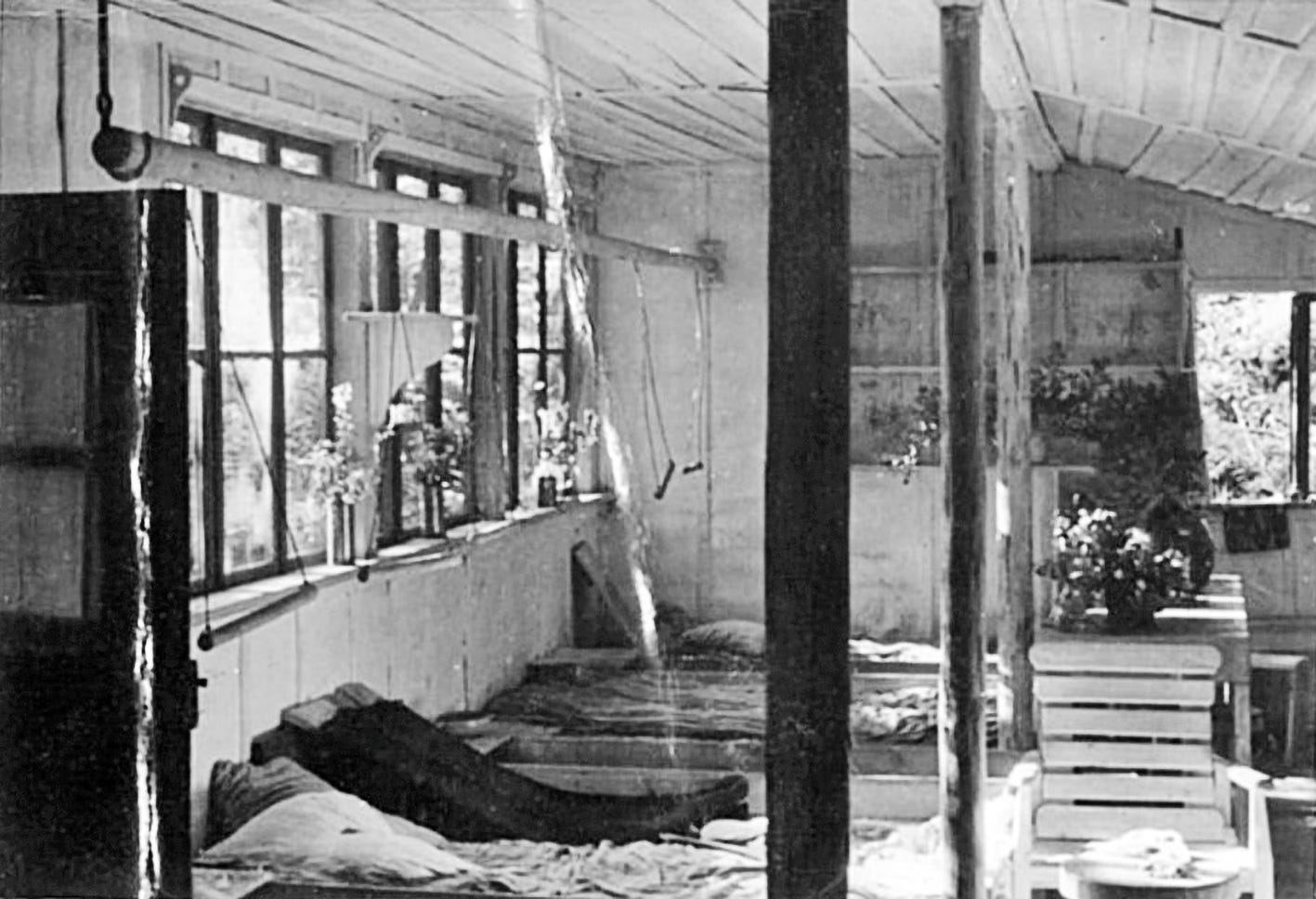
I felt a tug at my leg and when I looked down, there was a partizanka propped up on her elbow pointing at a space next to her. I found my other neighbour was also a partizanka. I just lay down exhausted while they cuddled into me, and I fell into deep sleep – no thought of any funny stuff. When you are wet, hungry and exhausted, sex is the last thing you think of. In the morning when I was having a wash, I saw a patrol move out. It included the two partizankas – one carrying a machine gun, the other had belts of ammunition draped round her neck and shoulders. They smiled and waved and walked away to God knows what.
The partisan OC asked us if we would like to see where we would be once it was dark. The Americans and the others were either sleeping or resting. We made our way along a hillside and after maybe a mile we stopped on the brow of the hill and peeped over. You had to be careful using binoculars because if the sun glinted on them, you could be a dead duck. The partisan pointed below and there, about three quarters of a mile away on a road, was a line of German trucks with two or three officers or NCOs waving and gesticulating. The partisan officer said he hoped they would move soon as the partisans we had seen leave earlier had mined the road on the bend going up the hill. Our officer said, ‘We should move. If they see us, we’ll get a breakfast of grenades’ (likely 88mm shells, in this case). We didn’t need any coaxing, and made our way back. We couldn’t move until dark and I hoped the German convoy hadn’t struck a mine as there would be a real hornets’ nest below if it had been attacked by the partisans.
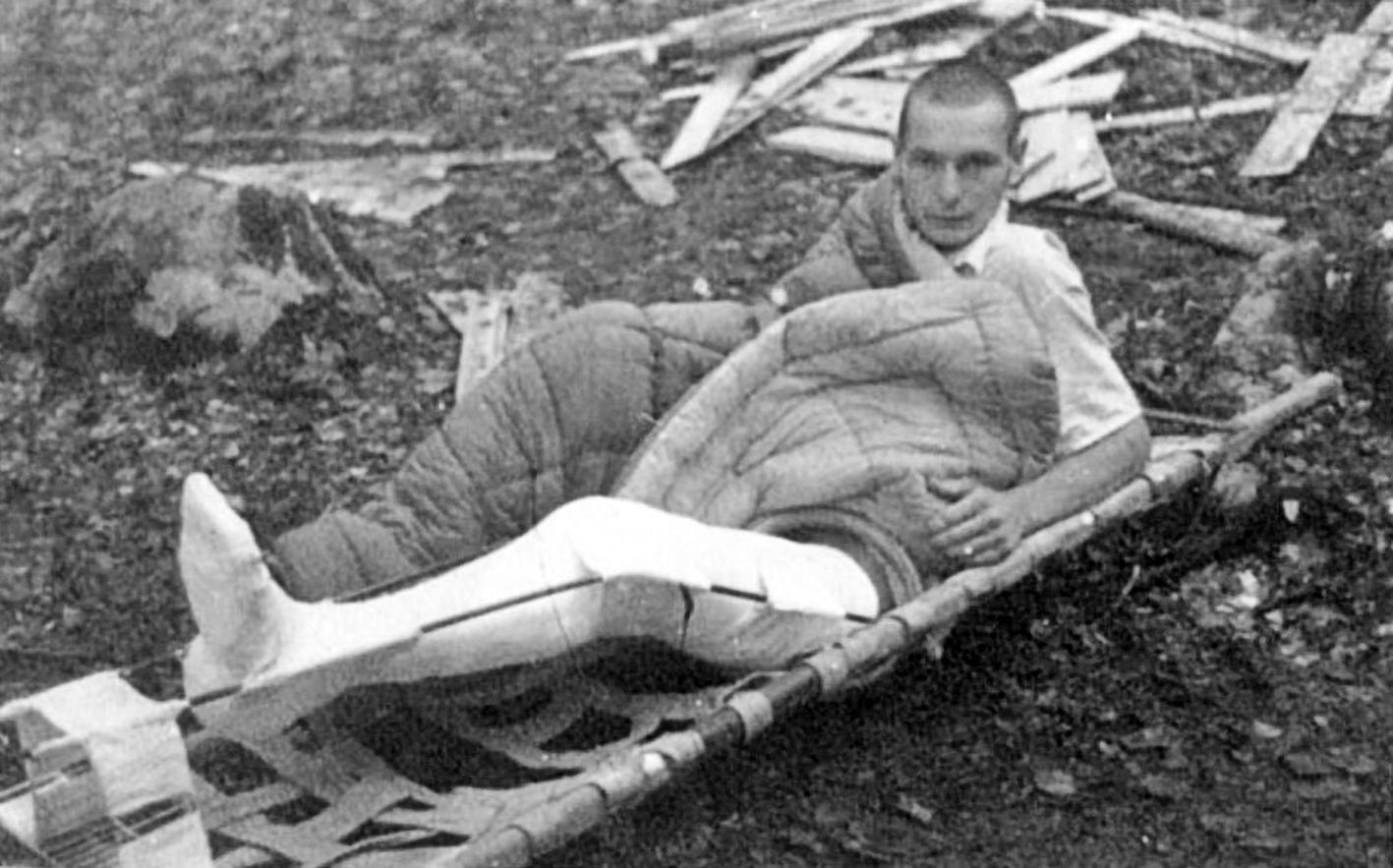
When our group left it was snowing and we trudged along the path. This time I was much happier, as we had a strong, well-armed escort with us. This unit must have been an elite partisan group. They were well disciplined, alert and had high spirits and a good attitude. We crossed the road easily enough but there was also an autobahn ahead, hence the escort. This road had a beautiful surface and was wide and dead straight. The Germans had armoured patrols running up and down the road all night, so a good escort was essential. And we made it. Once over the road it was hard climbing again until we reached one lone hut. Not a hope of sleeping but we did get a cup of hot ersatz coffee and some black bread. This was typical of our daily treks. Some of the airmen were by now very sick and weak and we realised that unless we reached Tito’s HQ soon, some would not make it.
I still remember one young fellow – his name was Anderson. He was a 21-year-old tail-gunner. The aircraft he was flying in was hit by anti-aircraft fire and went out of control. The last thing he heard was the command to bale out. He had opened the door of his turret to reach his parachute, which hung on a hook just outside the door. When he put his hand round to grab it, there was absolutely nothing there – the entire main part of the aircraft had gone. The flak had shot the tail and he realised that the tail had just broken away. He believed the rest of the crew would have died, as without its tail the aircraft would go into an uncontrollable spin. He told me he just sat down in his seat and yelled. The tail did not spin, but sailed down, landing in the tops of some tall trees, then slowly sliding down to the ground. He stepped out, unharmed physically but mentally a mess. Sometimes he didn’t know who he was. He ranted and raved at night and some of the Americans took care of him. He now had diarrhoea, as had 90 per cent of us, and was very weak.
© Lindsay Gillanders 2025, ‘Frontline Medic & SOE Agent: The WW2 Memoir of William Gillanders MM’. Reproduced courtesy of Pen & Sword Publishers Ltd.

Affiliate Links
Recently on World War II Today ...

